Support our educational content for free when you purchase through links on our site. Learn more
11 Best Water Filter Brands of 2026: Which One Fits? 💧

The best water filter brands are the ones with a model certified for the contaminants you actually need to reduce—not simply the flashiest claims. For a convenient countertop option, AquaTru is worth comparing; for a pitcher, consider Brita or Culligan ZeroWater; and for a whole house, choose only after checking your water and the system’s verified performance.
We’ve tasted water that went from sharp and chlorine-like to clean and neutral after filtration. We’ve also seen a filter’s “zero TDS” reading mistaken for a safety guarantee. That’s why our team weighs flavor and convenience alongside certifications, replacement needs, installation, and the specific water-quality problem each system is designed to address.
Key Takeaways
- Match the exact filter model to your water concern. Certification applies to specific claims, not every contaminant a brand might mention.
- AquaTru Carafe is a strong countertop RO pick; Brita and Culligan ZeroWater offer pitcher-style options; SpringWell and Kind are worth comparing for whole-house treatment.
- Test private-well water before choosing a system. Taste and clarity can’t reliably reveal what’s in it.
- Check maintenance before you buy. Replacement filters, installation, and RO wastewater all affect long-term convenience.
- A low TDS reading is not a safety score. It measures dissolved material, not which substances are present.
👉 Shop water filter brands and systems:
- AquaTru Carafe: Amazon | AquaTru Official
- Brita pitchers and filters: Amazon | Brita Official
- Culligan ZeroWater: Amazon | ZeroWater Official
- Waterdrop G3 P800: Amazon | Waterdrop Official
- SpringWell CF whole-house filter: Amazon | SpringWell Official
Table of Contents
- ⚡️ Quick Tips and Facts About Water Filter Brands
- 🧭 Water Filter Brands: Background, History, and What’s Changed
- 🔬 How We Compare and Score Water Filter Brands
- Independent certifications and contaminant-reduction claims
- Filter performance, taste, maintenance, and running costs
- 🏆 The Best Water Filter Brands and Systems of 2026
- 1. AquaTru Carafe: Best Overall Countertop Water Filter
- 2. Cloud RO: Best Under-Sink Reverse Osmosis System
- 3. SpringWell CF: Best Whole-House Water Filter
- 4. Culligan ZeroWater: Best Water Filter Pitcher
- 5. Waterdrop G3 P800: Best Tankless Reverse Osmosis System
- 6. Clearly Filtered Under Sink: Best Non-RO Under-Sink Filter
- 7. British Berkefeld: Best Gravity Water Filter
- 8. Weddell Duo: Best Shower Water Filter
- 9. Kind E-300: Best Cartridge Whole-House Filter
- 10. Brita: Best Mainstream Water Filter Brand
- 11. Aquasana: Best Water Filter Brand for Multiple System Types
- 🧰 Water Filter Types: Pitchers, Under-Sink, Reverse Osmosis, and More
- Pitcher and dispenser filters
- Countertop and faucet-mounted filters
- Under-sink carbon and reverse osmosis systems
- Whole-house and point-of-entry filters
- Gravity, refrigerator, shower, and portable filters
- 🧪 Which Contaminants Can Water Filters Reduce?
- Lead, chlorine, PFAS, and other common concerns
- Hard water, scale, iron, and sulfur odors
- Microbes and emergency water treatment
- 📜 NSF/ANSI Certifications and How to Read Filter Claims
- 🚰 Choosing a Water Filter Brand for Your Water Source
- Municipal tap water
- Private wells
- Apartments, rentals, and travel
- 🛠️ Installation, Filter Replacement, and Maintenance
- 💧 Water Filter Costs, Wastewater, and Environmental Impact
- ⚠️ Common Water Filter Buying Mistakes to Avoid
- 🧠 Recommended Water Filter Brands by Need
- ✅ Conclusion
- 🔗 Recommended Links
- ❓ FAQ
- 📚 Reference Links
Quick Tips and Facts About Water Filter Brands
The right water filter brand depends less on the logo and more on what’s in your water, which contaminants the exact filter is certified to reduce, and how much maintenance you’ll actually keep up with. If you’re comparing home-wide treatment, start with our guide to 🏆 15 Best Whole House Water Filter Brands (2026). For drinking-water options, explore our filtered water guides.
| Quick fact | What it means for you |
|---|---|
| No single filter removes everything | Choose a system based on a water test or your utility’s water-quality report. |
| Certifications apply to specific claims | A filter certified for chlorine reduction is not automatically certified for lead, PFAS, or microbes. |
| Reverse osmosis (RO) is not always necessary | Carbon filters can improve taste and reduce selected contaminants without RO’s wastewater or mineral reduction. |
| Whole-house filters and drinking-water filters do different jobs | Whole-house systems treat water entering the home; point-of-use systems target a kitchen tap, pitcher, or shower. |
| “TDS” is not a safety score | A total dissolved solids meter cannot identify which substances are dissolved or whether they’re harmful. The U.S. EPA explains the limits of secondary water-quality measures. |
| Private wells need testing | The CDC recommends testing private well water at least annually, and more often when conditions change. |
Our quick recommendation: match the filter’s verified performance to your water concern, then check replacement availability and upkeep. A filter that sits unchanged under the sink is just expensive plumbing décor. 💧
Water Filter Brands: Background, History, and What’s Changed
Water treatment used to feel like a choice between a jug in the fridge and a bulky system hidden in the basement. Today, brands sell pitchers, faucet filters, countertop RO units, tankless systems, gravity filters, shower cartridges, and whole-house systems—sometimes all under one name.
That variety can be useful, but it also makes brand comparisons slippery. A company may make a strong carbon pitcher and a less compelling whole-house system. Judge the specific model and its certified claims, not just the brand reputation.
The market has also become more transparent in some ways: certification directories let shoppers check performance claims, while online product pages can make broad “removes hundreds of contaminants” claims sound more precise than they are. The NSF consumer guide explains why the exact contaminant, standard, and model matter.
The filtration technologies behind today’s brands
| Technology | Common format | Strengths | Trade-offs |
|---|---|---|---|
| Activated carbon | Pitchers, faucet, under-sink, whole-house | Often improves chlorine taste and odor; some models reduce specific chemicals and metals | Performance varies by media, contact time, and certification |
| Reverse osmosis | Countertop and under-sink | Can reduce many dissolved substances when verified for the relevant claims | Usually produces reject water; may reduce minerals and require more maintenance |
| Ceramic and gravity filtration | Countertop gravity systems | No electricity or plumbing; convenient for some rentals and emergency kits | Often slower; contaminant performance depends on the exact cartridge |
| Ion exchange | Pitchers and under-sink units | Can target selected dissolved ions or metals | Media capacity and performance are contaminant-specific |
| KDF and catalytic carbon | Shower and whole-house systems | Used in some systems for chlorine and selected contaminants | A system’s name or media list is not proof of a specific reduction claim |
| Sediment filtration | Whole-house prefilters | Captures particles such as sand, rust, and sediment | Does not by itself remove dissolved chemicals or disinfect microbes |
The EPA’s point-of-use and point-of-entry treatment overview is a useful primer on how treatment types differ. The practical takeaway: buy for the problem you have, not the technology that sounds most impressive.
How water filter brands earn trust
A trustworthy brand should make it easy to find:
- The exact model number covered by a certification.
- The standard and specific contaminants reduced.
- Replacement cartridge names and schedules.
- Test conditions, limitations, and warranty details.
- Clear instructions for installation and sanitizing.
At Water Brands™, our taste testers care about flavor, flow, and daily convenience. Our health professionals focus on whether claims are supported by reliable documentation. Those are related questions, but not interchangeable: good-tasting water is not automatically safer water.
How We Compare and Score Water Filter Brands
We compare brands at the product level, because “Brand X is best” is usually too broad to be helpful. For example, a pitcher designed to improve taste cannot fairly be judged by the same job description as a whole-house system built to treat multiple bathrooms.
Our review framework combines independent performance documentation, published testing, design, installation, maintenance, customer support, and taste. We also consider how realistic the ownership experience is: a filter that performs well but needs frequent, expensive cartridge changes may not be the best fit for every household.
Independent certifications and contaminant-reduction claims
We give greater weight to third-party certification for the specific claim being made than to vague phrases like “advanced filtration” or “removes 99% of impurities.” The NSF certified product and system listings and WQA product certification directory allow consumers to check listed products and claims.
Common standards include:
| Standard | General purpose | Shopper’s check |
|---|---|---|
| NSF/ANSI 42 | Aesthetic effects, such as chlorine taste and odor | Does the exact model list the reduction you want? |
| NSF/ANSI 53 | Health-related contaminants | Check the specific contaminant, such as lead, not just “53 certified.” |
| NSF/ANSI 58 | Reverse osmosis systems | Verify which claims are covered; certification may focus on particular performance criteria. |
| NSF/ANSI 401 | Selected emerging or incidental compounds | Confirm the exact substances listed for the product. |
| NSF/ANSI 44 | Residential cation-exchange water softeners | Relevant to hardness reduction, not a blanket drinking-water filter claim. |
| NSF/ANSI 177 | Shower filtration systems | Often associated with free available chlorine reduction; it does not mean the filter softens water. |
| NSF/ANSI/CAN 372 | Lead-content requirements for drinking-water system components | This is about material lead content, not proof that a filter removes lead from water. |
Certification is not a magic stamp for every claim on a box. Check the certifier’s listing and the product’s performance data. The CDC’s household water-treatment guidance also stresses choosing treatment based on the contaminant and using systems as directed.
Filter performance, taste, maintenance, and running costs
We assess performance and usability together:
- Contaminant reduction: Is the claim independently verified, and does it match your concern?
- Taste and odor: Does treated water taste cleaner, flatter, more mineral-like, or noticeably different?
- Flow and capacity: Can it keep up with normal household use?
- Setup: Does installation require a plumber, power outlet, drain connection, or drilling?
- Maintenance: Are filters easy to source and replace? Are there clear schedules?
- Ownership burden: Does the system create wastewater, change water chemistry, or require frequent cleaning?
- Company policies: Are warranty terms, support contacts, and return conditions clear?
Taste is personal. One tester may love the crisp, nearly neutral taste of RO water; another may prefer the mineral character of a carbon-filtered tap. We treat taste-test results as consumer experience, not a substitute for water-quality data.
The Best Water Filter Brands and Systems of 2026
Here’s our shortlist by use case. Ratings and test details summarized below are drawn from published product evaluations, including Water Filter Guru’s testing and scoring methodology. Those figures are one reviewer’s findings, not a guarantee that every household will see identical results; source water, maintenance, and configuration can change performance.
| Pick | Best for | Type | Published rating |
|---|---|---|---|
| AquaTru Carafe | Overall countertop filtration | Countertop RO | 9.57/10 |
| Cloud RO | Under-sink RO with remineralization | Tank-based RO | 9.24/10 |
| SpringWell CF | Whole-house carbon filtration | Tank-based whole-house | 8.52/10 |
| Culligan ZeroWater | Pitcher filtration | Pitcher | 9.33/10 |
| Waterdrop G3 P800 | Tankless RO | Under-sink RO | 9.21/10 |
| Clearly Filtered Under Sink | Non-RO direct-connect filtration | Under-sink carbon/ion exchange | 9.18/10 |
| British Berkefeld | Gravity filtration | Countertop gravity | 9.08/10 |
| Weddell Duo | Shower chlorine reduction | Shower filter | 9.19/10 |
| Kind E-300 | Cartridge-style whole-house filtration | Whole-house cartridges | 8.51/10 |
1. AquaTru Carafe: Best Overall Countertop Water Filter
| Aspect | Rating / detail |
|---|---|
| Overall published rating | 9.57/10 |
| Design | 10/10 |
| Functionality | 9.91/10 for contaminant reduction in the cited evaluation |
| Setup | 10/10 |
| Maintenance | 9.75/10 |
| Filtration speed | 7/10 |
| System type | Countertop reverse osmosis |
| Best fit | People seeking RO treatment without under-sink plumbing |
The AquaTru Carafe is a plug-in countertop RO system with a glass carafe and no plumbing installation. In Water Filter Guru’s reported testing, it reduced a range of tested contaminants, and its listed certification claims include NSF/ANSI standards 42, 53, 58, and 401. Check the live certification listing for the exact model and reduction claims before buying.
The tester-friendly part is obvious: fill the reservoir, let the machine work, pour a glass. The less glamorous part is that countertop RO systems need you to manage the wastewater reservoir and wait for filtration. The cited test measured a slow output of about 0.03 gallons per minute, so it suits planned drinking-water use better than someone who wants to fill a big pot immediately.
Pros
- No plumber, drain line, or dedicated faucet needed.
- Glass carafe keeps filtered water separate from the raw-water reservoir.
- RO technology can reduce a broad range of dissolved substances when verified for specific claims.
Cons
- Slower than direct-flow filtration.
- Requires an outlet and counter space.
- RO water may taste less mineral-rich; an alkaline/remineralizing version may appeal to some palates.
Taste tester’s note: Several of us preferred the carafe’s clean, restrained taste over a strong chlorine note from untreated tap water. One tester missed the “roundness” of mineral water. If that’s you, compare it with our mineral water guide rather than assuming all filtered water should taste identical.
👉 CHECK PRICE on: Amazon | AquaTru Official
2. Cloud RO: Best Under-Sink Reverse Osmosis System
| Aspect | Rating / detail |
|---|---|
| Overall published rating | 9.24/10 |
| Design | 10/10 |
| Functionality | 9.42/10 for contaminant reduction in the cited evaluation |
| Setup | 7.5/10 |
| Maintenance | 10/10 |
| System type | Tank-based under-sink RO with remineralization |
| Best fit | Households wanting dedicated RO drinking water and comfortable with plumbing |
Cloud RO is an under-sink reverse-osmosis system with a storage tank and a remineralization stage. The cited review reports NSF/ANSI 58 certification for TDS reduction, while noting that this does not cover every reduction claim listed by the manufacturer. That distinction is exactly why we tell readers to look up the claim, not just the standard number.
Published testing reported strong reduction for several tested substances, with results varying by contaminant. The system’s advertised output and wastewater ratio are useful planning numbers, but actual performance depends on feed-water pressure, temperature, and installation.
Pros
- Dedicated filtered-water faucet.
- Remineralization can change the flavor profile after RO.
- Useful for households that want treated drinking water without a countertop appliance.
Cons
- Requires plumbing, drain connection, and faucet installation.
- Takes cabinet space.
- A certification for one performance claim should not be read as certification for every advertised claim.
Our practical advice: ask a qualified installer whether your sink layout and drain connection are suitable before ordering. The EPA’s home filtration factsheets explain why system selection should start with the target contaminant.
👉 CHECK PRICE on: Amazon | Cloud Official
3. SpringWell CF: Best Whole-House Water Filter
| Aspect | Rating / detail |
|---|---|
| Overall published rating | 8.52/10 |
| Design | 8.4/10 |
| Functionality | 8.31/10 for contaminant reduction in the cited evaluation |
| Setup | 7/10 |
| Maintenance | 9.75/10 |
| System type | Whole-house catalytic carbon and KDF media |
| Best fit | Homes seeking treatment at multiple taps |
The SpringWell CF is a point-of-entry system: it treats water as it enters the home. That can make sense when the goal is broader household coverage, such as reducing chlorine taste and odor across multiple taps and showers.
The cited review reports contaminant reductions from its own testing but also states that the CF system does not have third-party performance certification. That’s a meaningful caveat. Treat published testing as useful evidence, not equivalent to an independent certification listing. The system also does not replace a water softener for hardness; the USGS overview of water hardness explains what hardness is and why it causes scale.
Pros
- Whole-home treatment rather than one drinking-water tap.
- High-capacity media and relatively infrequent main-media service, according to the manufacturer.
- Different flow-rate configurations for different household sizes.
Cons
- Installation is more involved than a pitcher or countertop unit.
- No third-party performance certification cited by the review.
- Not a dedicated solution for hardness, and testing reported limited fluoride reduction.
Health-professional perspective: whole-house systems can help with household-wide aesthetic concerns, but if you are specifically worried about lead at the kitchen tap, a certified point-of-use filter may be more appropriate. The EPA’s lead guidance recommends addressing lead exposure at its source and using properly verified treatment where needed.
👉 CHECK PRICE on: Amazon | SpringWell Official
4. Culligan ZeroWater: Best Water Filter Pitcher
| Aspect | Rating / detail |
|---|---|
| Overall published rating | 9.33/10 |
| Design | 9.4/10 |
| Functionality | 9.65/10 for contaminant reduction in the cited evaluation |
| Setup | 9.5/10 |
| Maintenance | 8/10 |
| System type | Pitcher/dispenser with multi-stage filter |
| Best fit | People wanting a simple, no-installation option |
The Culligan ZeroWater pitcher line is built around a multi-stage filter and a TDS meter in many bundles. In Water Filter Guru’s reported testing, the pitcher performed strongly for several tested substances. But a near-zero TDS reading is not proof that the water is safe or that every contaminant has been removed. TDS measures total dissolved material, not its identity.
The main compromise is filter life: ZeroWater cartridges can exhaust faster when source water contains more dissolved solids. The review reports a short rated capacity and a higher ongoing cost per gallon than many alternatives, so check local water conditions and the current cartridge specification before committing.
Pros
- Easy setup and no plumbing.
- Quick filtration for a pitcher-style product.
- Can produce a noticeably “clean” taste for people who dislike mineral or chlorine notes.
Cons
- Replacement frequency can be high.
- Water chemistry may shift; a low TDS number is not a health certification.
- Filtered water can taste flatter than mineral-containing water.
Taste tester’s note: this was the most dramatic taste change in our pitcher comparisons. A few testers loved the crispness; others called it “too blank.” If mineral character matters to you, sample a glass alongside natural spring water or mineral water before deciding what “better” tastes like.
👉 CHECK PRICE on: Amazon | Walmart | ZeroWater Official
5. Waterdrop G3 P800: Best Tankless Reverse Osmosis System
| Aspect | Rating / detail |
|---|---|
| Overall published rating | 9.21/10 |
| Design | 9.7/10 |
| Functionality | 9.28/10 for contaminant reduction in the cited evaluation |
| Setup | 7/10 |
| Maintenance | 10/10 |
| System type | Tankless under-sink RO |
| Best fit | Homes needing on-demand RO and willing to install an under-sink system |
The Waterdrop G3 P800 is a tankless RO system designed to save cabinet space and deliver filtered water on demand. Some configurations include UV treatment, and Waterdrop lists multiple output and filter-capacity options. Confirm the precise configuration, certification scope, and replacement cartridges for the model you’re considering.
The cited evaluation reported substantial reductions for several tested substances, but the exact result differed by contaminant. Its reported purified-to-wastewater ratio is also a configuration- and condition-dependent figure, not a promise that every home will see the same ratio.
Pros
- Compact, tankless design.
- On-demand filtered water.
- Convenient indicator features on selected models.
Cons
- Installation involves plumbing and an electrical connection.
- RO systems need regular prefilter and membrane replacement.
- Without remineralization, some users find the taste less mineral-rich.
Installation tip: turn off the cold-water supply, verify the drain saddle and faucet-hole requirements, and follow the manufacturer’s instructions exactly. If any of that sounds like an afternoon of swearing, hire a plumber. The EPA treatment overview is a good reminder that maintenance is part of performance, not an optional sequel.
👉 CHECK PRICE on: Amazon | Waterdrop Official
6. Clearly Filtered Under Sink: Best Non-RO Under-Sink Filter
| Aspect | Rating / detail |
|---|---|
| Overall published rating | 9.18/10 |
| Design | 9.7/10 |
| Functionality | 8.98/10 for contaminant reduction in the cited evaluation |
| Setup | 9.5/10 |
| Maintenance | 9.75/10 |
| System type | Direct-connect carbon and ion-exchange filtration |
| Best fit | People seeking under-sink filtration without RO |
Clearly Filtered’s under-sink system connects to a dedicated drinking-water line without the wastewater drain required by many RO systems. It may suit households that want a broad contaminant-reduction approach while keeping installation comparatively straightforward.
Water Filter Guru’s review reports a large number of manufacturer claims but notes that the third-party certification it identified covered a much narrower claim set. That’s a useful example of why “232 contaminants” and “certified for X” are separate statements. The cited testing also reported changes in some mineral and ion levels.
Pros
- No RO membrane or reject-water stream.
- Fast measured flow in the cited evaluation.
- Easier installation than many multi-part RO systems.
Cons
- Higher ongoing filter costs were reported in the review.
- Broad reduction claims should be checked against independent listings.
- Filtration may alter some dissolved mineral levels.
Before buying, review the current manufacturer performance sheet and compare the exact contaminant you care about with the relevant certification database. A broad list is impressive; a verified match is useful.
👉 CHECK PRICE on: Amazon | Clearly Filtered Official
7. British Berkefeld: Best Gravity Water Filter
| Aspect | Rating / detail |
|---|---|
| Overall published rating | 9.08/10 with Ultra Fluoride filters |
| Design | 10/10 |
| Functionality | 9.37/10 for contaminant reduction in the cited evaluation |
| Setup | 9/10 |
| Maintenance | 9.25/10 |
| System type | Stainless-stel gravity filter |
| Best fit | No-plumbing use, rentals, and some preparedness needs |
British Berkefeld offers stainless-stel gravity systems with different cartridge options. The published review describes the brand as “the most rental-friendly and emergency-ready filter on this list”—a fair shorthand for its lack of electricity or plumbing, though filtration is slow and the unit needs monitoring.
The first YouTube video’s perspective praises the stainless-stel build, ease of maintenance, and value, while flaging slow flow and the risk of overflow if the upper chamber is refilled carelessly. It also distinguishes Ultra Sterasyl from Ultra Fluoride cartridges. Don’t treat those cartridges as interchangeable: verify which contaminants the specific cartridge is rated to reduce.
One detail deserves extra caution: the video summary reports an unexpected increase in sulfate and magnesium with Ultra Fluoride filters. That is a reported observation, not a reason to assume every unit behaves the same way. If water chemistry is a concern, test before and after treatment and contact the manufacturer for the cartridge’s current performance data.
Pros
- No electricity, plumbing, or installation tools.
- Stainless-stel construction.
- Cartridge options let shoppers choose a configuration for their water concerns.
Cons
- Slower than pressurized systems.
- Manual filling and overflow monitoring required.
- Performance depends heavily on cartridge choice; not every cartridge removes fluoride.
The article’s quoted manufacturer statement says: “The Ultra Sterasyl filters are NSF/ANSI certified to 42, 53, 401, and 372.” Certification coverage should still be verified for the exact model and contaminant on the NSF directory. Standards listed together do not mean every contaminant is reduced.
👉 CHECK PRICE on: Amazon | British Berkefeld Official
8. Weddell Duo: Best Shower Water Filter
| Aspect | Rating / detail |
|---|---|
| Overall published rating | 9.19/10 |
| Design | 7.8/10 |
| Functionality | 9.26/10 for contaminant reduction in the cited evaluation |
| Setup | 9/10 |
| Maintenance | 9.75/10 |
| System type | Inline shower filter |
| Best fit | People seeking chlorine reduction at a shower |
The Weddell Duo is an inline shower filter. The cited review reports NSF/ANSI 177 certification for chlorine reduction and strong results for chlorine in its own tests. The key limitation is equally useful: a shower filter is not a water softener. If you have hard water, a separate treatment system is needed.
Pros
- Fits on an existing shower arm.
- No plumbing work beyond a basic connection.
- Designed for shower-water chlorine reduction.
Cons
- Does not soften hard water.
- A shower filter is not a drinking-water treatment device.
- Cartridge changes remain necessary, and return terms should be checked before ordering.
For irritated skin or strong chlorine odor, a shower filter may be worth investigating, but don’t assume it treats every cause of dry skin or hair. The CDC’s water-treatment guidance can help distinguish treatment claims from broader health claims.
👉 CHECK PRICE on: Amazon | Weddell Official
9. Kind E-300: Best Cartridge Whole-House Filter
| Aspect | Rating / detail |
|---|---|
| Overall published rating | 8.51/10 |
| Design | 8.4/10 |
| Functionality | 8.23/10 for contaminant reduction in the cited evaluation |
| Setup | 7.5/10 |
| Maintenance | 9.5/10 |
| System type | Multi-cartridge whole-house system |
| Best fit | Homes seeking whole-house treatment with replaceable cartridges |
The Kind Water Systems E-300 uses multiple cartridges, including sediment and carbon stages; configurations may include scale-control media. The cited review reports that its test was repeated after an initial filter-order issue, a reminder that installation order is not a minor footnote. The correct sequence is essential to the system’s intended operation.
The reviewer reported strong reductions for selected tested substances when the system was installed correctly, but also noted the absence of third-party certifications. Read the performance sheet carefully and compare it with your water test rather than treating a broad “contaminant count” as a universal result.
Pros
- Whole-house coverage.
- Replaceable cartridge stages make individual maintenance visible.
- Can be configured for different treatment priorities.
Cons
- More cartridge upkeep than some tank-based systems.
- Installation and cartridge order matter.
- No third-party certification was cited in the evaluation.
If hardness is your issue, verify whether the system is intended to reduce scale or actually soften water. Scale-control media and a water softener are not the same thing.
👉 CHECK PRICE on: Amazon | Kind Official
10. Brita: Best Mainstream Water Filter Brand
Brita is widely available and offers pitchers, dispensers, faucet filters, and replacement cartridges. That accessibility is a genuine strength: a filter is only useful if you can find its replacement and remember to change it.
But Brita is not one single performance level. Different cartridges and devices make different claims. Check the exact model’s reduction data and certification listing, especially if you’re targeting lead or another health-related contaminant. The NSF product directory can help verify certified claims.
Best for: straightforward taste and odor improvement, broad retail availability, and households that want a familiar pitcher or dispenser.
Not automatically best for: every well-water concern, PFAS concerns, or broad dissolved-contaminant reduction. Match the cartridge to your water, not the brand’s general reputation.
👉 CHECK PRICE on: Amazon | Walmart | Brita Official
11. Aquasana: Best Water Filter Brand for Multiple System Types
Aquasana sells a range of systems, including countertop, under-sink, and whole-house options. That breadth makes it worth comparing if you want to keep your search within one brand family—but the model-specific certification rule still applies.
Look at the exact product’s performance data, filter capacity, replacement schedule, and installation requirements. A strong countertop option does not automatically tell you how a brand’s shower or whole-house system performs.
Best for: shoppers comparing several treatment formats and seeking published product documentation.
Before buying: verify the target contaminant on the model’s performance sheet and check whether certification covers the reduction claim that matters to you.
👉 CHECK PRICE on: Amazon | Aquasana Official
Water Filter Types: Pitchers, Under-Sink, Reverse Osmosis, and More
| Type | Typical convenience | Common advantage | Main limitation |
|---|---|---|---|
| Pitcher | High | Low setup effort | Small capacity and frequent refills |
| Faucet-mounted | High | Treats water at the tap | Fit and flow limitations |
| Countertop | Medium-high | Often avoids plumbing changes | Occupies counter space |
| Under-sink carbon | Medium | Dedicated filtered tap without RO wastewater | Must match filter claims to contaminants |
| Under-sink RO | Medium-low | Broad dissolved-substance reduction when verified | Installation, maintenance, and reject water |
| Whole-house | Low initially | Treats multiple taps and fixtures | Higher installation complexity; may not target every drinking-water concern |
| Gravity | Medium | No electricity or plumbing | Slow and dependent on cartridge selection |
| Portable | High for travel | Useful away from home | Capacity and contaminant coverage vary |
Pitcher and dispenser filters
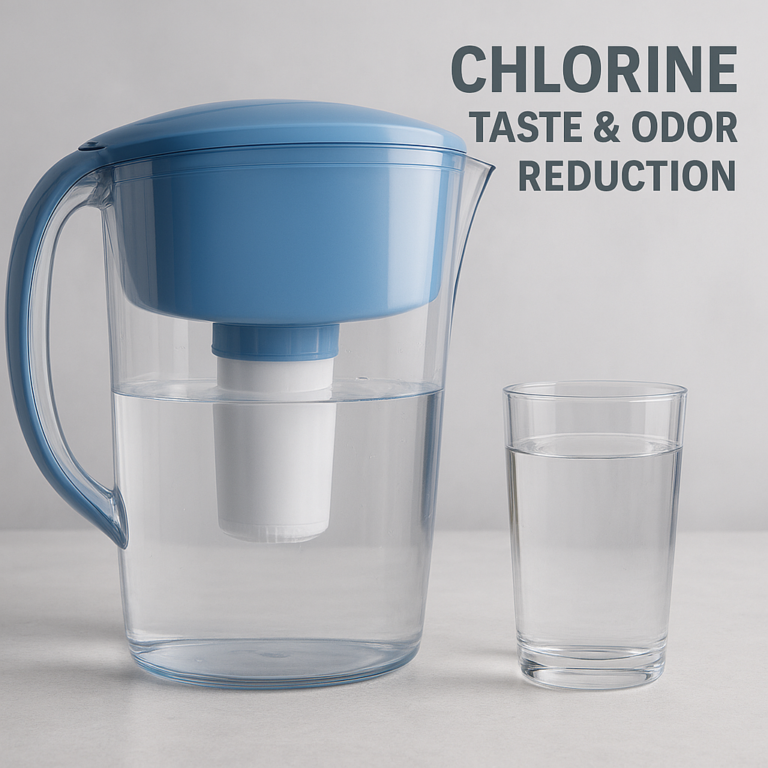
Pitchers are the low-commitment option: fill, wait, pour. They can be convenient for renters and small households, but capacity, fridge space, flow, and cartridge life vary. Check the model’s exact performance claims and replacement schedule.
Countertop and faucet-mounted filters
Countertop systems may connect to a faucet or operate as a self-contained appliance. Faucet-mounted systems can be quick to install but may not fit every faucet or provide the flow you prefer. These options are good candidates when you want a little more capacity than a pitcher without committing to under-sink plumbing.
Under-sink carbon and reverse osmosis systems
Under-sink filters free up counter space and can provide a dedicated drinking-water tap. Carbon systems generally avoid RO wastewater; reverse osmosis systems can reduce more dissolved substances when the exact claims are verified. Ask yourself: Do you need broad dissolved-contaminant treatment, or are taste and a specific certified reduction the real goal?
Whole-house and point-of-entry filters
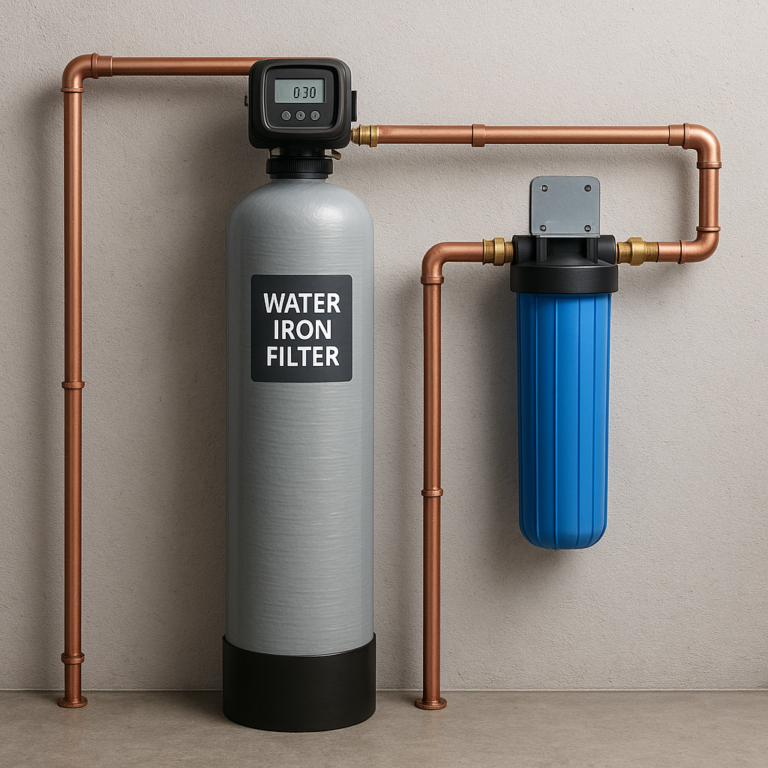
A whole-house filter is installed where water enters the home. It can treat water used at many taps, but may not be the best or only answer for a specific drinking-water issue. Whole-house filtration also does not necessarily soften hard water or disinfect a contaminated private well.
Gravity, refrigerator, shower, and portable filters
These are highly use-specific. Refrigerator filters should match the refrigerator model; shower filters are not drinking-water purifiers; portable filters have limited capacities and claims. For outdoor or emergency use, check whether a device addresses microbes as well as chemicals. The CDC’s emergency water-treatment advice is a safer starting point than assuming every outdoor filter makes unsafe water potable.
Which Contaminants Can Water Filters Reduce?
A filter only reduces the substances it is designed and tested to reduce. Start with a water-quality report or lab test, then find a system whose exact model-specific performance claim matches the result.
| Concern | Useful first step | Filter-selection caution |
|---|---|---|
| Chlorine taste and odor | Check your utility report and taste | Look for a specific chlorine-reduction claim, often under NSF/ANSI 42 |
| Lead | Test or investigate plumbing; use verified treatment | “Lead-free materials” is not the same as lead reduction |
| PFAS | Review local monitoring and verified product claims | Confirm which PFAS compounds are covered and under what conditions |
| Nitrate | Test, especially for private wells | Not all carbon filters reduce nitrate |
| Arsenic | Test and identify arsenic form where relevant | Treatment choice depends on water chemistry and arsenic species |
| Hardness | Measure hardness | A standard carbon filter does not soften water |
| Bacteria or viruses | Test and follow public-health advice | Chemical filters may not disinfect microbes |
Lead, chlorine, PFAS, and other common concerns
For lead, the EPA notes that lead in drinking water often comes from plumbing materials. Flushing and plumbing replacement may be needed alongside treatment. Choose a product specifically certified for lead reduction, and follow cartridge replacement instructions.
For PFAS, check current EPA standards and local monitoring information. The EPA’s PFAS drinking-water information provides regulatory context. A brand’s general “chemical reduction” language is not enough; look for the specific compound and verified performance claim.
Hard water, scale, iron, and sulfur odors
Hardness is mainly associated with calcium and magnesium. A carbon filter may improve some tastes but will not typically soften water. A water softener is a separate treatment technology; the USGS water-hardness guide explains common classifications and household effects.
Iron, manganese, sulfur odors, and sediment may call for tailored treatment. Test first. An undersized or mismatched system can disappoint even when the brand is reputable.
Microbes and emergency water treatment
If water may be contaminated with bacteria, viruses, or parasites, do not assume a standard pitcher or carbon cartridge makes it safe. Follow local health guidance and the CDC’s boil-water and emergency-water recommendations. For private wells, routine testing is essential; the CDC recommends checking wells at least annually and after issues such as flooding or repairs.
NSF/ANSI Certifications and How to Read Filter Claims
A certification is useful when you know what the certification covers. It is not a universal endorsement of every claim, model, or contaminant.
Follow these steps:
- Find the full model number. Similar product names can have different cartridges or certifications.
- Identify your target contaminant. Use a water report, lab test, or utility information.
- Look up the model in a certifier’s directory. Try NSF, WQA, or the relevant certifier.
- Read the specific reduction claim. A standard may cover only one or a few performance claims.
- Check capacity and replacement timing. Performance can decline when a cartridge is overdue.
- Distinguish material safety from filtration. NSF/ANSI/CAN 372 addresses lead content in components; it does not alone establish lead removal.
The NSF consumer guide to drinking-water treatment is especially useful when product pages lean heavily on technical-sounding numbers. Trust the verified listing and the named claim, not the largest number on the box.
Choosing a Water Filter Brand for Your Water Source
Municipal tap water
Start with your utility’s annual Consumer Confidence Report. The EPA explains how to access and understand these reports through its drinking-water information page. Then choose a filter for the concern that matters: taste, lead from household plumbing, or a specific contaminant.
Municipal water is treated, but local water reports and plumbing conditions still matter. If you’re mostly unhappy with chlorine flavor, a certified carbon filter may be enough. If you have a documented contaminant concern, look for a model certified for that substance.
Private wells
Well owners should test before buying. The CDC recommends annual testing for common concerns such as bacteria, nitrates, and other contaminants, with additional tests based on local risks. A filter cannot be chosen sensibly until you know what the well contains.
Do not rely on taste, smell, or clarity alone. Some contaminants have no obvious sensory warning. Contact your local health department or a certified lab for suitable testing.
Apartments, rentals, and travel
For rentals, consider a pitcher, faucet-compatible filter, countertop system, or gravity unit if it matches your water concern. Check lease terms before installing an under-sink system or drilling a faucet hole. For travel, verify the device’s microbial and chemical claims for the water source you expect to encounter.
A gravity filter can be appealing because it needs no power or plumbing, but slow filtration and careful filling are part of the deal. Portability is convenient; it does not guarantee suitability for every source water.
Installation, Filter Replacement, and Maintenance
Good maintenance protects performance. A neglected filter can lose flow, taste unpleasant, or stop delivering the reduction claims you paid for.
A careful installation and upkeep routine
- Read the model-specific manual. Do not assume cartridges from two models in the same product line are interchangeable.
- Check water pressure and connections. RO systems may have specific operating requirements.
- Flush new cartridges as directed. Initial carbon fines or unusual taste may be addressed by proper flushing.
- Mark the install date. Use a phone reminder or label.
- Watch for changes. Slow flow, unusual taste, leaks, or indicator alerts may signal service is due.
- Replace on schedule. Follow the manufacturer’s rated capacity and instructions, especially for health-related claims.
- Sanitize when required. Storage tanks and housings may require periodic cleaning.
| System type | Maintenance to expect |
|---|---|
| Pitcher | Cartridge changes, pitcher washing, filter-life tracking |
| Under-sink carbon | Cartridge replacement, leak checks, occasional housing service |
| Reverse osmosis | Prefilter, postfilter, membrane replacement; tank sanitation on some systems |
| Gravity | Chamber cleaning, cartridge replacement, overflow monitoring |
| Whole-house tank | Sediment prefilter changes and eventual media service |
| Cartridge whole-house | Several cartridge changes, correct sequence, housing checks |
| Shower | Inline cartridge replacement and seal inspection |
If you’re unsure whether a cartridge is due, do not rely on taste alone. A filter may still taste fine after its rated capacity has passed. Consult the manufacturer’s maintenance guidance and, when needed, the NSF treatment overview.
Water Filter Costs, Wastewater, and Environmental Impact
The purchase price is only one part of ownership. Compare replacement filters, electricity, plumbing, service intervals, reject water, and the hassle of obtaining cartridges. We’ve left out specific prices because they change frequently, but the cost structure is worth checking before you buy.
| Cost or impact factor | What to compare |
|---|---|
| Replacement cartridges | Cost per rated gallon, not just cost per cartridge |
| System lifespan | Warranty, replacement parts, and service availability |
| RO wastewater | Published recovery ratio and local operating conditions |
| Electricity | Whether pumps, indicators, or UV features require power |
| Plastic waste | Cartridge materials and manufacturer take-back options |
| Bottled-water substitution | How much single-use packaging the filter may replace |
RO systems commonly discharge some water during treatment; the exact amount varies by design and operating conditions. If you’re comparing home filtration with bottled water, include packaging and transport in the comparison—not just taste.
A reusable pitcher or long-life system can reduce disposable bottle use, but spent cartridges still need disposal. Check whether the brand offers a recycling program and whether it accepts the exact cartridge you use. The greenest option is the one you maintain correctly and keep using. 🌱
Common Water Filter Buying Mistakes to Avoid
- Buying before testing: especially risky with private wells.
- Treating all certifications as equal: verify the exact claim and model.
- Assuming TDS tells you whether water is safe: it does not identify the dissolved substances.
- Confusing NSF/ANSI 372 with lead removal: component lead content and lead reduction are different claims.
- Expecting a shower filter to soften hard water: shower filtration and softening solve different problems.
- Assuming “whole-house” means “removes everything”: treatment is still contaminant-specific.
- Ignoring replacement availability: a discontinued cartridge turns a promising system into a maintenance puzzle.
- Skipping installation instructions: cartridge order and flushing can affect performance.
- Choosing only by taste: flavor matters, but it cannot confirm safety.
- Overbuying filtration: if your only issue is chlorine taste, a complex RO system may be unnecessary.
When a brand makes a broad claim, ask three questions: What exact model? Which contaminant? What independent evidence? If those answers are hard to find, keep shopping.
Recommended Water Filter Brands by Need
| Your situation | Brands or models worth comparing | Why |
|---|---|---|
| Countertop RO without plumbing | AquaTru | Compact countertop format and published third-party certification claims to verify |
| Under-sink RO | Cloud RO, Waterdrop | Dedicated drinking-water systems; compare certification scope and installation needs |
| Pitcher convenience | Brita, Culligan ZeroWater | Easy to set up, but cartridge performance and lifespan differ |
| Gravity filtration | British Berkefeld | No electricity or plumbing; cartridge selection and slow flow matter |
| Whole-house city-water treatment | SpringWell, Kind | Compare flow rate, verified claims, maintenance, and installation |
| Chlorine reduction in a shower | Weddell | A dedicated shower-filter use case; not a softener |
| Broad non-RO under-sink treatment | Clearly Filtered, Aquasana | Compare model-specific contaminant claims and replacement costs |
| Hard water | A dedicated water softener brand/system | Standard carbon filters and shower filters are not substitutes for softening |
| Private well | A treatment system selected after lab testing | Well contaminants vary; testing should drive the choice |
Our confident rule of thumb: for taste, start simple; for a documented contaminant, start with the test result and a verified claim; for whole-home treatment, get the water assessed before sizing a system. That keeps you from paying for filtration you don’t need—or missing the one you do.