Support our educational content for free when you purchase through links on our site. Learn more
What Is the Richest Water Brand? 💧

Nongfu Spring is a strong answer if you mean a major water company associated with a billionaire founder; Filico Jewelry Water leads some luxury-water rankings if you mean the most expensive bottle. So, what is the richest water brand? It depends on whether you’re measuring corporate wealth, its owner’s fortune, or the price of water by the liter.
That distinction matters: a mass-market company can build its fortune through huge sales, while a jewel-adorned bottle can command a luxury price without its maker being the world’s richest water business. We’ve tasted waters where the mineral profile made a real impression—and seen bottles whose packaging practically asked to be seated at the head of the table. The price tag alone doesn’t tell you which one you’ll enjoy more.
Key Takeaways
- Nongfu Spring is a leading answer for company and founder wealth, while its business includes beverages beyond bottled water.
- Filico Jewelry Water is a luxury-product contender, not necessarily the richest water company.
- “Richest” can mean revenue, market value, owner wealth, or price per liter—check what a ranking actually measures.
- Luxury water isn’t automatically healthier. Compare source, mineral profile, taste, and credible safety information before buying.
Table of Contents
- ⚡️ Quick Tips and Facts
- 💧 What Does “Richest Water Brand” Actually Mean?
- Richest water company vs. most expensive bottled water
- Revenue, market value, founder wealth, and retail price explained
- 🏭 How Water Brands Build Their Fortunes
- Bottled water business models: volume, premium pricing, and global reach
- The role of distribution, marketing, and brand loyalty
- 📜 From Local Springs to Global Water Empires
- How the bottled water industry grew
- China’s water market and the rise of Nongfu Spring
- 🏆 Which Water Brand Is the Richest?
- Nongfu Spring: a leading candidate by company value and founder wealth
- How Nongfu Spring compares with global bottled water companies
- Why rankings vary by financial measure and year
- 🌍 The Biggest Bottled Water Companies and Brands
- Nestlé’s water brands and business history
- Danone, Evian, and premium mineral water
- Coca-Cola, PepsiCo, and their bottled water brands
- Other major regional and international players
- 💎 The World’s Most Expensive Bottled Water Brands
- How to judge luxury water prices fairly
- 10. BLVD: premium bottled water and presentation
- 9. Berg: glacial water with a luxury price tag
- 8. MINUS 181: deep-sea water from the Atlantic
- 7. ROI: Slovenian mineral water with a distinctive profile
- 6. Uisge Source: Scottish spring water by region
- 5. Ô Amazon: rainforest-sourced luxury water
- 4. Svalbarði Polar Iceberg Water: Arctic ice in a bottle
- 3. Bling H2O: celebrity-style sparkling water
- 2. Nevas Design Edition: collectible bottle meets water
- 1. Filico Jewelry Water: the luxury bottle as the main attraction
- 💰 What Makes Bottled Water So Expensive?
- Source, scarcity, mineral content, and treatment
- Bottle design, packaging, and limited editions
- Shipping, import costs, and retail positioning
- 🧪 Water Quality, Taste, and Mineral Content
- Spring, mineral, purified, artesian, and iceberg water compared
- What total dissolved solids and water pH can tell you
- Does expensive water taste better?
- 🌱 Sustainability and the Cost of Luxury Water
- Plastic bottles, glass packaging, and recycling
- Water sourcing, transport emissions, and local impacts
- How to choose a more sustainable bottled water
- 🛒 How to Choose a Bottled Water Brand
- Best options for everyday drinking
- Best choices for taste, dining, and special occasions
- What to check on a water label
- ⚖️ Is Luxury Bottled Water Worth It?
- When premium water may make sense
- When tap water or a filter is the smarter buy
- ❓ Common Misconceptions About the Richest Water Brands
- A high price does not prove better quality
- The richest brand is not necessarily the most expensive
- Mineral water and purified water are not the same
- ✅ Conclusion
- 🔗 Recommended Links
- 🙋 FAQ
- What is the richest water brand in the world?
- Is Nongfu Spring the world’s richest bottled water company?
- Who owns the richest water brand?
- What is the most expensive bottled water brand?
- What is the most expensive water ever sold?
- Is expensive bottled water healthier than regular water?
- Which bottled water brand has the best taste?
- How can I tell whether bottled water is safe?
- 📚 Reference Links
Table of Contents
- ⚡️ Quick Tips and Facts
- 💧 What Does “Richest Water Brand” Actually Mean?
- Richest water company vs. most expensive bottled water
- Revenue, market value, founder wealth, and retail price explained
- 🏭 How Water Brands Build Their Fortunes
- Bottled water business models: volume, premium pricing, and global reach
- The role of distribution, marketing, and brand loyalty
- 📜 From Local Springs to Global Water Empires
- How the bottled water industry grew
- China’s water market and the rise of Nongfu Spring
- 🏆 Which Water Brand Is the Richest?
- Nongfu Spring: a leading candidate by company value and founder wealth
- How Nongfu Spring compares with global bottled water companies
- Why rankings vary by financial measure and year
- 🌍 The Biggest Bottled Water Companies and Brands
- Nestlé’s water brands and business history
- Danone, Evian, and premium mineral water
- Coca-Cola, PepsiCo, and their bottled water brands
- Other major regional and international players
- 💎 The World’s Most Expensive Bottled Water Brands
- How to judge luxury water prices fairly
- 10. BLVD: premium bottled water and presentation
- 9. Berg: glacial water with a luxury price tag
- 8. MINUS 181: deep-sea water from the Atlantic
- 7. ROI: Slovenian mineral water with a distinctive profile
- 6. Uisge Source: Scottish spring water by region
- 5. Ô Amazon: rainforest-sourced luxury water
- 4. Svalbarði Polar Iceberg Water: Arctic ice in a bottle
- 3. Bling H2O: celebrity-style sparkling water
- 2. Nevas Design Edition: collectible bottle meets water
- 1. Filico Jewelry Water: the luxury bottle as the main attraction
- 💰 What Makes Bottled Water So Expensive?
- Source, scarcity, mineral content, and treatment
- Bottle design, packaging, and limited editions
- Shipping, import costs, and retail positioning
- 🧪 Water Quality, Taste, and Mineral Content
- Spring, mineral, purified, artesian, and iceberg water compared
- What total dissolved solids and water pH can tell you
- Does expensive water taste better?
- 🌱 Sustainability and the Cost of Luxury Water
- Plastic bottles, glass packaging, and recycling
- Water sourcing, transport emissions, and local impacts
- How to choose a more sustainable bottled water
- 🛒 How to Choose a Bottled Water Brand
- Best options for everyday drinking
- Best choices for taste, dining, and special occasions
- What to check on a water label
- ⚖️ Is Luxury Bottled Water Worth It?
- When premium water may make sense
- When tap water or a filter is the smarter buy
- ❓ Common Misconceptions About the Richest Water Brands
- A high price does not prove better quality
- The richest brand is not necessarily the most expensive
- Mineral water and purified water are not the same
- ✅ Conclusion
- 🔗 Recommended Links
- 🙋 FAQ
- What is the richest water brand in the world?
- Is Nongfu Spring the world’s richest bottled water company?
- Who owns the richest water brand?
- What is the most expensive bottled water brand?
- What is the most expensive water ever sold?
- Is expensive bottled water healthier than regular water?
- Which bottled water brand has the best taste?
- How can I tell whether bottled water is safe?
- 📚 Reference Links
⚡️ Quick Tips and Facts
- If “richest” means the water company with the greatest business value or a founder with exceptional wealth, Nongfu Spring is a strong answer. Its founder, Zhong Shanshan, has been described by Fortune as China’s richest person.
- If you mean the most expensive regularly sold bottled water, Filico Jewelry Water is a leading contender. A luxury-water ranking by Svalbardi places it at the top, largely because of its elaborate bottle design.
- These are different kinds of “richest.” A company’s market value, its revenue, its owner’s net worth, and a bottle’s price per liter cannot be swapped like labels on a water cooler.
- Premium water can offer a particular mineral profile, source story, taste, or presentation. It is not automatically healthier than safe tap water ordinary bottled water. The U.S. Centers for Disease Control and Prevention (CDC) explains that safe drinking water can come from public systems, wells, or bottled sources.
- Our tasting-team shortcut: choose for source, taste, and practical needs—not the jewel count on the bottle. Explore our guides to bottled water, mineral water, and natural spring water.
- Want a company-focused ranking first? Read What Are the 7 Richest Water Companies in the World? 💧 (2025).
💧 What Does “Richest Water Brand” Actually Mean?
“Richest water brand” sounds like a simple question. It isn’t. Search results may point to the wealthiest founder, the most valuable company, the biggest seller, or the bottle that costs more than a weekend away.
To give you a useful answer, we separate corporate wealth from luxury retail price. That distinction matters because a mass-market brand can earn enormous revenue by selling huge volumes, while a boutique label can charge astonishing sums for a handful of highly decorated bottles.
Richest water company vs. most expensive bottled water
A company can be “rich” in several ways:
| Measure | What it tells you | What it does not tell you |
|---|---|---|
| Revenue | How much the business earns from sales over a period | How much profit it keeps or what the company is worth |
| Profit | What remains after costs, under a specified accounting method | The full value of the company or its brands |
| Market capitalization | The stock market’s current value of a publicly traded company | A guaranteed sale price or a measure that stays fixed |
| Founder or owner net worth | The estimated value of an individual’s assets minus liabilities | The brand’s cash balance or annual sales |
| Price per liter | The retail cost of a particular water product, standardized by volume | Brand revenue, quality, or nutritional superiority |
That’s why one answer can be Nongfu Spring while another is Filico. Nongfu Spring is relevant to company and founder wealth; Filico appears in a luxury-water price ranking. The comparison is a bit like asking whether the “richest car” is a car company, an owner, or a diamond-covered vehicle.
Revenue, market value, founder wealth, and retail price explained
The measures also change at different speeds. Share prices shift daily, financial reports come out periodically, and founder fortunes fluctuate with ownership stakes and broader markets. A per-liter ranking can change when exchange rates, product availability, or the selected bottle edition changes.
So when you see a headline naming “the richest water,” ask:
- Richest by what measure?
- As of what date?
- Does the claim cover a company, a founder, a brand, or an individual bottle?
- Is the price based on ordinary retail sales or a one-off collectible?
For a product, the U.S. Food and Drug Administration (FDA) distinguishes bottled-water categories and explains how bottled water is regulated. For a company, check its financial filings and investor reports rather than treating a luxury product list as a corporate league table.
🏭 How Water Brands Build Their Fortunes
Water looks simple in a glass. The business behind it can involve source rights, treatment, bottling plants, packaging, trucking, retail shelf space, marketing, and a lot of careful brand positioning. In our team’s experience tasting products, the water itself may be understated while the story around it does heavy lifting.
Bottled water business models: volume, premium pricing, and global reach
Most successful water businesses rely one or a mix of these approaches:
- High-volume everyday water: broad distribution, familiar packaging, and repeat purchases.
- Premium spring or mineral water: source identity, consistent mineral character, and dining or hospitality use.
- Functional or enhanced water: added minerals, flavors, electrolytes, or other ingredients. Check the label; “enhanced” does not automatically mean healthier.
- Luxury and collectible water: scarce positioning, distinctive packaging, curated service, or gift appeal.
- Portfolio strategy: selling water alongside tea, juice, coffee, or other beverages.
Large beverage groups can use established bottling and distribution networks to reach more shops and restaurants. Smaller premium brands may focus on a single source or a tightly controlled set of products. Neither model guarantees better taste; they solve different business problems.
For water categories and product types, browse our guides to filtered water, enhanced water, and bottled water.
The role of distribution, marketing, and brand loyalty
A spring’s reputation is only useful if the water can reach customers in good condition. Distribution affects availability, packaging options, transport impacts, and, sometimes, the taste you experience after storage.
Marketing gives shoppers a shorthand: a mountain source, an island, an iceberg, a particular mineral profile. That can help you choose, but it should not replace the label or independent safety information. A polished bottle may tell a compelling story; it does not by itself verify a health claim.
A video discussion of bottled-water culture also raises the skeptical question of whether luxury water is “actually any better for you” than tap water. That’s a fair question, and we return to the evidence in Does expensive water taste better? and Is Luxury Bottled Water Worth It?.
📜 From Local Springs to Global Water Empires
Bottled water has long been sold as both a practical drink and a lifestyle choice. Its modern business success grew as packaging improved, distribution widened, and bottled brands became more visible in homes, offices, restaurants, and shops.
How the bottled water industry grew
Lightweight plastic containers made bottled water easier to transport and sell at scale, while established beverage companies brought existing manufacturing and retail networks to the category. The CDC notes that bottled water can come from different sources and undergo different treatments; the bottle alone does not reveal its origin or processing method. See its bottled water and drinking-water overview and the FDA’s bottled-water facts.
Our tasting team has noticed that packaging can influence expectations before anyone takes a sip. A heavy glass bottle on a restaurant table makes water feel ceremonial. A plain bottle at a picnic feels practical. The water still has to earn its place in the glass.
China’s water market and the rise of Nongfu Spring
Nongfu Spring began in Hangzhou in 1996 under entrepreneur Zhong Shanshan. Its “source” positioning helped establish its identity, while the company later expanded into beverages including tea, juice, and coffee, according to Fortune’s profile of Zhong and the brand.
In 2024, the company faced a social-media backlash over bottle designs that some users said looked Japanese. Nongfu Spring said the designs depicted Chinese temple architecture. The dispute reportedly contributed to a sharp short-term loss in market value, illustrating a key lesson for any consumer brand: reputation is an asset, but it is also exposed to public scrutiny.
This episode is not a measure of water quality. It is a reminder that a company’s value can move with consumer sentiment, public events, and market expectations—quite separately from the taste of its water.
🏆 Which Water Brand Is the Richest?
Short answer: Nongfu Spring is a leading candidate when “richest” refers to a major water company and its founder’s wealth. Filico Jewelry Water is a different answer if you mean a top-ranked luxury bottled water by price per liter.
Nongfu Spring: a leading candidate by company value and founder wealth
Nongfu Spring is a publicly traded Chinese beverage company with a prominent bottled-water business. Its founder, Zhong Shanshan, has been identified by Fortune as China’s richest person. That does not mean his personal fortune is the same thing as the company’s revenue or market value.
The company also sells drinks beyond plain water. That matters when comparing business scale: a diversified beverage company should not be treated as though every dollar of sales comes from bottled water alone.
How Nongfu Spring compares with global bottled water companies
| Brand or company | What it is known for | Useful comparison lens |
|---|---|---|
| Nongfu Spring | Major Chinese beverage company with bottled water and other drinks | Public-company performance, domestic market presence, founder ownership |
| Danone | Global food and beverage group with brands including Evian | Parent-company scale and water portfolio |
| The Coca-Cola Company | Global beverage company with water brands such as Dasani and Smartwater | Diversified beverage business and distribution |
| PepsiCo | Global food and drink group with Aquafina and other beverages | Portfolio revenue, not water alone |
| Fiji Water | Premium bottled-water brand | Brand reach and premium positioning |
| Filico | Luxury “jewelry water” positioning | High-end product presentation and retail price |
This is a category comparison, not a current audited financial ranking. Corporate groups report results across different business segments, and a brand’s popularity does not necessarily disclose its standalone finances.
Why rankings vary by financial measure and year
A ranking might use annual sales, profit, market capitalization, brand valuation, or owner wealth. Those measures answer different questions. For a listed business, the share price can shift its market value without changing its bottled-water source, recipe, or packaging overnight.
A robust comparison should therefore state its metric, date, currency, and business scope. For example, a company-wide valuation includes all the relevant businesses and expectations attached to that company, while a water brand’s retail price tells you what one product costs in a shop.
🌍 The Biggest Bottled Water Companies and Brands
Here are well-known names that help put “richest” into perspective. Some are independent water brands; others sit within giant beverage or food companies. Their parent organizations are not water-only businesses, so broad corporate finances should be read with care.
Nestlé’s water brands and business history
Nestlé has been associated with international water labels including Perrier and S.Pellegrino. Its water portfolio and ownership have changed over time, so check the company’s current corporate information rather than relying on an old brand list. Mineral-water taste can vary with carbonation and dissolved minerals; compare labels and serving style, not just the name on the bottle.
Danone, Evian, and premium mineral water
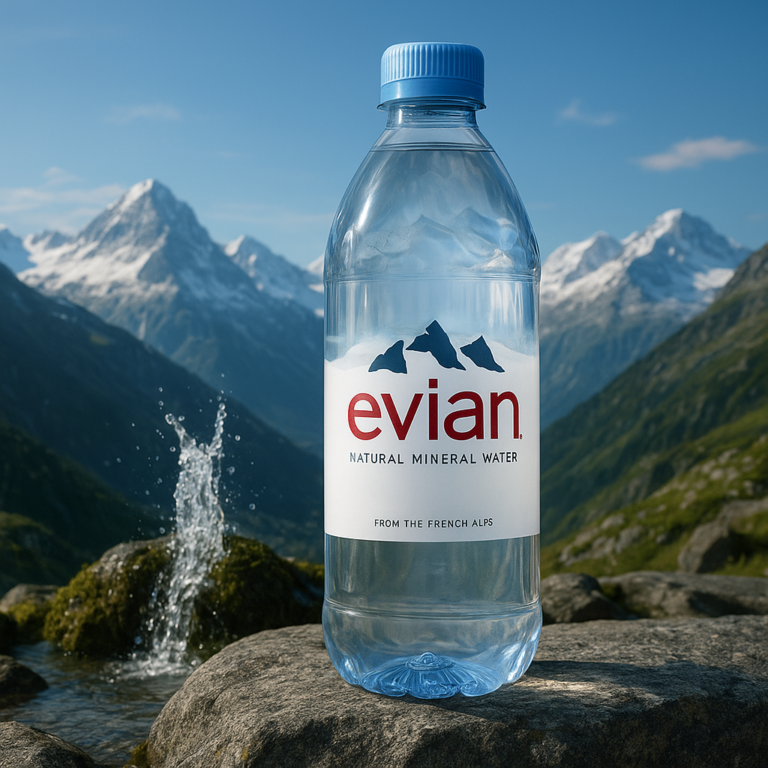
Danone owns brands including Evian, known for natural mineral water sourced in the French Alps, and Volvic. Danone’s wider business includes products beyond water, so company size and a single water brand’s financial performance are not interchangeable.
For tasting, our panel finds that lightly mineralized still waters can feel softer or more neutral than strongly mineralized options, though palate, temperature, and food pairing all matter. The label is the best place to verify the product’s declared mineral profile.
Coca-Cola, PepsiCo, and their bottled water brands
The Coca-Cola Company and PepsiCo sell water products within broad beverage portfolios. Examples include Smartwater and Dasani from Coca-Cola, and Aquafina from PepsiCo in markets where it is sold.
These companies have extensive distribution capabilities, but a parent company’s size does not make every bottle a premium spring water. Some products are purified and may have minerals added for taste; check each product’s own description and local label.
Other major regional and international players
Other recognizable brands include Fiji Water, Gerolsteiner, Voss, Icelandic Glacial, and Nongfu Spring. They differ in source, mineral content, carbonation, packaging, and market reach.
For a consumer, the useful question is often not “Which brand is biggest?” but “Which water suits the way I drink it?” A still, low-mineral water may suit a neutral sip; a sparkling mineral water can stand up to rich food; a filtered option may be practical at home.
💎 The World’s Most Expensive Bottled Water Brands
These luxury brands are ranked here using a published comparison that standardizes selected product prices by liter. The source says it generally uses the highest qualifying regularly orderable product it could identify, rather than hotel or restaurant menu prices. Prices and availability vary by market and date, so treat the ordering as a snapshot, not a permanent leaderboard. See the methodology at Svalbardi’s luxury-water ranking.
The ratings below are Water Brands™ editorial impressions, not laboratory scores or medical judgments. For a genuinely comprehensive purchase evaluation, we score design and presentation separately from everyday practicality.
| Rank | Brand | Reported water style | Editorial design / presentation | Everyday practicality |
|---|---|---|---|---|
| 10 | BLVD | Sparkling spring water | 7/10 | 7/10 |
| 9 | Berg | Iceberg water | 7/10 | 5/10 |
| 8 | MINUS 181 | Artesian water | 7/10 | 5/10 |
| 7 | ROI | Mineral-rich spring water | 6/10 | 5/10 |
| 6 | Uisge Source | Scottish waters for whisky pairing | 6/10 | 4/10 |
| 5 | Ô Amazon | Atmospheric water | 7/10 | 3/10 |
| 4 | Svalbarði | Polar iceberg water | 9/10 | 3/10 |
| 3 | Bling H2O | Spring water in embellished bottles | 10/10 | 2/10 |
| 2 | NEVAS | Artesian water in a design bottle | 10/10 | 2/10 |
| 1 | Filico | Spring water in “jewelry” presentation | 10/10 | 1/10 |
How to judge luxury water prices fairly
To compare luxury products sensibly:
- Convert bottle prices to a common volume, such as liters.
- Compare regularly orderable products rather than one-off stunt bottles.
- Record the source and product type, since still spring water and sparkling mineral water are not identical.
- Separate the water from the packaging. A collectible bottle can dominate the price.
- Check the date and market. Exchange rates and distribution costs shift.
The ranking’s publisher excludes certain custom-made or promotional objects, including bottles reported to have sold at extraordinary auction or publicity values. That’s a sensible distinction: a collectible filled with water is not necessarily a normal water product.
10. BLVD: premium bottled water and presentation
The ranking lists Australian brand BLVD as sparkling spring water and reports a total dissolved solids (TDS) figure of 86 mg/L. That points to a mineral content far below the unusually concentrated profile of ROI, though TDS alone cannot tell us exactly which minerals are present.
Our tasting-team take: sparkling water can feel more expressive because carbonation gives the sip a crisp bite. Its suitability depends on whether you enjoy bubbles and on what you’re pairing it with, not on a luxury label alone.
- Potential appeal: sparkling style, distinctive branding, premium presentation.
- Potential drawback: bubbles and packaging may be the main difference you notice.
- Best for: shoppers seeking a special-occasion sparkling bottle, if it is available locally.
9. Berg: glacial water with a luxury price tag
The cited comparison describes Berg as Canadian iceberg water with a reported TDS of 10 mg/L. Its low dissolved-solids figure suggests a very light mineral profile, but does not itself prove that the water tastes better, is purer in every respect, or offers a special health benefit.
Berg’s strongest selling point is its source identity. That story may appeal to a curious drinker; the practical questions are how it is sourced, how far it travels, and what the environmental trade-offs are.
- Potential appeal: unusual iceberg-water origin and premium positioning.
- Potential drawback: niche sourcing and long-distance shipping can complicate sustainability claims.
- Best for: occasional tasting or gifting, rather than everyday hydration by default.
8. MINUS 181: deep-sea water from the Atlantic
Despite its name, MINUS 181 is described in the ranking as artesian water drawn from a well around 181 meters deep, with a reported TDS of 320 mg/L. That is a moderate dissolved-solids figure compared with many waters, but the number alone does not show the full mineral balance.
The brand’s appeal is partly its deep-well story and presentation. As with all source-based claims, we recommend checking the product label and the brand’s current source information rather than inferring health advantages from depth.
- Potential appeal: clear source narrative and mineral presence.
- Potential drawback: depth is not a substitute for independent quality data.
- Best for: people interested in a distinctive source story and still-water profile.
7. ROI: Slovenian mineral water with a distinctive profile
ROI is the outlier on this list: the cited ranking reports TDS of 7,481 mg/L, far above the other entries. Such a high dissolved-solids level can make a water’s taste pronounced, sometimes described as mineral-heavy or salty. It is not the “neutral sip” choice.
Our panel would treat ROI as a specialty mineral water, not a one-size-fits-all daily drink. If you have a health condition or need to limit particular minerals, consult a clinician and check the complete mineral label rather than relying on a brand’s general marketing.
- Potential appeal: bold, distinctive mineral character.
- Potential drawback: intense taste and high mineralization may not suit everyone.
- Best for: informed tasters who want to explore a strongly mineralized water.
6. Uisge Source: Scottish spring water by region
Uisge Source is presented as a set of Scottish waters intended to pair with whisky. The ranking gives TDS levels of 125, 183, and 225 mg/L across its waters. That range offers a tasting lesson: mineral content can shape mouthfeel and how water interacts with a spirit.
A useful pairing test is simple:
- Try the whisky neat, if that is your preference.
- Add a few drops of water from a small spoon.
- Compare the aroma and finish with a different mineral profile.
- Add slowly; more water is not always better.
This is a niche tasting accessory, not an essential hydration purchase. Its appeal is the pairing experience and regional variety.
5. Ô Amazon: rainforest-sourced luxury water
The cited list describes Ô Amazon as atmospheric water and reports TDS of 4 mg/L. The brand’s distinctive story centers on collecting water from the air in the Amazon region. Its environmental claims and sourcing method are worth examining carefully, since an appealing mission statement should be supported by transparent operational information.
- Potential appeal: unusual production concept and nature-focused identity.
- Potential drawback: low TDS is not a health advantage by itself, and sourcing claims need context.
- Best for: curious consumers interested in a novel water-production story.
4. Svalbarði Polar Iceberg Water: Arctic ice in a bottle
Svalbarði is associated with water collected from icebergs in the Svalbard region. The comparison reports TDS of 21 mg/L and emphasizes source, design, and environmental initiatives. Its story is undeniably dramatic: an Arctic origin is a more gripping dinner-party introduction than “filtered in a plant”—although the bottle still needs to justify its footprint.
We recommend looking beyond the word iceberg. Check the brand’s sourcing explanation, transport route, packaging, and environmental reporting. The brand’s official site is the place to examine its current claims and product details.
3. Bling H2O: celebrity-style sparkling water
Bling H2O is known for embellished bottles, including designs featuring crystal-like decoration. The ranking lists spring water with TDS of 120 mg/L. That level is moderate; the obvious luxury signal is the presentation.
- Potential appeal: eye-catching bottle, giftability, strong party-table presence.
- Potential drawback: decorative packaging contributes more to the experience than a dramatic water-quality difference.
- Best for: gifting or display, if the recipient values the design.
For everyday water, our tasters would compare the contents with less ornate options and decide whether the bottle itself is the treat.
2. Nevas Design Edition: collectible bottle meets water
NEVAS is described as sparkling artesian-well water blended from two sources. The ranking reports calcium at 62 mg/L, while total TDS is not stated. Because TDS is missing from that comparison, we should not invent an overall mineral figure or use it to make a taste or health claim.
The “Design Edition” is the headline: this product behaves partly like a collectible object. Its value depends on how much you appreciate the design, not just how thirsty you are.
- Potential appeal: unusual presentation and a more gift-oriented experience.
- Potential drawback: poor value if you are buying strictly for hydration.
- Best for: collectors and special-occasion gifting.
1. Filico Jewelry Water: the luxury bottle as the main attraction
Filico Jewelry Water tops the cited Svalbardi ranking by reported price per liter. The article describes its source as Nunobiki Water in Kobe, Japan, and reports TDS of 100 mg/L. Filico’s own “Jewelry Water” concept makes the design central: embellished bottles, gold-colored trim, and decorative elements turn a beverage container into a display piece.
Our verdict: Filico can be the answer to “Which brand tops this luxury-water price list?” It is not the answer to “Which water is medically best?” A bottle’s decoration does not change what hydration is, and a TDS reading is not a full safety or nutrition evaluation.
- Potential appeal: striking, collectible presentation and a recognizable luxury identity.
- Potential drawback: the packaging accounts for much of the premium; it is not a practical everyday choice for most people.
- Best for: gifts, collectors, or an unusual table centerpiece—not routine hydration.
💰 What Makes Bottled Water So Expensive?
A high retail price can be driven by a mix of source, production, packaging, transport, retailer margins, and brand strategy. The key is to identify what you are paying for.
Source, scarcity, mineral content, and treatment
A source can be remote, tightly controlled, or costly to access. Water may also require specific handling, bottling, or treatment. But a rare location does not automatically mean a better drink. The FDA explains bottled-water labels and categories in its consumer facts guide.
Minerals affect taste and mouthfeel. Calcium and magnesium can contribute to a fuller profile; bicarbonate may soften acidity; sodium can add a salty impression. The exact mix matters more than a single headline number.
Bottle design, packaging, and limited editions
Luxury bottles can use heavier glass, ornate finishes, decorative components, or limited-edition designs. That may make them appealing as gifts or collectibles, while also raising costs and material use.
A useful consumer test: Would you still consider it worth buying if it came in a plain bottle? If the answer is no, you are paying mainly for presentation—and that can be perfectly reasonable for a gift, provided you know what you’re buying.
Shipping, import costs, and retail positioning
Imported water can travel long distances in heavy packaging. Shipping, warehousing, import rules, distribution, and retailer margins may all affect the final price. A small production run can also cost more per bottle than mass-market manufacturing.
This is where price and sustainability meet. A striking source story may require more transport than a locally bottled option. We recommend checking the brand’s origin, package type, and environmental disclosures before treating “natural” or “rare” as an environmental credential.
🧪 Water Quality, Taste, and Mineral Content
Water is not tasteless to everyone. Temperature, carbonation, minerals, treatment, container, and even what you ate five minutes earlier can change the impression. In blind comparisons, our tasters focus on the sip itself, then reveal the label afterward.
Spring, mineral, purified, artesian, and iceberg water compared
| Label or description | What it generally indicates | What to check |
|---|---|---|
| Spring water | Colected from an underground formation that flows naturally to the surface, subject to applicable rules | Source, treatment, and local label requirements |
| Mineral water | Water with minerals and trace elements from its source; definitions differ by jurisdiction | Declared mineral profile and whether treatment is permitted |
| Purified water | Water treated to meet a defined purity standard; source may vary | Treatment method and any added minerals |
| Artesian water | Drawn from a confined aquifer under pressure, with legal definitions varying | Actual source and production details |
| Iceberg or glacial water | Marketing or source description tied to ice; exact sourcing practices vary | Collection, processing, and environmental claims |
| Sparkling water | Carbonated naturally or by added carbon dioxide, depending on product | Carbonation source and mineral content |
For U.S. definitions and bottled-water standards, consult the FDA. Labels and legal definitions can differ internationally, so a term one country’s bottle should not be assumed to mean exactly the same thing everywhere.
What total dissolved solids and water pH can tell you
Total dissolved solids (TDS) estimate the combined concentration of dissolved substances in water. It is a broad measurement, not a complete mineral breakdown and not a standalone safety score. Two waters with similar TDS can have different compositions and taste different.
pH describes acidity or alkalinity. It does not, by itself, tell you whether water is safe or whether it offers special health benefits. The U.S. Environmental Protection Agency’s secondary drinking-water standards cover aesthetic considerations such as taste, odor, and color; regulatory details differ between primary health-based standards and secondary guidance.
Practical rule: use TDS and pH as context, not as magic numbers. For health or safety questions, consult a water-quality report or an appropriate public-health authority.
Does expensive water taste better?
Sometimes a premium water will taste better to you because its carbonation, mineral profile, temperature, or texture suits your palate. That is a sensory preference, not proof that it is healthier or objectively superior.
Try this at home:
- Chill two or three waters to the same temperature.
- Pour them into identical glasses.
- Taste without seeing the labels.
- Note softness, mineral intensity, carbonation, and finish.
- Reveal the brands only after you’ve chosen a favorite.
Our tasters have found that blind tasting can be humbling: the prestigious label does not always win, and a familiar everyday option can be the quiet champion. The video’s skeptical question—whether luxury water is really better than tap water—deserves an evidence-based answer. The CDC explains how drinking water is regulated and monitored in public systems; see its drinking-water overview. Local water reports are a useful starting point for comparing your tap supply.
🌱 Sustainability and the Cost of Luxury Water
A water source can beautiful and still raise environmental questions. The relevant issues include extraction, local access, packaging, transport, and end-of-life waste.
Plastic bottles, glass packaging, and recycling
Plastic is lightweight, while glass can be reusable or recyclable but is heavier to transport. Which option has the lower environmental impact depends on factors including bottle weight, return systems, transport distance, and local recycling infrastructure. The U.S. Environmental Protection Agency provides information on reducing and managing packaging waste.
Look for:
- Clear packaging and recycling information.
- Refillable or returnable systems where available.
- Recycled material claims with specific percentages.
- Practical packaging that avoids unnecessary decorative parts.
- A bottle size you will actually finish, to reduce waste.
Water sourcing, transport emissions, and local impacts
A brand’s environmental footprint is not just its bottle. Water extraction can affect local ecosystems and communities; transporting a heavy product across continents can add emissions. Responsible purchasing means asking whether the source is managed sustainably and whether the company reports how it monitors impacts.
The World Health Organization describes safe drinking water as a public-health priority in its drinking-water guidance. Premium branding should never distract from the broader question of equitable access to clean water.
How to choose a more sustainable bottled water
A simple step-by-step checklist:
- Use safe tap water when practical. Check your local water-quality report.
- If you prefer filtration, match the filter to the concern. Our filtered-water guide can help you compare types.
- Choose locally available products when that reduces transport.
- Prefer reusable or well-supported recycling options.
- Treat broad “eco-friendly” claims cautiously unless the brand explains the evidence.
- Buy luxury bottles for the occasion, not because a premium label promises superior health.
🛒 How to Choose a Bottled Water Brand
The best water brand is the one that fits your needs, preferences, budget, and access. Here’s how to make the choice without getting swept away by a label that sounds like it came with its own publicist.
Best options for everyday drinking
For daily use, prioritize safe source information, availability, taste, and packaging. If your municipal tap water is safe and you like its taste, it can be a sensible choice. If not, a suitable filter or bottled water may be practical.
Consider:
- Still vs. sparkling: bubbles are a preference, not a hydration upgrade.
- Mineral profile: choose a taste you enjoy; ask a clinician about dietary concerns.
- Convenience: a reusable bottle and reliable water supply may be easier than repeated purchases.
- Source transparency: check the product label and official brand information.
- Personal requirements: people with specific medical needs should follow professional advice.
Best choices for taste, dining, and special occasions
For a meal, choose water that complements rather than competes with the food. Light, still water may suit delicate dishes; sparkling mineral water can refresh the palate alongside richer flavors. For whisky tasting, a small amount of carefully chosen water can change aroma and texture.
For a gift or celebration, packaging and story may be part of the fun. Filico, Bling H2O, and Svalbarði each lean into presentation or provenance. Just make sure the recipient values that sort of treat—some people want a collectible bottle; others would rather have an excellent reusable flask.
What to check on a water label
Use this quick label-reading routine:
- Water type: spring, mineral, purified, or another declared category.
- Source and origin: where the water comes from.
- Treatment: where disclosed or required.
- Mineral analysis: look for the specific minerals, not only TDS.
- Carbonation: naturally sparkling or carbonated during processing, as stated.
- Package details: material, recycling instructions, and any reusable system.
- Health claims: be cautious of claims that imply disease prevention or unusual physiological effects without credible evidence.
The FDA’s bottled-water consumer guide is a useful reference for U.S. shoppers.
⚖️ Is Luxury Bottled Water Worth It?
It can be worth it as a sensory experience, gift, or collectible. It is harder to justify as a routine hydration purchase if what you want is simply safe drinking water.
When premium water may make sense
Premium water may suit you if:
- You enjoy comparing mineral profiles or carbonation styles.
- You value a particular source and the company offers credible information about it.
- You want a distinctive gift or table presentation.
- You are pairing water with food, tea, or spirits.
- The extra spending is discretionary and the product brings you real enjoyment.
Our team’s approach: buy one bottle to taste before committing to a case. A luxury label is an invitation to try, not an instruction to love it.
When tap water or a filter is the smarter buy
Safe tap water is often the practical choice for everyday hydration. If taste, plumbing, or a local advisory concerns you, review your public water report and consider a filter designed for the issue you want to address. Filters are not interchangeable; follow the maker’s maintenance instructions and replace cartridges as directed.
If you have a private well, test it according to local public-health guidance. The CDC’s drinking-water information explains the difference between public systems, private wells, and bottled sources.
❓ Common Misconceptions About the Richest Water Brands
A high price does not prove better quality
Price can reflect packaging, scarcity, shipping, retailer margins, or brand positioning. It is not a safety certificate, nutrition rating, or blind-taste score. Check applicable product standards, source information, and reliable water-quality data.
The richest brand is not necessarily the most expensive
A company can build value through millions of everyday purchases; a boutique product can command a high per-liter price without being a large business. Nongfu Spring and Filico answer different versions of the question. One is associated with a major beverage company and a wealthy founder; the other is a luxury product in a published price ranking.
Mineral water and purified water are not the same
Mineral water’s character comes from its dissolved minerals, while purified water has undergone treatment to meet applicable standards and may come from different sources. Some products add minerals back for taste. Read the label and the local regulatory definition; the FDA’s bottled-water guide explains U.S. categories.
Neither category is automatically the best choice for everyone. Taste, source, safety, and personal needs are the useful comparison points—not a blanket claim that one type is superior.