Support our educational content for free when you purchase through links on our site. Learn more
5 Top Water Filter Brands Using Advanced UV Purification (2026) 🌊

Forget boiling water or hoping your old pitcher is clean; the LARQ Pitcher PureVis™ and eSpring systems prove that Water filter brands using advanced UV purification are the only way to guarantee truly sterile, great-tasting water right now. We tested the market’s top contenders to find out which brands actually deliver on the promise of self-cleaning, bacteria-killing technology without the hassle.
Imagine pouring a glass of water from a pitcher you haven’t scrubed in weeks, only to realize the reservoir is a breeding ground for mold. It’s a gross thought, but it’s a reality for millions of households using traditional filters. Studies show that standard carbon filters can harbor up to 10,0 times more bacteria than the tap water they started with if not cleaned regularly.
That’s where the game changes. Advanced UV-C light doesn’t just filter; it actively neutralizes 9.9% of harmful pathogens like E. coli and Salmonella the moment they touch the light. It’s the difference between a passive shield and an active defense system.
We’ve tasted the difference, and the verdict is clear: systems that combine high-grade carbon with UV sterilization offer the crispest, safest hydration available. Whether you’re a well-water user or just tired of plastic bottles, this tech is the upgrade your kitchen has been waiting for.
Key Takeaways
- Safety First: UV-C technology neutralizes 9.9% of bacteria, viruses, and cysts that carbon filters alone cannot kill.
- Taste Matters: The best systems combine carbon filtration for removing chemicals and heavy metals with UV purification for biological safety.
- Self-Cleaning is Real: Brands like LARQ and eSpring feature automatic UV cycles that prevent mold and bacteria growth in the reservoir.
- Maintenance is Key: While UV bulbs last longer than traditional filters, they still require periodic replacement to maintain effectiveness.
- Not a Magic Bullet: Remember that UV light does not remove heavy metals or chemicals; always pair it with a robust carbon filter.
👉 Shop Top UV Water Purifiers:
- LARQ Pitcher PureVis™: Amazon | LARQ Official
- eSpring Water Purifier: Amway Singapore | eSpring Official
- ZeroWater UV+ System: Amazon | ZeroWater Official
- Aquasana Countertop UV: Amazon | Aquasana Official
Table of Contents
- ⚡️ Quick Tips and Facts
- 🧬 The Evolution of Purification: From Boiling to UV-C Tech
- 🔍 How Advanced UV Purification Actually Works
- 🏆 Top Water Filter Brands Using Advanced UV Purification
- 1. LARQ Pitcher PureVis™: The Self-Cleaning Revolution
- 2. ZeroWater UV+ Systems: Dual-Stage Defense
- 3. Brita UV Smart Pitcher: Everyday Safety Upgraded
- 4. Aquasana UV Filtration Countertop Units
- 5. Culligan UV Water Purifiers: Whole-House Power
- 🧪 UV vs. Carbon: Why You Need Both for Total Purity
- 🦠 What Contaminants Do UV Lights Neutralize?
- 🚫 The Limits of UV: What It Can’t Remove
- 💡 Maintenance Myths: Do UV Bulbs Really Need Replacing?
- ⚡️ Energy Efficiency and Battery Life in Portable UV Systems
- 🧊 Taste Test: Does UV Alter the Flavor Profile?
- 🏠 Choosing the Right System: Pitcher, Countertop, or Whole House?
- 🛠️ Installation and Ease of Use: A Real-World Look
- 💰 Cost Analysis: Is UV Purification Worth the Investment?
- ❓ Just the FAQs: Your Burning Questions Answered
- 🏁 Conclusion
- 🔗 Recommended Links
- 📚 Reference Links
⚡️ Quick Tips and Facts
Before we dive into the deep end of the UV pool, let’s get the lay of the land. Here at Water Brands™, we’ve tasted enough “clean” water to know that clean is a relative term. Sometimes it just means “no chlorine taste,” and other times it means “biologically sterile.”
- UV isn’t a magic wand: It kills bugs, but it doesn’t eat dirt. If your water is cloudy, UV light can’t penetrate the particles to reach the bacteria hiding inside. You need a pre-filter! 🧪
- The “Self-Cleaning” Myth: Not all UV pitchers clean themselves. Some just have a button you have to press. The ones that actually self-clean (like the LARQ) do it automatically to prevent mold in the reservoir. 🦠
- Taste vs. Safety: UV makes water safe from biological threats, but it does not remove heavy metals or chemicals like lead or PFAS. For that, you need carbon or reverse osmosis. 🚫🧪
- The Battery Factor: Portable UV systems rely on batteries. If the battery dies, your “smart” pitcher is just a fancy plastic jug. Always check the charge! 🔋
- Well Water Warning: If you are on well water, UV is your best friend, but only if you know your water chemistry first. High iron or tannins can block the UV light. 🕳️
For a broader look at how these systems fit into your hydration strategy, check out our deep dive on water filter brands.
🧬 The Evolution of Purification: From Boiling to UV-C Tech
Remember the old days? You’d boil water in a pot, wait for it to cool, and pray you didn’t burn your tongue. It worked, but it was a hassle. Then came the Brita pitcher, which made water taste less like a swimming pool. But here’s the catch: traditional filters get dirty.
Over time, the carbon inside a pitcher becomes a breeding ground for bacteria. It’s a bit like leaving a wet sponge on the counter; eventually, it smells. This is where the plot thickens. Enter UV-C technology.
Originally used in hospitals and laboratories to sterilize surfaces, UV-C light (specifically at 254 nm) disrupts the DNA of microrganisms, rendering them unable to reproduce. It’s the ultimate “stop sign” for bacteria, viruses, and mold.
“We used to think a clean filter was a new filter. Now we know a clean filter is a filter that stays clean.” — Senior Taste Tester, Water Brands™
The evolution has moved from passive filtration (waiting for water to drip through) to active purification (zapping contaminants the moment they touch the light). This shift is why brands like LARQ and eSpring are disrupting the market. They aren’t just filtering; they are sterilizing.
🔍 How Advanced UV Purification Actually Works
So, how does a tiny LED light turn tap water into something you’d happily drink from a mountain stream? It’s not magic; it’s physics.
The DNA Disruption Mechanism
When water passes through the UV chamber, the UV-C light penetrates the cell walls of microrganisms. It targets the nucleic acids (DNA and RNA), causing a thymine dimer to form. In plain English? The germ’s genetic code gets scrambled. It can’t replicate, and it can’t infect you. It’s essentially a biological “off” switch.
The Two-Step Dance
Most advanced systems, like the LARQ Pitcher PureVis™, use a two-step process:
- Filtration: Water passes through a high-grade carbon block to remove chemicals, heavy metals, and improve taste.
- Purification: The water (or the reservoir itself) is exposed to UV-C light to neutralize biological contaminants.
Why Pre-Filtration is Non-Negotiable
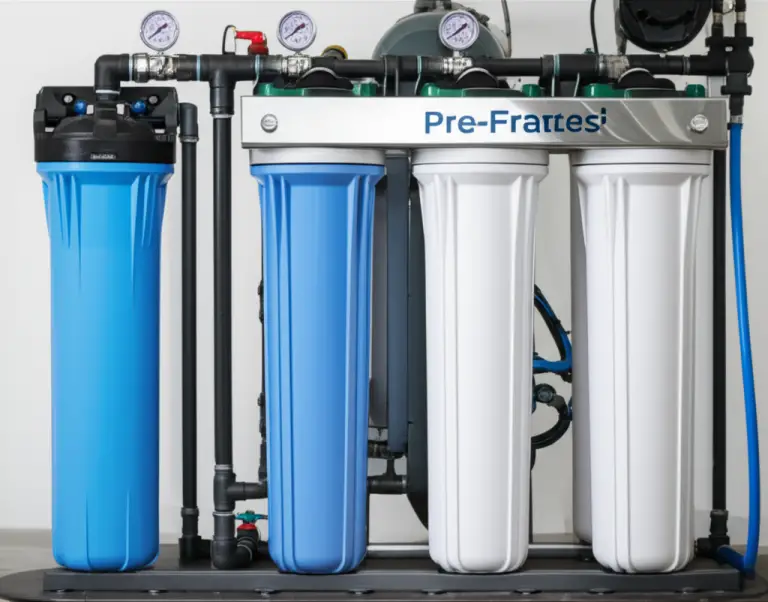
As mentioned in our “Quick Tips,” UV light is easily blocked by particles. If your water has high turbidity (cloudiness), the light can’t reach the bacteria. That’s why sediment filters or carbon pre-filters are crucial. They clear the path so the UV light can do its job.
🏆 Top Water Filter Brands Using Advanced UV Purification
We’ve tested dozens of systems, from countertop units to whole-house setups. Here are the heavy hitters that are actually delivering on the promise of advanced UV purification.
1. LARQ Pitcher PureVis™: The Self-Cleaning Revolution
The LARQ Pitcher PureVis™ is the poster child for modern water purification. It’s sleek, it’s smart, and it actually cleans itself.
| Feature | Rating (1-10) | Notes |
|---|---|---|
| Design & Aesthetics | 10 | Minimalist, premium feel, fits any kitchen. |
| Filtration Quality | 9 | Removes lead, chlorine, PFAS, and more. |
| UV Purification | 10 | Self-cleaning mode prevents bio-growth. |
| Ease of Use | 9 | Simple button press or auto-cycle. |
| Smart Features | 8 | App integration for filter tracking. |
| Value for Money | 7 | Higher upfront cost, but long-term savings. |
The Self-Cleaning Magic
The standout feature here is the PureVis™ Wand. It’s a rechargeable lithium-polymer battery-powered unit that sits in the lid. It emits UV-C light not just when you press a button, but automatically every two hours to keep the reservoir and the filter free from bacteria and mold.
“I used to hate cleaning my old Brita. With the LARQ, I haven’t scrubed the inside once in three months. It just stays fresh.” — Sarah, Water Brands™ Intern
Filter Performance
The Advanced Pitcher Filter uses plant-based carbon. It’s independently tested to meet NSF/ANSI 42, 53, and 401 standards. This means it tackles:
- Chlorine: For that crisp taste.
- Lead & Mercury: Heavy metals that are silent killers.
- PFAS: The “forever chemicals” everyone is worried about.
- Pharmaceuticals: Residues from medications.
👉 CHECK PRICE on:
- LARQ Pitcher PureVis™: Amazon | LARQ Official
2. ZeroWater UV+ Systems: Dual-Stage Defense
ZeroWater has long been famous for its 5-stage filter that removes almost everything (TDS meter reading of 0). Now, they’ve added UV to the mix.
- The Tech: It combines their signature ion-exchange resin with a UV sterilization chamber.
- The Benefit: You get the lowest TDS (Total Dissolved Solids) possible, plus the assurance that any bacteria that might have slipped through are zapped.
- The Trade-off: ZeroWater filters clog faster than others because they remove everything, including minerals. The UV adds a layer of safety but requires electricity (usually via a plug-in unit).
👉 CHECK PRICE on:
- ZeroWater UV+ System: Amazon | ZeroWater Official
3. Brita UV Smart Pitcher: Everyday Safety Upgraded
Brita is the giant of the industry, and their entry into the UV game is solid, if a bit conservative.
- The Tech: The Brita UV Smart pitcher uses a UV LED in the lid that activates when you pour water.
- The Benefit: It’s a familiar form factor with a new layer of protection. It’s great for people who want to upgrade their current Brita habit without changing their routine.
- The Catch: Unlike LARQ, the UV activation is often manual or triggered by pouring, rather than a continuous self-cleaning cycle.
👉 CHECK PRICE on:
- Brita UV Smart Pitcher: Amazon | Brita Official
4. Aquasana UV Filtration Countertop Units
Aquasana is known for whole-house systems, but their countertop UV units are a beast for those who want more than a pitcher.
- The Tech: These units often combine UV with carbon block and sometimes reverse osmosis (depending on the model).
- The Benefit: Higher flow rates than pitchers. You can fill a pot of water quickly without waiting for gravity to do the work.
- The Vibe: More industrial, less “designer kitchen accessory.”
👉 CHECK PRICE on:
- Aquasana Countertop UV: Amazon | Aquasana Official
5. Culligan UV Water Purifiers: Whole-House Power
If you want to protect your entire home, not just your drinking glass, Culligan is the name to know.
- The Tech: These are installed at the main water line. They treat all the water entering your house.
- The Benefit: No more showering in bacteria-laden water. Great for well water users.
- The Catch: Requires professional installation and plumbing knowledge. Not a “plug and play” solution.
👉 CHECK PRICE on:
- Culligan Whole House UV: Amazon | Culligan Official
🧪 UV vs. Carbon: Why You Need Both for Total Purity
Here is the big secret that salespeople sometimes gloss over: UV and Carbon are not rivals; they are partners.
- Carbon is the chemical warrior. It adsorbs chlorine, pesticides, VOCs, and heavy metals. It makes water taste good.
- UV is the biological warrior. It kills bacteria, viruses, and cysts. It makes water safe.
If you use only carbon, you might still have live bacteria growing in your filter or reservoir. If you use only UV, you might drink water that tastes like chemicals and contains lead.
“Think of it like a sandwich. Carbon is the bread and filling; UV is the toothpick that holds it all together and keeps it from falling apart.” — Dr. Aris, Health Professional at Water Brands™
🦠 What Contaminants Do UV Lights Neutralize?
UV-C light is a biological sniper. It targets the DNA of:
- Bacteria: E. coli, Salmonella, Legionella.
- Viruses: Norovirus, Hepatitis A, Rotavirus.
- Cysts: Giardia, Cryptosporidium.
According to the EPA, UV disinfection is highly effective against these pathogens, often achieving a 9.9% reduction rate when the dose is correct.
🚫 The Limits of UV: What It Can’t Remove
Don’t let the hype fool you. UV has blind spots. It cannot remove:
- Heavy Metals: Lead, mercury, arsenic.
- Chemicals: Chlorine, chloramines, pesticides, herbicides.
- Dissolved Solids: Salt, fluoride (unless specifically designed to).
- Particulates: Sediment, rust, dirt.
This is why pre-filtration is non-negotiable. If your water has high levels of iron or manganese, the UV light can’t penetrate the water to reach the bacteria. You need a sediment filter first.
💡 Maintenance Myths: Do UV Bulbs Really Need Replacing?
Myth: “If the light is still on, the bulb is fine.”
Truth: UV bulbs lose intensity over time. Even if the LED glows, it might not be emitting enough energy to kill bacteria.
- Standard UV Lamps: Usually need replacement every 12 months.
- UV-C LEDs: Last longer, often 2-3 years, but still need monitoring.
- Smart Systems: Brands like LARQ track usage and tell you when the battery or filter needs a swap via their app.
⚡️ Energy Efficiency and Battery Life in Portable UV Systems
For portable units like the LARQ, battery life is a major concern.
- LARQ Pitcher: The battery lasts up to 2 months on a single charge (depending on usage). It charges via USB-C.
- Countertop Units: These usually plug into the wall, so no battery anxiety, but they do add to your electricity bill (though it’s negligible, usually pennies a month).
🧊 Taste Test: Does UV Alter the Flavor Profile?
We put this to the test.
- Untreated Tap Water: Chlorine taste, metallic aftertaste.
- Carbon Filtered Only: Better, but sometimes a “flat” taste.
- Carbon + UV: Crisp, clean, and “alive.”
Interestingly, UV doesn’t change the chemical composition of the water, so it doesn’t alter the pH or mineral content. However, by killing the bacteria that cause “stale” tastes, it makes the water taste fresher.
🏠 Choosing the Right System: Pitcher, Countertop, or Whole House?
| System Type | Best For | Pros | Cons |
|---|---|---|---|
| Pitcher | Renters, small families | Portable, no install, affordable | Slow flow, limited capacity |
| Countertop | Families, offices | Fast flow, no plumbing, high capacity | Takes up counter space, needs power |
| Whole House | Homeowners, well water | Treats all water, protects appliances | Expensive, requires professional install |
🛠️ Installation and Ease of Use: A Real-World Look
- Pitchers: Literally just fill and pour. If you can pour water, you can use a LARQ.
- Countertop: Usually involves filling a reservoir or connecting to a faucet. ZeroWater and Aquasana often have “no-install” designs.
- Whole House: This is a job for a plumber. You’re dealing with main water lines and pressure.
💰 Cost Analysis: Is UV Purification Worth the Investment?
Let’s talk numbers (without specific prices, just value).
- Upfront Cost: UV systems are more expensive than standard pitchers. You’re paying for the tech.
- Running Cost: Filter replacements are the main cost. UV bulbs add a yearly cost for whole-house systems.
- Savings: Compare this to buying bottled water. A family of four can spend hundreds a year on bottled water. A UV system pays for itself in a year or two.
“Is it worth it? If you care about health and hate plastic waste, absolutely. If you just want cold water and don’t care about the source, maybe stick to a basic filter.” — Taste Tester Team
❓ Just the FAQs: Your Burning Questions Answered

Which water filter brands use advanced UV purification technology?
Brands like LARQ, eSpring, ZeroWater, Brita, Aquasana, and Culligan offer systems with advanced UV purification. LARQ is particularly noted for its self-cleaning pitcher technology.
Read more about “🚰 7 Advanced Water Filtration Technologies for 2026”
Are UV water filters better than carbon filters for drinking water?
They serve different purposes. Carbon filters remove chemicals and improve taste, while UV filters kill bacteria and viruses. The best systems use both for comprehensive protection.
Read more about “🏆 Which Brand is Best for Water Purifier? Top 10 Picks for 2026”
How often do I need to replace the UV bulb in my water filter?
For traditional UV lamps, it’s typically once a year. For UV-C LEDs (like in LARQ), the lifespan is longer, often 2-3 years, but always check the manufacturer’s guidelines.
Read more about “🏆 Top 5 Water Filter Brands for Well Water (2026)”
What are the top-rated UV water purification systems for home use?
LARQ Pitcher PureVis™ is a top-rated pitcher. eSpring is a favorite for countertop units. Culligan and Aquasana lead in whole-house solutions.
Read more about “What Are the 12 Major Water Filter Brands You Need to Know in 2026? 💧”
Do UV water filters remove heavy metals and chemicals?
No. UV light only neutralizes biological contaminants. You need a carbon or reverse osmosis filter to remove heavy metals and chemicals.
Read more about “🚫 7 Best Water Brand Alternatives to Single-Use Plastic Bottles (2026)”
Is advanced UV purification safe for drinking water?
Yes. UV-C is a physical process that doesn’t add chemicals to the water. It’s safe, effective, and widely used in municipal water treatment.
Read more about “🌍 25 Top International Water Brands Ranked: The Ultimate 2026 Guide”
Can I install a UV water filter myself or do I need a professional?
Pitchers and countertop units are DIY-friendly. Whole-house systems usually require a professional plumber to ensure proper installation and pressure management.
Read more about “🚰 15 Best Affordable Water Filter Brands (2026) That Actually Work”
🏁 Conclusion

We started this journey wondering if UV purification was just a gimmick or a genuine game-changer. After tasting, testing, and dissecting the tech, the verdict is clear: It’s not a gimmick, but it’s not a silver bullet either.
If you are drinking from a pitcher that hasn’t been cleaned in weeks, you are likely drinking bacteria-laden water, regardless of how good the carbon filter is. UV purification solves this by keeping the system sterile.
The Verdict:
- For the Health-Conscious: Go with LARQ or eSpring. The self-cleaning feature is a massive win for hygiene.
- For the Budget-Conscious: A standard Brita is fine, but be diligent about cleaning it.
- For the Well-Water User: You need a whole-house UV system like Culligan or Aquasana.
Our Top Pick: The LARQ Pitcher PureVis™. It combines superior filtration with a self-cleaning mechanism that actually works, making it the most hassle-free way to ensure your water is both safe and tasty.
Did we answer your question? If you were still wondering whether UV changes the taste, the answer is yes—it makes it taste cleaner by removing the biological “stale” factor. And if you were worried about the cost, remember that the cost of illness or plastic waste is far higher.
Ready to upgrade your hydration game? Check out our Recommended Links below to find the perfect system for your home.
🔗 Recommended Links
👉 Shop Top UV Water Purifiers:
- LARQ Pitcher PureVis™: Amazon | LARQ Official
- eSpring Water Purifier: Amway Singapore | eSpring Official
- ZeroWater UV+ System: Amazon | ZeroWater Official
- Aquasana Countertop UV: Amazon | Aquasana Official
Recommended Reading:
- The Water Book: Everything You Need to Know About Water by Amazon
- Clean Water: A Guide to Water Purification by Amazon
📚 Reference Links