Support our educational content for free when you purchase through links on our site. Learn more
8 Water Filter Brands for Chlorine Taste & Odor 💧

The best water filter brands for chlorine taste and odor reduction are the ones with a verified claim for your specific disinfectant—usually a well-matched activated-carbon filter for free chlorine. Before choosing, check your water utility’s report: if it uses chloramine, you’ll need a filter that specifically addresses chloramine, not just chlorine.
We’ve tasted tap water that smelled like someone had moved a swimming pool into the kitchen. A pitcher filter can be a straightforward fix for drinking water; if the smell bothers you at several taps or in the shower, an under-sink or whole-house system may make more sense.
Our picks include pitcher, countertop, under-sink, shower, and whole-house options, from Clearly Filtered and Culligan to SpringWell and Waterdrop. The deciding detail isn’t the boldest “removes contaminants” claim—it’s whether the exact model and replacement filter back up the reduction you need.
Key Takeaways
- Start with your water report. Find out whether your utility uses chlorine or chloramine before buying.
- Choose a filter with a specific, verifiable claim. Check the exact model in a certification directory; a chlorine taste-and-odor claim does not prove reduction of lead, PFAS, or other contaminants.
- Match the system to the problem. Pitchers suit simple drinking-water needs; under-sink filters offer kitchen convenience; whole-house systems make more sense when the issue affects multiple fixtures.
- Maintain the filter. Flush new cartridges as directed and replace them on schedule to help preserve performance and taste.
👉 Shop the featured water filter brands:
- AquaTru Carafe: Amazon | AquaTru Official
- Waterdrop G3 P800: Amazon | Waterdrop Official
- Clearly Filtered: Pitcher on Amazon | Under-sink system
- Culligan MaxClear: Amazon | Culligan Official
- SpringWell CF: Amazon | SpringWell Official
Table of Contents
- ⚡ Quick Tips and Facts: Reducing Chlorine Taste and Odor
- 🧭 Why Tap Water Can Taste or Smell Like Chlorine
- Chlorine vs. chloramine: What’s in your drinking water?
- When a chlorine smell may signal a plumbing or water-quality issue
- 🔬 How We Evaluate Water Filter Brands for Chlorine Reduction
- Taste tests, certifications, and performance data
- What NSF/ANSI Standards 42, 53, and 401 mean
- 🏆 8 Water Filter Picks for Chlorine Taste and Odor
- 1. AquaTru Carafe: A countertop reverse osmosis option
- 2. Cloud RO: A countertop purifier with remineralization
- 3. Waterdrop G3 P800: An under-sink reverse osmosis system
- 4. Clearly Filtered Under Sink: Multi-contaminant filtration
- 5. Clearly Filtered Pitcher: A simple pitcher filter
- 6. Weddell Duo: A compact under-sink filter
- 7. Culligan MaxClear: A whole-house filtration choice
- 8. SpringWell CF: Whole-home carbon filtration
- 🧪 Which Filter Type Works Best for Chlorine Taste and Smell?
- Pitcher and refrigerator filters
- Countertop and faucet-mounted filters
- Under-sink carbon and reverse osmosis systems
- Whole-house water filters
- 📊 Compare Water Filter Brands at a Glance
- Filter type, chlorine reduction, and installation
- Replacement filters, capacity, and maintenance
- 🛒 How to Choose a Water Filter for Chlorine Taste and Odor
- Check your utility’s water quality report
- Match the filter to chlorine or chloramine
- Look for independent certifications and verified claims
- Consider household size, flow rate, and filter capacity
- 🧰 Installation, Filter Changes, and Everyday Maintenance
- When to replace a carbon filter
- How to flush a new filter and prevent stale-water taste
- 💧 Chlorine Removal vs. Other Drinking Water Concerns
- Does a chlorine filter remove lead, PFAS, or sediment?
- Can filtered water still contain disinfectant byproducts?
- Should you remove all chlorine from drinking water?
- 🍋 Other Ways to Improve Chlorinated Tap Water’s Taste
- ✅ Quick Tips for Better-Tasting Filtered Water
- Conclusion
- Recommended Links
- FAQ
- What is the best water filter for chlorine taste and odor?
- Do Brita filters remove chlorine taste?
- Does activated carbon remove chlorine or chloramine?
- How long should tap water sit to reduce chlorine smell?
- Can boiling water remove chlorine taste?
- Why does filtered water still taste like chlorine?
- How often should I replace a chlorine water filter?
- Reference Links
⚡ Quick Tips and Facts: Reducing Chlorine Taste and Odor
If chlorine taste is your only complaint, a well-matched activated-carbon filter is usually the simplest place to start. For a broader look at options, see our guide to water filter brands and browse our filtered water guides.
| Quick question | Short answer |
|---|---|
| What filter media usually reduces chlorine taste? | Activated carbon, provided the exact filter is rated or certified for chlorine taste and odor reduction. |
| What if my utility uses chloramine? | Look for a system that specifically claims or is independently certified for chloramine reduction. Free-chlorine claims aren’t interchangeable. |
| Do I need reverse osmosis just for chlorine taste? | Usually no. RO can make sense when you have other specific dissolved-contaminant concerns, but it adds complexity beyond a basic taste complaint. |
| What should I verify before buying? | The exact model, replacement cartridge, certification, capacity, and performance claim. |
| Where should treatment happen? | At the smallest location that solves your problem: a pitcher for drinking water, an under-sink filter for kitchen water, or whole-house treatment if the concern extends to multiple fixtures. |
A taste improvement is not proof that a filter removes every contaminant. Read the performance data for the specific reduction you need, and check your utility’s annual water report. The EPA explains how Consumer Confidence Reports describe local drinking-water quality.
🧭 Why Tap Water Can Taste or Smell Like Chlorine
Municipal water providers commonly use disinfectants to control harmful microorganisms as water travels through the distribution system. That’s a public-health measure, not evidence that your tap water is unsafe. Still, disinfectant can leave a noticeable swimming-pool-like flavor or smell, and your nose may object before your water does anything dangerous. The CDC explains the role of drinking-water disinfection.
Chlorine vs. chloramine: What’s in your drinking water?
Free chlorine and chloramine are different disinfectants, so choosing the right filter starts with knowing which one your utility uses.
| Disinfectant | What it is | What to look for in a filter |
|---|---|---|
| Free chlorine | Chlorine used as a drinking-water disinfectant | A filter with a verified chlorine taste and odor reduction claim |
| Chloramine | A disinfectant made by combining chlorine and ammonia | A product that specifically addresses chloramine, often through suitable catalytic carbon or another validated treatment method |
Check the latest Consumer Confidence Report from your water supplier, or contact the utility if the report is unclear. You can also review the EPA’s drinking-water data and resources.
When a chlorine smell may signal a plumbing or water-quality issue
A mild disinfectant smell can vary by location, season, and water use. But a suden, strong, or unusual change deserves a closer look.
- Compare cold water from more than one tap.
- Check whether the smell comes from hot water only; that may point to a plumbing or water-heater issue rather than the incoming supply.
- Ask neighbors whether they notice the same change.
- Contact your utility if the change is widespread, persistent, or accompanied by unusual color, cloudiness, or taste.
- If you use a private well, remember that municipal disinfectant reports do not apply; testing should be based on your well and local risks. The CDC’s private-well guidance explains why routine testing matters.
Don’t use odor alone to diagnose safety. Taste and smell can be useful clues, but laboratory testing and utility reporting answer different questions.
🔬 How We Evaluate Water Filter Brands for Chlorine Reduction
At Water Brands™, our taste testers care about the obvious question: does the water taste less like a pool? Our health professionals add the less glamorous, more useful questions: What exact reduction is claimed? Is that claim independently verified? How much water can the cartridge treat? And what happens when it’s overdue for a change?
We compare the products’ stated capabilities, certification information, installation demands, maintenance, and suitability for different homes. We also consider outside testing, but one test in one home is not a universal guarantee. Water chemistry, flow rate, cartridge condition, and incoming disinfectant all matter.
Taste tests, certifications, and performance data
A blind taste test can tell us whether the flavor improved. It cannot establish whether a filter removes lead, PFAS, or a disinfectant byproduct. Likewise, a lab result for one contaminant does not automatically validate every marketing claim on a product page.
When evaluating a model, we look for:
- The exact model and cartridge covered by a test or certification.
- The named contaminant or aesthetic claim, such as free chlorine taste and odor.
- A recognized independent certifier’s listing, where available.
- Capacity and replacement instructions that reflect real use, not just a dramatic maximum.
- Clear limits: a chlorine claim does not prove chloramine reduction or broad contaminant removal.
For an example of why claims deserve careful checking, the first YouTube video embedded above, “I tested a Berkey…AGAIN!” follows Water Filter Guru’s retest of Berkey fluoride filters using a certified third-party laboratory. It is about fluoride-filter testing rather than chlorine reduction, but it offers a useful reminder: test the specific filter and claim you care about.
What NSF/ANSI Standards 42, 53, and 401 mean
These standards cover different performance areas. A standard number by itself is not a magic stamp for every contaminant.
| Standard | General focus | What it does not automatically mean |
|---|---|---|
| NSF/ANSI 42 | Aesthetic effects, including listed chlorine taste and odor claims | It does not prove removal of every health-related contaminant |
| NSF/ANSI 53 | Health-effect contaminant reduction claims, when specifically listed | It does not mean every product certified to the standard reduces the same contaminants |
| NSF/ANSI 401 | Certain emerging or incidental compounds, when specifically listed | It does not establish universal removal of all emerging contaminants |
| NSF/ANSI 58 | Reverse-osmosis system performance, including claims such as TDS reduction | It does not automatically establish chlorine reduction unless that claim is also listed |
| NSF/ANSI 177 | Shower-filter performance for free available chlorine reduction | It does not certify drinking-water treatment |
Before buying, search the exact model in the certifier’s database. The NSF consumer guide explains how to check certification claims, and WQA’s certification directory lets consumers search certified products.
🏆 8 Water Filter Picks for Chlorine Taste and Odor
The best fit depends on where the taste bothers you and whether chlorine is your only concern. A pitcher can be perfectly sensible for one person’s drinking water; it’s a funny choice if you’re trying to fill a stockpot every evening. We’ve included countertop, under-sink, and whole-house approaches, but verify current model-specific claims and replacement cartridges before purchasing.
1. AquaTru Carafe: A countertop reverse osmosis option
The AquaTru Carafe combines carbon filtration with reverse osmosis in a countertop unit and stores treated water in a glass carafe. It is a strong fit for people who want broader filtration without installing equipment under the sink.
What stands out
- Countertop setup avoids plumbing modifications.
- The glass carafe is appealing if you prefer storing drinking water outside a plastic reservoir.
- Carbon and RO stages offer more than a basic chlorine-taste solution.
Trade-offs
- It needs counter space and an electrical outlet.
- Filtration is batch-based: you wait for the unit to process water and then refill the carafe.
- RO is more treatment than many people need when chlorine taste is the only complaint.
Independent reviewers have reported chlorine reduction in their own testing, but testing results vary by test method and water source. Check AquaTru’s current certification and performance information before relying on a specific contaminant claim.
👉 Shop AquaTru Carafe: Amazon | AquaTru Official
2. Cloud RO: A countertop purifier with remineralization
The Cloud RO is an under-sink reverse-osmosis system, despite its countertop-free look: installation generally involves a dedicated faucet and drain connection. Its carbon stages address taste concerns while RO provides broader dissolved-contaminant treatment.
What stands out
- Useful if chlorine taste is one concern among several.
- A dedicated faucet keeps treated water available on demand.
- Remineralization is designed to add minerals back after RO treatment.
Trade-offs
- Requires cabinet space and installation work.
- A certification for one performance area, such as TDS reduction, is not the same as a listed chlorine-reduction claim.
- Ongoing cartridge replacement and RO wastewater should factor into your decision.
Cloud’s current product and certification details should be checked for the exact model and claims. If you only want chlorine taste reduced, a certified carbon filter may be a more proportionate choice.
👉 Shop Cloud RO: Amazon search | Cloud Official
3. Waterdrop G3 P800: An under-sink reverse osmosis system
The Waterdrop G3 P800 is a tankless under-sink RO system with a dedicated faucet. It suits households that want broader treatment and can accommodate plumbing work.
What stands out
- On-demand filtered water without a large conventional storage tank.
- A dedicated faucet keeps treated water separate from the regular kitchen tap.
- Some versions include monitoring features that can help track system status.
Trade-offs
- Installation is more involved than replacing a pitcher cartridge; expect a drain connection and faucet work.
- RO adds maintenance and water-use considerations.
- Features and certifications can differ by model or revision, so check the exact listing.
The NSF certification database and Waterdrop’s product documentation are better sources for specific claims than a broad “removes contaminants” headline.
👉 Shop Waterdrop G3 P800: Amazon | Waterdrop Official
4. Clearly Filtered Under Sink: Multi-contaminant filtration
The Clearly Filtered Under Sink system is a non-RO option for people who want a plumbed kitchen filter without installing a separate RO drain line. Its appeal is a broader filtration approach, but each contaminant claim should be checked against the exact model’s test or certification documentation.
What stands out
- Under-sink placement keeps the counter clear.
- A non-RO setup avoids RO wastewater.
- It can suit households seeking more than basic taste improvement.
Trade-offs
- Installation and cartridge costs are higher than those of a simple pitcher.
- Broad contaminant-reduction claims need careful, model-specific verification.
- A chlorine reduction claim does not establish chloramine reduction unless that is stated and supported.
Review the manufacturer’s performance information and the relevant certifier’s listing before purchase.
👉 Shop Clearly Filtered Under Sink: Amazon search | Clearly Filtered Official
5. Clearly Filtered Pitcher: A simple pitcher filter
The Clearly Filtered Water Pitcher is a no-install option for renters, dorm rooms, and smaller households. It is easy to start using, though gravity filtration means you’ll need to plan ahead for larger pours.
What stands out
- No plumbing, tools, or dedicated faucet.
- Convenient for chilled drinking water.
- A practical way to try filtration before committing to an installed system.
Trade-offs
- Capacity is limited, and filling multiple bottles may involve waiting.
- Cartridges have a finite rated life and must be replaced on schedule.
- Verify the exact cartridge’s chlorine claim and certification rather than assuming all pitcher filters perform alike.
For a simple chlorine taste complaint, compare this pitcher with other filtered-water options and check its current product details.
👉 Shop Clearly Filtered Pitcher: Amazon | Clearly Filtered Official
6. Weddell Duo: A compact under-sink filter
The Weddell Duo is a shower filter, not an under-sink drinking-water filter. That distinction matters: its purpose is to treat shower water, and its performance claims should be evaluated against the appropriate shower-filter standard.
What stands out
- Aimed at reducing free available chlorine in shower water.
- Installs inline between a shower arm and showerhead.
- Helpful if the smell is most noticeable while showering.
Trade-offs
- Treats one shower, not kitchen drinking water or the whole home.
- It does not soften hard water.
- Check the replacement filter’s capacity and the exact certification listing.
The NSF/ANSI 177 standard is the relevant framework to understand when comparing shower filters.
👉 Shop Weddell Duo: Amazon search | Weddell Official
7. Culligan MaxClear: A gravity countertop filter
The Culligan MaxClear is a gravity-fed countertop system intended for people who want a larger batch of treated water without plumbing or electricity. Check the current product documentation closely: filter media, capacity, certification, and maintenance can vary by configuration.
What stands out
- Countertop use without a dedicated faucet.
- Gravity operation requires no electrical connection.
- Can provide a larger reservoir than a typical pitcher.
Trade-offs
- Gravity filtration is slower than turning on a tap.
- The system takes counter space and needs regular cleaning.
- Some configurations may have higher ongoing filter costs than a simple carbon cartridge.
For chlorine and chloramine, look for a clearly stated, model-specific reduction claim and confirm it in the NSF or WQA directory. The brand’s current product information is the place to verify what is included.
👉 Shop Culligan MaxClear: Amazon search | Culligan Official
8. SpringWell CF: Whole-home carbon filtration
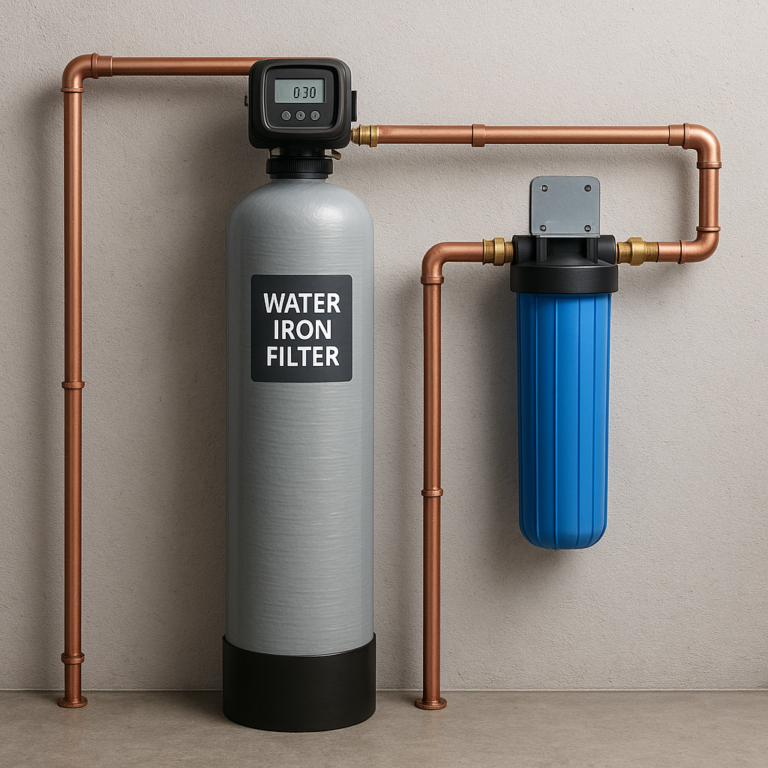
The SpringWell CF system is designed for whole-house treatment, making it a better fit when chlorine taste or odor is noticeable at several taps or in the shower. It is a much bigger commitment than a drinking-water pitcher, so size it to your household’s flow demand and verify what its performance claims cover.
What stands out
- Treats water entering the home rather than one drinking-water tap.
- Can address chlorine concerns at multiple fixtures.
- Carbon-based media is commonly used for taste and odor treatment.
Trade-offs
- Requires main-line installation and adequate service space.
- It does not automatically remove hardness or dissolved contaminants.
- Whole-house treatment is usually excessive if only one person dislikes the taste of tap water.
Ask for the system’s current performance data and sizing guidance before installation. The EPA’s consumer guide to home water treatment is a useful counterweight to broad marketing claims.
👉 Shop SpringWell CF: Amazon search | SpringWell Official
🧪 Which Filter Type Works Best for Chlorine Taste and Smell?
For free chlorine at a drinking-water tap, activated carbon is often the practical starting point. The right form depends on how much water you use, whether you rent, and whether you want treatment at one tap or throughout the home.
| Filter type | Best for | Main advantage | Main limitation |
|---|---|---|---|
| Pitcher | One or two people, renters, small kitchens | No installation | Slow, limited capacity |
| Refrigerator | Cold drinking water | Convenient chilled water | Performance varies by exact cartridge |
| Faucet-mounted | On-demand water at one compatible faucet | Simple installation | May not fit every faucet or suit high-volume filling |
| Under-sink carbon | Everyday kitchen use | Good convenience and flow potential | Requires plumbing access |
| Reverse osmosis | Chlorine plus selected dissolved-contaminant concerns | Broader treatment | More installation, maintenance, and potential wastewater |
| Whole-house carbon | Multiple taps, showers, and appliances | Treats water at the point it enters the home | Higher installation effort; does not solve every water problem |
Pitcher and refrigerator filters
Pitchers and refrigerator cartridges are convenient, but brand name alone does not prove a chlorine reduction claim. Filter models and replacement cartridges differ. Look up the exact product and check its performance listing.
A pitcher is easy to carry to a dorm or rental. A refrigerator filter is a neat choice if you already use the dispenser, but replacement cartridges should match the refrigerator’s approved model and verified performance claims. The NSF drinking-water treatment guide can help you interpret certification language.
Countertop and faucet-mounted filters
Countertop systems are a useful middle ground: more capacity than a pitcher, less commitment than a full under-sink installation. Faucet-mounted filters can provide filtered water on demand, but they may reduce flow and are not compatible with every faucet design.
Before buying, check:
- Faucet thread compatibility and whether the tap has a pull-down sprayer.
- Whether the filter has a separate filtered-water mode.
- The exact replacement cartridge’s chlorine reduction claim.
- Filter capacity and the maker’s replacement schedule.
Under-sink carbon and reverse osmosis systems
A direct-connect carbon filter is often a strong option for a busy kitchen where the main goal is better-tasting water. RO may be worthwhile if you also have a specific reason to reduce dissolved substances, but it is not automatically better for everyone.
Ask whether you need:
- A dedicated faucet.
- A drain connection.
- Electrical power.
- Cabinet space for filters or a tank.
- A separate certification for chlorine, in addition to RO-related claims.
For treatment decisions beyond taste, consult your utility report or test results, then compare the exact claims listed by a certification body.
Whole-house water filters
Whole-house systems can be sensible if the chlorine smell bothers you at several taps or while showering. They are not a shortcut to “purified” water: a whole-house chlorine filter does not necessarily remove lead, PFAS, hardness, or every other contaminant.
Size the system to the home’s peak flow demand, not just the number of people living there. Ask the installer about pressure drop, prefilter maintenance, media replacement, and the specific disinfectant the system is designed to reduce.
📊 Compare Water Filter Brands at a Glance
Here’s the quick map. Treat it as a starting point, not a substitute for model-specific certification checks.
| Product | Form | Best fit | Installation | Key check before buying |
|---|---|---|---|---|
| AquaTru Carafe | Countertop RO | Broader treatment without plumbing work | Countertop setup | Current model’s chlorine claim and cartridge schedule |
| Cloud RO | Under-sink RO | Kitchen treatment for multiple concerns | Faucet and drain connections | Which claims are independently certified |
| Waterdrop G3 P800 | Tankless under-sink RO | Higher-volume kitchen use and broader treatment | Under-sink plumbing | Exact model certification and flow requirements |
| Clearly Filtered Under Sink | Under-sink non-RO | Kitchen filtration without an RO drain line | Under-sink connection | Specific tested and certified reduction claims |
| Clearly Filtered Pitcher | Pitcher | No-install drinking water | None | Cartridge capacity and certification |
| Weddell Duo | Shower filter | One shower | Inline shower installation | NSF/ANSI 177 listing and cartridge life |
| Culligan MaxClear | Gravity countertop | Batch drinking water without plumbing | Countertop assembly | Current configuration, flow, and replacement costs |
| SpringWell CF | Whole-house | Chlorine concerns across multiple fixtures | Main-line installation | Flow sizing and verified performance claims |
Filter type, chlorine reduction, and installation
The shortest path to a good purchase is to match treatment location to the location of the problem. If chlorine taste is only an issue in drinking water, try point-of-use filtration first. If you smell it at taps throughout the home, investigate whole-house options.
Replacement filters, capacity, and maintenance
Cartridge life is usually expressed in gallons, months, or both. Either limit can arrive first. A household using more water than the manufacturer’s typical test conditions may need replacements sooner; sediment and local water chemistry can also affect performance.
Keep a simple record:
- Write the installation date on the cartridge.
- Track water use if the filter has a meter.
- Replace it at the manufacturer’s stated limit.
- Do not assume a “long-life” claim means the cartridge stays effective forever.
🛒 How to Choose a Water Filter for Chlorine Taste and Odor
Check your utility’s water quality report
Search your utility’s annual Consumer Confidence Report for its disinfectant, reported levels, and any notices. The EPA’s CCR resource explains what these reports contain. If the report doesn’t answer your question, call the water provider directly.
Match the filter to chlorine or chloramine
Do not assume that “chlorine reduction” means “chloramine reduction.” Ask the manufacturer or look for a specific claim and supporting test for your disinfectant. When a product’s language is vague, that is a reason to pause, not to translate its claims optimistically.
Look for independent certifications and verified claims
Search the exact model number, not just the brand. Check whether the listing covers chlorine taste and odor, chloramine, or another contaminant you actually care about. Use the NSF product search or WQA product directory.
Also distinguish:
- Certification to a standard from certification for a specific contaminant claim.
- Material safety from contaminant reduction.
- Manufacturer testing from independent certification.
- A reduction claim from a claim of complete removal.
Consider household size, flow rate, and filter capacity
A pitcher can work beautifully for one person and become a tiny administrative job for a family of five. Consider how much water you use for drinking, coffee, cooking, and bottle refills.
- Low volume: pitcher or refrigerator filter.
- Regular kitchen use: faucet-mounted or under-sink carbon filter.
- Several household fixtures: properly sized whole-house system.
- More than taste concerns: compare specific contaminant claims and consider a water test.
🧰 Installation, Filter Changes, and Everyday Maintenance
When to replace a carbon filter
Replace the cartridge according to its instructions, even if the water still tastes fine. A cartridge’s rated capacity is not a promise that performance remains unchanged indefinitely. Heavy use, incoming water quality, and product design all matter.
Watch for:
- A replacement indicator or end-of-life alert.
- The stated gallon or month limit.
- Reduced flow, unusual taste, or odor.
- A filter that has been stored or unused for an extended period.
Follow the manufacturer’s directions; avoid trying to extend filter life by rinsing or reusing a cartridge unless the product instructions explicitly allow it.
How to flush a new filter and prevent stale-water taste
A new cartridge may release harmless carbon fines or have a temporary “new filter” taste. That’s why flushing matters.
- Read the model’s instructions first. Flush time and volume vary.
- Install the cartridge carefully, checking seals and alignment.
- Run the specified volume of water through the filter; don’t guess based on another brand’s directions.
- Discard the initial water if the instructions say to do so.
- Check for leaks, then taste the water after the flush.
- Set a replacement reminder based on the manufacturer’s capacity or time limit.
If the taste remains unusual after correct flushing, check the cartridge seating, faucet, refrigerator tubing, or plumbing—and contact the manufacturer or utility if the issue persists.
💧 Chlorine Removal vs. Other Drinking Water Concerns
Does a chlorine filter remove lead, PFAS, or sediment?
Not necessarily. A filter certified for chlorine taste and odor is not automatically certified for lead, PFAS, sediment, or microbes. Look for the specific claim on the exact model’s listing. The EPA’s home drinking-water filtration fact sheet stresses choosing treatment for the contaminant of concern.
If you suspect a health-related contaminant, use a certified lab or an appropriate testing program. Taste and smell are not reliable ways to confirm its presence or absence.
Can filtered water still contain disinfectant byproducts?
Yes. A chlorine taste-and-odor claim does not automatically show reduction of disinfection byproducts such as trihalomethanes (THMs). These are different measurements and different claims. Look for the relevant product-specific reduction data and check your utility’s water-quality report.
The EPA’s drinking-water standards and health information provide context for regulated contaminants. If your concern comes from a specific test result, discuss that result with a qualified water professional rather than inferring it from the water’s smell.
Should you remove all chlorine from drinking water?
Not as a default. Municipal disinfectants help protect water as it moves through pipes, and a chlorine smell alone does not mean treatment is unsafe. If the taste bothers you, point-of-use filtration can improve flavor while keeping the treatment choice targeted.
If your utility uses chloramine, or you have a specific health concern, get advice based on your water report and a filter’s verified claims. A filter can be useful, but it should not replace public-health guidance or a response to a boil-water notice.
🍋 Other Ways to Improve Chlorinated Tap Water’s Taste
If you’re waiting to choose a filter, try these low-effort steps:
- Chill water in a clean, covered container. Cold water can taste more refreshing, though it does not substitute for verified filtration.
- Keep the container clean. A stale pitcher can add its own odor, which is rude of it.
- Use a filter pitcher only according to its instructions. Keep it refrigerated if the manufacturer recommends it.
- Ask your utility whether it uses chlorine or chloramine. The answer changes which treatment options may work.
- Avoid boiling as a universal fix. It is inconvenient and does not address every disinfectant or contaminant. The CDC’s drinking-water advice is a better guide for water safety decisions.
Leaving water uncovered may allow some free chlorine to dissipate, but results depend on conditions and this approach should not be relied on for chloramine or contaminant removal.
✅ Quick Tips for Better-Tasting Filtered Water
- ✅ Check your water report before choosing a filter.
- ✅ Match the claim to the disinfectant: chlorine and chloramine are not interchangeable.
- ✅ Verify the exact model and cartridge in an independent certification directory.
- ✅ Replace filters on schedule, even if taste seems fine.
- ✅ Flush new filters correctly and check for leaks.
- ❌ Don’t infer lead, PFAS, or THM reduction from a chlorine taste-and-odor claim.
- ❌ Don’t buy a whole-house system if one drinking-water tap is the only issue—unless you have another reason to treat the whole home.
- ✅ If the odor changes suddenly or seems unusually strong, contact your water provider.
Our taste testers’ simplest rule: pick the smallest treatment location that solves your actual problem. That usually keeps installation and maintenance manageable—and prevents a chlorine-flavor complaint from turning into an unnecessary plumbing project.