Support our educational content for free when you purchase through links on our site. Learn more
What Water Filter System Is Best? 12 Smart Picks 💧

What water filter system is best? For most homes with treated municipal water, start with a certified under-sink carbon filter that targets your specific concern. Choose reverse osmosis when you need broader reduction of dissolved contaminants and are comfortable with its extra maintenance; for well water, test first and match treatment to the results.
That last part matters more than the number of filters or stages. In our taste tests, carbon-filtered water often won over chlorine-heavy tap water for its softer aroma, but our health professionals emphasize that better taste doesn’t prove water is safer. A filter needs the right verified performance claim for the contaminant you want to reduce.
From simple pitchers to whole-house systems, we compare 12 options and explain what each can—and can’t—do, so you can choose confidently without buying more filtration than your water needs.
Key Takeaways
- Match the filter to your water. Check your utility report or test private-well water before choosing a system.
- Verify the exact contaminant claim. Certification is model-specific; confirm it in the NSF drinking-water treatment database.
- Consider under-sink carbon for many municipal-water homes. It can be a practical choice for taste and specific certified reduction claims.
- Consider reverse osmosis for broader dissolved-contaminant reduction. Check maintenance, water use, and the system’s verified performance.
- Don’t confuse filtration with disinfection. Many pitcher and refrigerator filters do not remove germs.
- Keep up with maintenance. Replace cartridges and follow care instructions on schedule; taste and smell aren’t reliable safety checks.
Table of Contents
- ⚡️ Quick Tips and Facts: Choosing the Best Water Filter System
- 💧 What Water Filter System Is Best? The Short Answer
- 🕰️ How Modern Water Filtration Systems Work
- 🏆 12 Best Water Filter Systems for Different Needs
- 1. Best Overall: Reverse Osmosis System
- 2. Best for Municipal Water: Under-Sink Carbon Filter
- 3. Best for Well Water: Multi-Stage Filtration System
- 4. Best for Lead: Lead-Certified Drinking Water Filter
- 5. Best for PFAS: PFAS-Certified Water Filter
- 6. Best for Bacteria and Viruses: UV Water Purifier
- 7. Best for Whole-Home Protection: Whole-House Water Filter
- 8. Best for Renters: Countertop Water Filter
- 9. Best Budget Option: Water Filter Pitcher
- 10. Best for Emergency Use: Gravity-Fed Water Filter
- 11. Best for Hard Water: Water Softener and Filter Combination
- 12. Best for On-the-Go: Portable Water Purifier
- 🔍 Water Filter Types Compared: Pitcher, Faucet, Under-Sink, and More
- Pitcher and Refrigerator Filters
- Faucet-Mounted and Countertop Filters
- Under-Sink and Reverse Osmosis Systems
- Whole-House and Point-of-Entry Systems
- Water Softeners, UV Purifiers, and Distillers
- 🧪 Match the Filter to Your Water: What Contaminants Should It Remove?
- Lead, Copper, and Other Heavy Metals
- PFAS, PFOA, and PFOS
- Chlorine, Taste, and Odor
- Arsenic, Nitrates, and Other Well-Water Contaminants
- Bacteria, Viruses, and Parasites
- Hardness, Iron, Sulfur, and Sediment
- 🧭 How to Choose the Right Water Filtration System
- Test Your Tap or Well Water First
- Check Your Consumer Confidence Report
- Understand NSF/ANSI Certifications and Performance Claims
- Read the Label and Verify Each Contaminant Reduction Claim
- Compare Filter Capacity, Flow Rate, and Daily Water Needs
- Consider Installation, Space, and Plumbing Compatibility
- Calculate Filter-Replacement and Maintenance Needs
- ✅ What Water Filters Can—and Cannot—Remove
- Why Taste and Smell Do Not Prove Water Is Safe
- Why Many Filters Do Not Remove Germs
- Why Filtration May Also Reduce Beneficial Minerals
- When Boiling, Disinfection, or a Purifier Is Needed
- 🛠️ Installation, Filter Changes, and Troubleshooting
- DIY or Professional Installation
- How Often to Replace a Water Filter
- Sanitizing and Maintaining Your System
- Common Problems: Slow Flow, Leaks, and Strange Taste
- 💰 Water Filter System Costs and Long-Term Value
- Upfront Equipment and Installation Considerations
- Replacement Filters, Water Waste, and Operating Costs
- Filtered Water Compared with Bottled Water
- 🏠 Special Considerations for Homes, Renters, and Sensitive Groups
- Choosing a Filter for a Private Well
- Choosing a Filter for an Older Home
- Water Filtration for Babies and Children
- Water Safety for People with Weakened Immune Systems
- Apartment-Friendly Options for Renters
- 🚫 Water Filter Buying Mistakes to Avoid
- 📌 Conclusion
- 🔗 Recommended Links
- ❓ FAQ
- What is the best water filter system for most homes?
- Is reverse osmosis better than a carbon filter?
- Do water filters remove bacteria and viruses?
- What water filter removes the most contaminants?
- Should I filter well water?
- How do I know which water filter fits my needs?
- Are NSF-certified water filters worth it?
- How often should I change my water filter?
- 📚 Reference Links
⚡️ Quick Tips and Facts: Choosing the Best Water Filter System
The best water filter system is the one certified to reduce the contaminants in your water—and that you’ll maintain. A fancy faucet cannot fix the wrong filter choice. 💧
| Quick fact | What it means for you |
|---|---|
| There is no one-size-fits-all “best” filter. | Start with your water source and concerns, then select a system with verified reduction claims. The CDC’s guide to choosing home water filters recommends testing your water and matching the filter to the specific germs or chemicals you want to reduce. |
| Taste and safety are different questions. | Lead, nitrate, and germs may not make water taste, smell, or look unusual. Conversely, harmless minerals can affect taste or odor. |
| Filter claims are contaminant-specific. | “NSF certified” alone does not tell you which substances a model reduces. Check the exact model and claim in the NSF Certified Drinking Water Treatment Units database. |
| Pitcher filters often target taste and odor. | Many use activated carbon to reduce chlorine taste and odor; that does not mean they disinfect water or remove every chemical. |
| Well water needs routine checks. | The CDC recommends private well owners test at least annually for germs and chemicals, and after changes in taste, smell, or appearance. |
| Maintenance is part of performance. | A neglected cartridge may not treat water as intended. Follow the manufacturer’s replacement schedule and care instructions. |
A quick note from our Water Brands™ tasting table: when a pitcher filter improved a chlorine-heavy tap sample, tasters often called the water “cleaner” or “smother.” That’s a useful taste observation—not proof that the water is microbiologically safe. For more on the companies making these products, see our guide to major water filter brands. If your main interest is drinking-water quality, browse our filtered water guide too.
💧 What Water Filter System Is Best? The Short Answer
For most households on treated municipal water, a certified under-sink activated-carbon filter is a strong starting point when the goal is better taste and reduction of a specific contaminant listed on its performance sheet. If you want to reduce a broader range of dissolved substances—and accept extra maintenance, wastewater, and installation—consider a properly certified reverse osmosis (RO) system.
But the right recommendation changes with the water:
- Want better taste and less chlorine odor? A certified carbon pitcher, faucet, or under-sink filter may be enough.
- Concerned about lead or PFAS? Choose a model whose certification or independently verified performance specifically covers the contaminant. Don’t assume a basic carbon cartridge does.
- Have a private well? Test first. A treatment system may need a sediment filter, contaminant-specific media, and sometimes UV disinfection.
- Want water filtered at every tap? A whole-house system treats water as it enters the home, but isn’t automatically better for drinking-water contaminants.
- Need a removable, renter-friendly setup? A pitcher, countertop filter, or portable RO unit avoids permanent plumbing changes.
The CDC puts the central principle plainly: “Test your water and choose a filter that removes the harmful germs or chemicals you are concerned about.” That advice outranks broad advertising claims, glossy faucet photos, and the occasional “my water tastes amazing now” review.
| Your main priority | System type to investigate | Check before buying |
|---|---|---|
| Better taste and chlorine odor | Activated-carbon pitcher, faucet, or under-sink filter | Specific taste-and-odor claim; often NSF/ANSI 42 |
| Lead reduction | Certified point-of-use filter | Lead claim and exact model in certification listing |
| PFAS reduction | Certified carbon, RO, or other verified system | Named PFAS compounds or claim, test basis, and maintenance |
| Broad dissolved-contaminant reduction | RO system | Contaminant-specific certification, water waste, and required pressure |
| Well-water microbes | Validated disinfection and filtration combination | Lab test, organism-specific performance, and professional guidance |
| Sediment throughout the home | Whole-house sediment filtration | Micron rating, flow rate, and filter-change schedule |
| Hardness and scale | Water softener or conditioner, often alongside filtration | Hardness test; a softener is not a universal drinking-water filter |
A filter can also reduce substances you may want to keep. The CDC notes that some systems remove disinfectants such as chlorine and minerals such as fluoride. So before installing a whole-house system that removes disinfectant, ask what happens to water quality in the pipes after treatment.
🕰️ How Modern Water Filtration Systems Work
Water filters use different methods, and each has its own job. Think of them as a kitchen team: one catches grit, another grabs certain chemicals, and another separates dissolved substances. No single player handles every task.
| Filtration method | How it works | Common uses | Important limitation |
|---|---|---|---|
| Activated carbon | Adsorbs some chemicals onto a porous carbon surface | Chlorine taste and odor; selected organic compounds, depending on product | Performance depends on the contaminant, contact time, filter condition, and certification |
| Mechanical filtration | Physically traps particles larger than the effective pore size | Sediment, rust, and some microorganisms in appropriately designed systems | A stated pore size alone does not prove reduction of every germ |
| Ion exchange | Exchanges selected charged ions for others | Hardness minerals, nitrate, or certain metals in specific systems | Target substances and performance vary; maintenance and regeneration may be needed |
| Reverse osmosis | Uses pressure to push water through a semipermeable membrane | Many dissolved contaminants, depending on the unit’s verified claims | Usually makes reject water, requires maintenance, and may reduce minerals |
| Ultraviolet disinfection | Uses UV light to inactivate susceptible microorganisms | Disinfection in suitable, pretreated water systems | Does not remove chemicals, sediment, or dissolved minerals |
| Distillation | Evaporates water and condenses the vapor | Some dissolved substances and microorganisms | Slow and energy-intensive; volatile compounds may require additional treatment |
| Water softening | Reduces hardness by exchanging calcium and magnesium ions | Scale control, appliance protection, and some hardness-related taste issues | A softener is not a substitute for a contaminant-specific drinking-water filter |
A filter’s “stage count” is not a report card
A system marketed as 10-stage is not automatically better than a 3-stage model. “Stage” describes the arrangement of components, not the amount of independent testing or the range of contaminants reduced. A five-stage RO unit might be the better fit for a documented contaminant; a simple carbon filter could be all you need for chlorine taste.
Look for the specific standard and claim—not the stage count. The NSF drinking-water treatment standards overview explains how standards relate to particular treatment claims.
🏆 12 Best Water Filter Systems for Different Needs
The “best” pick below is a system category, not a claim that one product is right for every tap. We’ve included familiar examples to help you compare options. Before buying, verify the exact model’s current certification, cartridge compatibility, and reduction claims.
| Rank | Best for | System style | Example brands or models to investigate | Main trade-off |
|---|---|---|---|---|
| 1 | Broad point-of-use treatment | Reverse osmosis | AquaTru, APEC, Waterdrop | More maintenance, reject water, and often slower output |
| 2 | City-water taste and selected contaminants | Under-sink carbon | Aquasana, Culligan, PUR | Usually treats one tap, not the whole home |
| 3 | Private well with several identified issues | Tailored multi-stage treatment | SpringWell, Aquasana, iSpring | Must be designed around lab results |
| 4 | Lead reduction at a drinking tap | Lead-certified point-of-use filter | Brita Elite, PUR, Waterdrop | Certification is model-specific; cartridges need timely replacement |
| 5 | PFAS reduction | PFAS-verified carbon or RO | Aquasana, AquaTru, Culligan | “PFAS reduction” needs a verifiable test or certification claim |
| 6 | Microbial risk in suitable well systems | UV disinfection plus pretreatment as needed | Viqua, Aquasana | UV does not remove chemicals or particles |
| 7 | Water treatment throughout the home | Whole-house point-of-entry filtration | Aquasana Rhino, SpringWell, Culligan | Higher installation and maintenance complexity; treatment is not always needed at every tap |
| 8 | Renters who want countertop convenience | Countertop filter | AquaTru, Bluevua, Waterdrop | Takes counter space and may need electricity |
| 9 | Small households and simple taste improvement | Pitcher filter | Brita, PUR, ZeroWater | Smaller capacity and frequent refills |
| 10 | Gravity-fed use without plumbing | Gravity filter | Culligan MaxClear, LifeStraw Home, Boroux | Can be slow, heavy, or involved to prime |
| 11 | Scale from hard water | Water softener or conditioner | Culligan, Aquasana, SpringWell | Addresses hardness, not every health-related contaminant |
| 12 | Hiking or travel | Portable purifier or filter | LifeStraw, Sawyer, Katadyn | Must match the water hazard; many do not treat chemical contamination |
1. Best Overall: Reverse Osmosis System
RO is a versatile point-of-use option when you want reduction of multiple dissolved contaminants and can manage installation and upkeep. Models such as the APEC ROES-50 and iSpring RCC7 are familiar under-sink examples. Countertop options such as AquaTru Classic can avoid plumbing work.
What we like: RO can reduce a broad range of dissolved substances when the product’s claim supports it.
What gives us pause: It produces reject water, typically requires several cartridges, and may remove minerals along with unwanted compounds. Verify the exact contaminant claim in the product documentation and certification directory.
2. Best for Municipal Water: Under-Sink Carbon Filter
If your utility supplies treated water and your main complaint is chlorine taste or odor, a carbon system may be the most convenient fit. Brands including Aquasana, Culligan, and PUR offer point-of-use options.
Taste-tester note: In side-by-side samples of chlorinated tap water, our team generally preferred properly maintained carbon-filtered samples for their softer aroma. That’s a flavor preference, not a guarantee that the unit reduces lead, PFAS, or germs. Look for the exact contaminant listed in the model’s performance data.
3. Best for Well Water: Multi-Stage Filtration System
There is no safe shortcut here: test the well, then build the treatment plan around the results. Depending on the findings, a system might combine sediment filtration, iron or sulfur treatment, activated carbon, RO, and UV. A single “well-water filter” label cannot tell you whether a system addresses your specific problem.
The EPA’s private drinking-water well guidance and your local health department can help you identify suitable testing and treatment resources.
4. Best for Lead: Lead-Certified Drinking Water Filter
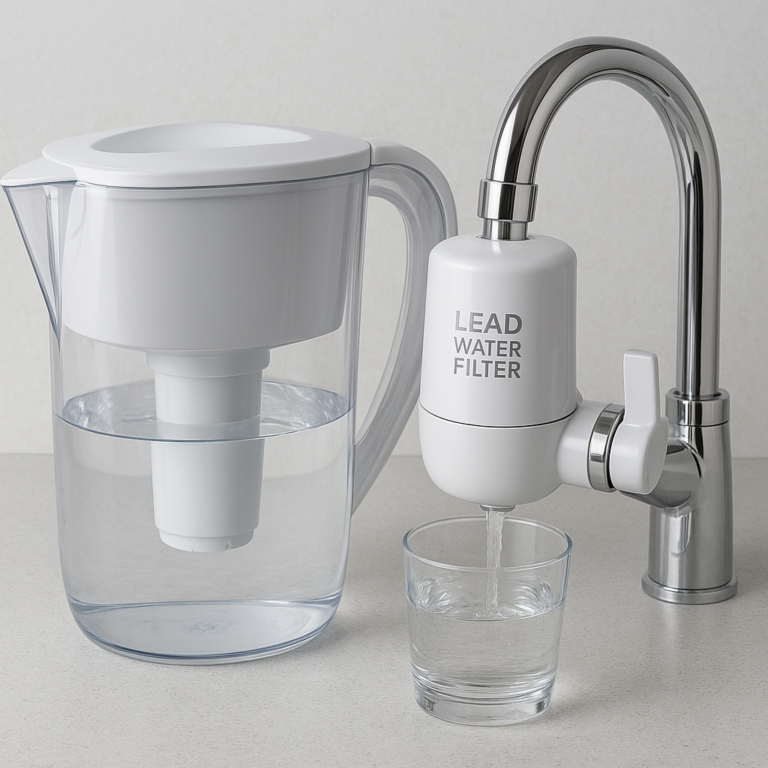
Choose a filter with a specific, independently verified lead-reduction claim. Some products from Brita, PUR, and Waterdrop offer lead-reduction models, but brand name alone is not enough: different cartridges and configurations can have different claims.
If lead in plumbing is a concern, the EPA’s lead-in-drinking-water information explains exposure sources and practical steps. A certified point-of-use filter may reduce exposure while you address the plumbing source; it does not repair lead pipes.
5. Best for PFAS: PFAS-Certified Water Filter
For PFAS, scrutinize what “reduces PFAS” means. Check whether the claim names the compounds, states the test basis, and applies to your exact model. RO and some activated-carbon systems may reduce certain PFAS, but neither label is a blanket promise for every compound or operating condition.
The EPA’s PFAS drinking-water resources explain the broader issue. Products from AquaTru, Aquasana, and other brands should be compared using their specific performance sheets, not a general marketing headline.
6. Best for Bacteria and Viruses: UV Water Purifier
UV systems can inactivate microorganisms in properly installed and maintained systems, but they do not filter out chemical contaminants. Turbidity and sediment can interfere with treatment, so prefiltration may be necessary. For a private well, confirm the microbial issue with testing and consult a qualified water-treatment professional.
The CDC’s home-filter guidance distinguishes chemical reduction from germ removal. If the water is under a boil-water notice, follow local public-health instructions rather than assuming an installed household filter is sufficient.
7. Best for Whole-Home Protection: Whole-House Water Filter
A whole-house system treats water at the point it enters the home. It can be useful for sediment, certain water-quality concerns throughout the plumbing, or households that want treatment for bathing and laundry as well as drinking and cooking.
For example, Aquasana’s whole-house systems include models designed for different water sources and treatment goals. Check the exact system’s certified claims, flow requirements, and maintenance schedule. A whole-house system is not automatically the best drinking-water filter; many homeowners may better served by point-of-use treatment at the kitchen tap.
8. Best for Renters: Countertop Water Filter
A countertop filter can be a renter-friendly compromise: more capacity than many pitchers, no permanent under-sink installation, and easy relocation. RO countertop models like AquaTru and Bluevua require electricity and counter space; simpler carbon units may not.
If you liked the convenience angle in the featured RO-system video, compare its product claims with the exact model documentation before making a decision. Video demonstrations can help you understand setup and features, but they do not replace independent certification records.
9. Best Budget Option: Water Filter Pitcher
A pitcher is simple, portable, and often effective for improving taste when its cartridge is designed for the issue. Brita, PUR, and ZeroWater are widely available examples.
Our practical warning: a pitcher can look effortless right up until the household empties it during dinner prep. Capacity, fill speed, refrigerator space, and replacement-filter availability matter almost as much as taste.
10. Best for Emergency Use: Gravity-Fed Water Filter
Gravity systems can be helpful where electricity and plumbing are unavailable, but “gravity filter” does not automatically mean safe against every hazard. Verify reduction claims for the specific microorganisms or chemicals involved. Follow instructions for priming, cleaning, and cartridge changes.
Examples include gravity-oriented products from LifeStraw, Culligan, and Boroux. For emergency water safety, follow CDC guidance on making water safe, especially during an official advisory.
11. Best for Hard Water: Water Softener and Filter Combination
Hard water is commonly linked to scale and soap performance. A softener can reduce hardness, but it is not a universal purifier and may not address lead, PFAS, microbes, or other contaminants. Test hardness, then consider a softener separately from drinking-water filtration.
12. Best for On-the-Go: Portable Water Purifier
Portable filters and purifiers are designed for travel, outdoor recreation, and emergency use. Products from LifeStraw, Sawyer, and Katadyn vary in which bacteria, parasites, viruses, and chemicals they address. Read the intended-use instructions carefully: a wilderness filter is not necessarily suitable for chemically contaminated tap water.
🔍 Water Filter Types Compared: Pitcher, Faucet, Under-Sink, and More
| System | Best fit | Install effort | Typical treatment scope | Main drawback |
|---|---|---|---|---|
| Pitcher | Small households, renters, taste improvement | Very low | Cartridge-specific; often chlorine taste and odor | Limited capacity and slow refills |
| Refrigerator | Convenient chilled water | Low to moderate | Model-specific | Appliance compatibility and replacement timing |
| Faucet-mounted | Easy access at one tap | Low | Cartridge-specific | May not fit all faucets; limited flow or capacity |
| Countertop | Renters and larger filtered-water needs | Low to moderate | Carbon or RO, depending on unit | Uses counter space |
| Under-sink | Daily drinking and cooking water | Moderate | Often carbon, RO, or multi-stage | Plumbing access and filter upkeep |
| Whole-house | Treatment at all fixtures | Moderate to high | Depends on system design | More complex; can be unnecessary for drinking-only concerns |
| UV purifier | Microbial treatment in suitable systems | Moderate to high | Inactivates susceptible microorganisms | Requires power and pretreated water in many setups |
| Distiller | Selected dissolved contaminants | Low to moderate | Condensation-based treatment | Slow output and energy use |
Pitcher and Refrigerator Filters
Pitcher and refrigerator filters are convenient, but their performance depends on the exact cartridge. Activated carbon can improve chlorine taste and odor; some models carry additional certified reduction claims. See Brita’s filter information, PUR’s products, and your refrigerator maker’s filter documentation.
A good pitcher is an everyday tool, not a substitute for testing. If you’re comparing water simply by flavor, also explore our guides to natural spring water and mineral water. Those categories describe bottled-water styles—not a treatment recommendation for your tap.
Faucet-Mounted and Countertop Filters
Faucet-mounted systems provide filtered water at a single fixture and are usually easier to install than an under-sink RO unit. Countertop systems offer more range, from basic carbon filtration to electrically powered RO. Check whether a unit fits your faucet and whether replacement cartridges are readily available.
Under-Sink and Reverse Osmosis Systems
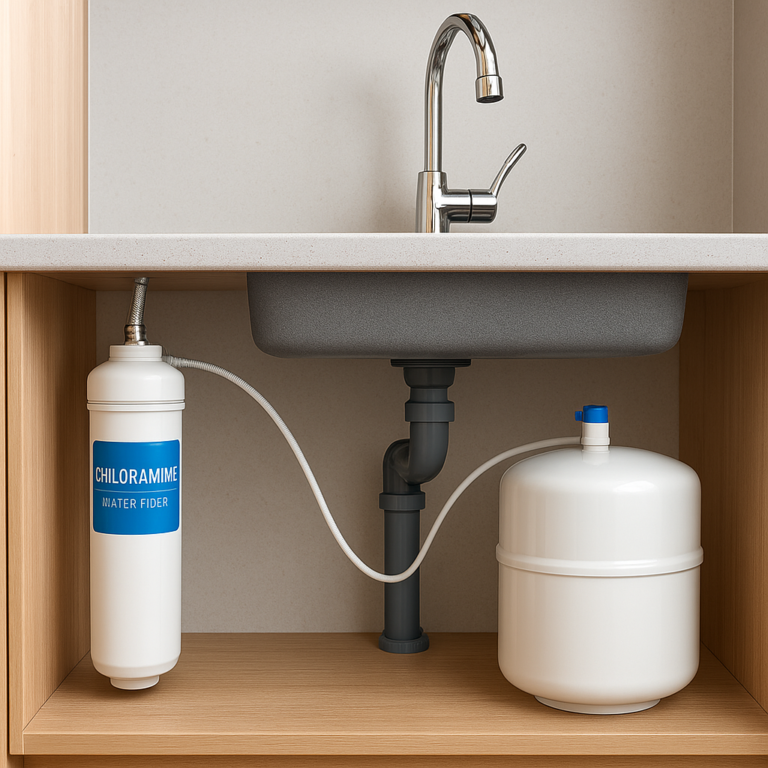
Under-sink systems keep equipment out of sight and are convenient for drinking and cooking. Carbon models may target taste, odor, or listed contaminants; RO models use a membrane and may reduce many dissolved substances. A mineral-remineralization stage may alter taste after RO treatment, but it should not distract from the system’s verified contaminant claims.
Whole-House and Point-of-Entry Systems
Whole-house systems are installed where water enters a building. They can make sense when a verified concern affects multiple uses, such as sediment throughout plumbing. But if the goal is drinking-water treatment at one kitchen tap, a point-of-use filter may be simpler and more targeted.
Removing chlorine disinfectant at the entry point may also affect conditions in household plumbing. Ask a qualified professional how a whole-house system handles microbial control and whether post-treatment disinfection is needed.
Water Softeners, UV Purifiers, and Distillers
These systems are often grouped with filters, but they do different jobs:
- Softener: targets hardness minerals.
- UV unit: inactivates susceptible microorganisms; does not remove chemicals.
- Distiller: boils and condenses water; does not necessarily remove volatile compounds without additional treatment.
🧪 Match the Filter to Your Water: What Contaminants Should It Remove?
| Concern | First step | Treatment approach to investigate | Don’t assume |
|---|---|---|---|
| Lead | Test or assess plumbing risk | Point-of-use filter with a specific lead-reduction claim | That clear, good-tasting water is lead-free |
| PFAS | Review utility data or test appropriately | Certified or independently verified PFAS reduction | That “carbon” or “RO” alone guarantees every PFAS claim |
| Chlorine taste and odor | Review water report; compare taste | Activated carbon with an applicable claim | That improved taste proves broader purification |
| Nitrate or arsenic | Test, especially for private wells | Treatment specifically validated for the measured contaminant | That a general sediment filter will help |
| Bacteria or viruses | Microbial testing and health-department advice | Validated disinfection and/or suitable membrane treatment | That ordinary pitcher filters disinfect |
| Hardness or iron | Test water chemistry | Softening or contaminant-specific treatment | That a softener removes all health-related contaminants |
Lead, Copper, and Other Heavy Metals
Lead can enter drinking water through plumbing materials, and there is no reliable taste or smell warning. The EPA’s lead drinking-water guide explains common sources and exposure-reduction measures.
A filter may reduce lead only if its specific model and cartridge have a verified claim. Check the product’s documentation and certification listing, and keep up with replacements. If you’re dealing with a known plumbing source, filtration is a practical exposure-control measure—not a substitute for repairing or replacing the source.
PFAS, PFOA, and PFOS
PFAS is a broad group of substances, and a product’s performance may vary by compound and test conditions. The EPA PFAS information hub provides current background and regulatory resources.
When comparing systems, ask:
- Which PFAS compounds were tested?
- Was the result independently certified or otherwise verified?
- Does the claim apply to the exact model and cartridge you’ll use?
- What capacity and replacement schedule are required?
A claim that a filter “targets PFAS” is a reason to inspect the performance data, not a reason to skip it.
Chlorine, Taste, and Odor
Activated carbon is commonly used to improve chlorine taste and odor. That can make a glass of tap water more pleasant, especially when a utility disinfectant flavor is prominent. The CDC explains why chlorine can be present: disinfectants help control germs in public water systems.
The taste testers at Water Brands™ have found that people often prefer carbon-filtered samples when chlorine aroma is strong. But if taste is your only issue, you may not need RO. More treatment is not automatically better.
Arsenic, Nitrates, and Other Well-Water Contaminants
Private wells are not regulated in the same way as public water systems, so the household is responsible for testing. The EPA’s private-well resources explain recommended steps and potential testing support.
Arsenic, nitrate, and other contaminants require targeted testing and treatment. Don’t rely on a generic “well-water” cartridge or a neighbor’s setup; wells in the same area can differ.
Bacteria, Viruses, and Parasites
Microrganisms require a treatment method designed and validated for the specific hazard. The CDC notes that pore-size claims matter and distinguishes the requirements for parasites, bacteria, and viruses. For example, a nominal pore rating is not equivalent to an absolute pore rating.
- Parasites: look for an applicable cyst-reduction claim or a suitable filtration specification.
- Bacteria: use treatment validated for bacteria or a suitable disinfection method.
- Viruses: ordinary pitcher filters generally are not enough; follow CDC or local-health guidance for validated treatment.
If the water is visibly cloudy, pretreatment may be needed before UV or membrane treatment. For suspected contamination, contact your local health department rather than experimenting with a filter.
Hardness, Iron, Sulfur, and Sediment
Hardness can cause scale, while iron and sulfur may affect color, staining, or odor. Sediment may clog downstream filters. These concerns are often manageable, but the solution depends on water chemistry:
- Test hardness, iron, and other suspected substances.
- Choose treatment designed for the measured problem.
- Add sediment pretreatment when recommended.
- Recheck water quality after treatment if the issue is significant.
🧭 How to Choose the Right Water Filtration System
Test Your Tap or Well Water First
Use this simple sequence:
- Identify your source. Is it public municipal water, a private well, rainwater, or another supply?
- List your concern. Taste, lead, PFAS, nitrate, microbes, scale, or something else?
- Gather evidence. Review the utility report or arrange appropriate testing.
- Choose a treatment claim. Match the result to a product’s exact reduction claim.
- Check installation and upkeep. Confirm that you can fit the system, buy cartridges, and maintain it.
- Retest when appropriate. After installation, testing can confirm whether treatment is doing what you need.
For a private well, contact your local health department or use a state-certified laboratory. For a public water system, start with its annual report.
Check Your Consumer Confidence Report
Public water systems typically provide annual Consumer Confidence Report (CCR). The EPA explains how to find and understand them through its drinking-water consumer confidence report resources. A CCR can tell you about monitored contaminants and system-level results, but it does not necessarily describe water quality inside your home’s plumbing.
If your home has older plumbing, a building-specific concern, or an unusual taste change, you may need additional testing at the tap.
Understand NSF/ANSI Certifications and Performance Claims
The certification standard matters, but the specific contaminant claim matters more.
| Standard commonly encountered | General purpose | What to verify |
|---|---|---|
| NSF/ANSI 42 | Aesthetic effects such as chlorine taste and odor | Which specific aesthetic claims are certified |
| NSF/ANSI 53 | Health-related contaminant reduction claims | The named contaminant—such as lead or cysts—on the exact model listing |
| NSF/ANSI 58 | Reverse osmosis system performance | Specific reduction claims for the unit |
| NSF/ANSI 401 | Certain emerging compounds | Which substances are included in the product’s certification |
| NSF/ANSI 55 | UV microbiological water treatment systems | Class, installation conditions, and operating requirements |
| NSF/ANSI 62 | Distillation systems | The specific performance claims and system requirements |
These are broad standard categories, not universal guarantees. Verify the brand, model, and claim in the NSF product directory or the relevant certifier’s database.
Read the Label and Verify Each Contaminant Reduction Claim
Be cautious of vague phrases such as “purifies everything,” “removes 99% of contaminants,” or “medical-grade filtration.” Ask:
- What exact contaminants were tested?
- Under what standard or protocol?
- Does the certification apply to the full system or just one component?
- What cartridge is required?
- How long does the test support the stated capacity?
- Does the claim depend on water pressure, temperature, or pretreatment?
As a useful consumer principle, the CDC advises checking the label to see what a filter is designed to remove. If the claim is not specific, treat it as marketing—not a treatment plan.
Compare Filter Capacity, Flow Rate, and Daily Water Needs
A small pitcher may be fine for one person who drinks a glass at a time. It can become an ongoing refill chore for a busy household. Under-sink and whole-house systems also need adequate flow for their intended use.
Estimate:
- How many people will use filtered water?
- Will you filter drinking water only, or also cooking water?
- Do you need one tap or several?
- Can the system supply water at a comfortable rate?
- Is the stated capacity based on your water conditions and replacement schedule?
A high flow rate is convenient, but it does not prove the system reduces the contaminant you care about.
Consider Installation, Space, and Plumbing Compatibility
Before ordering, measure cabinet clearance, outlet access, faucet-hole availability, and plumbing connections. For renters, countertop units and pitchers are easier to move. For a whole-house system, professional sizing and installation may be sensible, especially when the plumbing layout is complex.
Calculate Filter-Replacement and Maintenance Needs
The purchase is only the beginning. Check:
- Cartridge replacement intervals
- Availability of compatible cartridges
- Whether replacement is tool-free
- Sanitizing requirements
- Whether the system needs electricity or a drain connection
- Whether the manufacturer specifies a maximum service life or capacity
The filter that looks cheapest at first can become frustrating if replacement cartridges are difficult to find. A system you can maintain consistently is often the better real-world choice.
✅ What Water Filters Can—and Cannot—Remove
| Claim you might see | What to ask |
|---|---|
| “Improves taste” | Which taste or odor compounds does the model reduce? |
| “Removes lead” | Is the exact model certified for lead reduction, and which cartridge is required? |
| “Removes bacteria” | Which organisms? Under what conditions? Is the unit a filter, purifier, or disinfection system? |
| “Removes PFAS” | Which PFAS compounds and what verified performance claim? |
| “Removes 99% of contaminants” | Which contaminants were included in that percentage? |
| “Purifies water” | What treatment process and independent testing support the statement? |
Why Taste and Smell Do Not Prove Water Is Safe
The CDC cautions that harmful contaminants may not change water’s taste, smell, or appearance. And a harmless mineral or disinfectant can give water an unusual flavor. Use taste as a preference test—not as a safety test.
Why Many Filters Do Not Remove Germs
Many common pitcher and refrigerator filters are designed mainly for taste, odor, and specified chemical reduction. They should not be treated as microbial purifiers unless the exact model has a relevant, verified claim. The CDC’s home-filter guidance explains why chemical and germ-removal claims must be considered separately.
Why Filtration May Also Reduce Beneficial Minerals
RO and distillation may reduce minerals such as calcium and magnesium, depending on the system. That does not automatically make the water unsafe; it does mean treatment can change its composition and taste. Some products add a remineralization stage, but don’t use that feature as a substitute for verifying contaminant reduction.
The same goes for fluoride: some systems can reduce it, while many households rely on community water fluoridation for cavity prevention. Discuss specific health concerns with a dental or healthcare professional.
When Boiling, Disinfection, or a Purifier Is Needed
Follow your local health authority during a boil-water or do-not-drink advisory. A standard carbon filter may not make contaminated water safe. Boiling can address many microbial risks but does not remove chemical contamination and may concentrate some dissolved substances as water evaporates.
For emergency instructions, use official guidance such as the CDC’s emergency drinking-water resources.
🛠️ Installation, Filter Changes, and Troubleshooting
DIY or Professional Installation
A pitcher takes no installation; an under-sink system may require a saddle valve, drain connection, storage tank, or dedicated faucet. A whole-house system may need plumbing modifications and adequate space.
A practical checklist:
- Confirm the system fits your water source and pressure.
- Read the installation manual before opening the box.
- Check whether a separate drinking-water faucet or drain line is required.
- Follow sanitizing and flushing instructions exactly.
- Inspect every connection for leaks.
- If uncertain, hire a qualified plumber or water-treatment professional.
How Often to Replace a Water Filter
Use the manufacturer’s schedule and capacity limits. A filter can need replacement based on time, gallons treated, a change indicator, or a drop in flow. Do not wait for a bad taste: some contaminants are not detectable by taste or smell.
Sanitizing and Maintaining Your System
- Wash your hands before and after servicing.
- Follow the manufacturer’s instructions for cartridge handling and system sanitizing.
- Replace prefilters and membranes on schedule.
- Clean pitcher reservoirs and other reusable parts regularly.
- Keep replacement parts matched to the system.
The CDC specifically emphasizes proper maintenance because an incorrectly maintained filter may not work as intended. People with weakened immune systems should seek healthcare and water-treatment advice before handling filters that may have captured germs.
Common Problems: Slow Flow, Leaks, and Strange Taste
| Problem | Possible cause | First check |
|---|---|---|
| Slow output | Clogged cartridge, low pressure, or RO tank issue | Filter age, valves, and manufacturer troubleshooting steps |
| Leaking connection | Loose fitting, damaged tubing, or poor installation | Shut off the supply and inspect connections |
| New or odd taste | Unflushed cartridge, expired filter, or changing source water | Follow startup flush instructions and check replacement date |
| Cloudy water | Air bubbles, sediment, or a water-quality change | Let it stand briefly; if persistent, contact your utility or lab |
| No improvement | Wrong filter type or wrong contaminant target | Recheck test results and the exact performance claim |
If a system develops a persistent leak, shut off its water supply before investigating. Water damage is a very unfun way to discover your filter needed a quarter-turn.
💰 Water Filter System Costs and Long-Term Value
We’re not listing specific prices because they change frequently and can vary by retailer. Instead, compare the total cost of ownership.
Upfront Equipment and Installation Considerations
A pitcher has low setup complexity; under-sink RO and whole-house systems may require more installation planning. Factor in a dedicated faucet, drain connection, plumbing work, or electrical supply where relevant. For whole-house treatment, ask for a written scope that explains media, flow rate, pretreatment, and maintenance.
Replacement Filters, Water Waste, and Operating Costs
A useful comparison includes:
- Replacement cartridge cost and availability
- Filter lifespan under your household’s water use
- RO reject-water ratio and drain requirements
- Electricity use for powered systems
- Sanitizing supplies and professional maintenance
- Any pretreatment required by your source water
A unit with a long advertised service life still needs upkeep according to its manual. “Lasts for years” is not the same as “requires no maintenance.”
Filtered Water Compared with Bottled Water
A home filter can reduce reliance on bottled water for some households, but the environmental and practical comparison depends on cartridge waste, packaging, electricity, filter performance, and how much water you consume. If you like comparing packaged-water choices, our guides cover bottled water, natural spring water, and enhanced water.
🏠 Special Considerations for Homes, Renters, and Sensitive Groups
Choosing a Filter for a Private Well
Private-well owners should test at least annually and after changes in water quality. Ask a local health department or certified lab which contaminants to include; the right panel can depend on local geology, nearby land use, and well construction. Don’t select treatment until you know what the test found.
Choosing a Filter for an Older Home
Older plumbing can introduce lead or other metals even when the utility’s source water meets standards. Review the EPA’s lead information, consider testing at the tap, and select a filter with an applicable verified claim. Addressing the plumbing source remains important.
Water Filtration for Babies and Children
Infants and young children can be more vulnerable to some water contaminants. If you are preparing infant formula or have a specific health concern, follow your pediatrician’s advice and the formula label. Do not assume boiling removes chemical contaminants; consult your local health department if your water source is under an advisory.
Water Safety for People with Weakened Immune Systems
People with weakened immune systems should ask a healthcare provider and a water-treatment specialist what level of protection is appropriate. The CDC recommends special care around microbes such as Cryptosporidium and advises people at higher risk to seek professional guidance. If you select a filter, verify that it addresses the organism of concern and follow maintenance instructions carefully.
Apartment-Friendly Options for Renters
Renters can start with a pitcher or countertop unit, then consider a faucet-mounted or under-sink system if the landlord permits installation. Before buying, check:
- Counter and refrigerator space
- Faucet compatibility
- Whether the unit needs electricity
- Cartridge availability
- Whether removal at move-out is straightforward
A countertop RO purifier can be convenient, but it still needs room, power, cleaning, and filter changes. Convenience is only convenient if it fits your kitchen.
🚫 Water Filter Buying Mistakes to Avoid
- Buying before testing or checking your water report. You may spend money treating the wrong problem.
- Assuming “NSF certified” means “removes everything.” Certification applies to defined standards and claims.
- Choosing by stage count. More stages do not guarantee better performance.
- Treating better taste as proof of safety. Taste and odor cannot reliably reveal many contaminants.
- Assuming pitcher filters remove germs. Many are intended for taste and selected chemical reduction, not disinfection.
- Ignoring cartridge availability. A system is only useful if you can maintain it.
- Skipping replacement because water still tastes fine. Some contaminants have no sensory warning.
- Buying a whole-house system for a one-tap concern without comparing point-of-use options. The bigger system may add complexity without solving a different need.
- Treating a water softener as a complete filter. Hardness treatment and contaminant treatment are different jobs.
- Trusting broad “all contaminants” claims without evidence. Check the exact model, contaminant, test standard, and certification database.
The best filter is rarely the one with the most dramatic label. It’s the one that matches your water, has a verifiable claim for your concern, and still gets maintained after the novelty wears off.