Support our educational content for free when you purchase through links on our site. Learn more
9 Water Filter Brands for Lead Line Programs 🚰

For water filter brands for lead service line replacement programs, choose by the exact model’s certified lead-reduction claim—not by brand name alone. PUR, Brita, ZeroWater, Aquasana, and other brands offer products worth checking, but a city program may accept only specific models and cartridges.
Replacement work can disturb particles in plumbing, so utilities may recommend a certified filter before, during, or after construction. The timeline varies: Chicago recommends certified filtration for three months after replacement work, while Wisconsin’s program calls for six months after full replacement. Your local utility’s instructions take priority.
One detail often surprises homeowners: a filter can reduce lead in the water you drink, but it cannot remove lead pipe from your property. We’ll help you check certifications, compare filter formats, and ask your program the right questions before you buy.
Key Takeaways
- Verify the exact filter and cartridge. Look for a specific lead-reduction claim in an accredited certifier’s directory, such as NSF’s listings.
- Check local program rules before purchasing. Cities may supply filters, require particular models, or offer reimbursement only with prior approval.
- Treat filtration as a temporary protective measure, not pipe replacement. Full replacement removes the lead-bearing service line; follow your utility’s flushing and testing guidance afterward.
- Use cold filtered water for drinking and cooking. Boiling does not remove lead, and taste or clarity cannot tell you whether water contains it.
- Compare brands by model, format, maintenance, and certification. Explore PUR, Brita, ZeroWater, Aquasana, Culligan, 3M, Pentair, Hydroviv, and Clearly Filtered—then confirm the exact model with your utility.
Table of Contents
- ⚡️ Quick Tips and Facts
- 🏙️ How Lead Service Line Replacement Programs Work
- What Is a Lead Service Line—and Who Owns Each Part?
- Why Replacing the Full Line Matters
- Federal and State Rules, Funding, and Timelines
- 🚰 Water Filters During Lead Service Line Replacement
- Why Replacement Work Can Temporarily Affect Tap Water
- What a Certified Lead-Reduction Filter Can—and Cannot—Do
- NSF/ANSI Standards for Lead Reduction
- 🏷️ Water Filter Brands Used or Considered for Lead Replacement Programs
- 1. PUR
- 2. Brita
- 3. ZeroWater
- 4. Aquasana
- 5. Culligan
- 6. 3M Aqua-Pure
- 7. Pentair
- 8. Hydroviv
- 9. Clearly Filtered
- How to Verify a Specific Model’s Lead-Reduction Certification
- 🏘️ City-Assisted Lead Service Line Replacement Programs
- How Municipal Programs Identify and Replace Lead Lines
- How Filter Distribution Fits Into City Assistance
- Equity-Focused Lead Service Line Replacement Programs
- How to Find Your Local Replacement Program
- 🧰 Homeowner-Initiated Lead Service Line Replacement
- Steps to Take Before Hiring a Contractor
- Permits, Licensed Plumbers, and Utility Coordination
- Costs, Grants, Loans, and Reimbursement Questions
- Renters, Landlords, and Shared Service Lines
- 🧪 Choosing a Water Filter for a Lead Replacement Program
- Pitcher, Faucet-Mount, Under-Sink, and Countertop Filters
- Comparing Certified Lead-Reduction Filter Features
- Filter Capacity, Replacement Cartridges, and Household Needs
- Questions to Ask a City or Water Utility
- ✅ Safe Drinking Water Practices Before, During, and After Replacement
- What to Do Before Construction Begins
- Flushing Tap Water After Line Work
- Cleaning Faucet Aerators and Using Cold Water
- When to Use Bottled Water or a Certified Filter
- 📋 Lead Testing and Follow-Up After Service Line Replacement
- How to Request and Interpret a Tap-Water Test
- Why Partial Lead Line Replacements Need Extra Follow-Up
- When to Contact Your Water Utility or Health Department
- 🚫 Common Filter and Replacement Program Mistakes
- 🔎 More Resources for Lead Service Line Replacement
- Conclusion
- Recommended Links
- FAQ
- Reference Links
Quick Tips and Facts
If you’re comparing water filter brands for a lead service line replacement program, start with the exact filter model’s lead-reduction certification—not the brand name or a “clean water” claim on the box. A pitcher, faucet-mounted unit, or under-sink system may help only if its specific model and cartridge are certified for lead reduction and used as directed. 🚰
| Quick fact | What it means for you |
|---|---|
| Lead can enter tap water from plumbing | A lead service line is one possible source; faucets, solder, and other plumbing components can contribute too. |
| No level of lead exposure is considered safe for children | Use precautions for drinking, cooking, and preparing infant formula if lead is a concern. CDC lead guidance |
| Certification is model-specific | Check the exact product and replacement cartridge in an accredited certifier’s directory, such as NSF’s lead-reduction listings. |
| Replacement and filtering are complementary | A filter can reduce exposure while you wait for work or during post-construction precautions; it does not replace the lead line. |
| Program rules vary by location | Some programs supply filters and replacement cartridges. Ask your water utility or health department what your local program requires. |
| Follow the local flushing and filter instructions | Construction can disturb plumbing deposits. A single universal flushing schedule does not fit every home or project. |
| Use cold water for drinking and cooking | Hot water can dissolve lead more readily. Boiling water does not remove lead. EPA: Basic Information About Lead in Drinking Water |
Our practical rule: until your utility or health department confirms the right next step, use a properly certified filter for water you drink or cook with, maintain it on schedule, and follow your program’s construction guidance. The question that trips people up is deceptively simple: Does the brand qualify—or does only one particular model? We’ll untangle that below.
🏙️ How Lead Service Line Replacement Programs Work
What Is a Lead Service Line—and Who Owns Each Part?
A service line carries water from the public water main toward a building. Depending on local rules, it may include a publicly owned section and a privately owned section. The boundary can be at the property line, curb stop, meter, or another connection point, so don’t assume your utility owns the whole pipe.
The U.S. Environmental Protection Agency (EPA) describes lead service lines as a potential source of lead in drinking water, alongside household plumbing and fixtures. EPA overview
| Service-line part | Common responsibility | What to confirm |
|---|---|---|
| Public side | Often the water utility or municipality | Who schedules excavation and restoration? |
| Private side | Often the property owner, sometimes with program assistance | Is the private portion eligible for full or partial assistance? |
| Interior plumbing and fixtures | Usually the property owner | Could older solder, brass, or fixtures contribute lead? |
| Filter and cartridges | Utility, program, or household, depending on policy | Who supplies replacements, and for how long? |
These arrangements differ by state and municipality. Get ownership and funding details in writing, especially if a project requires coordination between the utility and property owner.
Why Replacing the Full Line Matters
Replacing only one side can leave lead-bearing pipe connected to the home. Construction may also disturb particles and scale inside plumbing. For that reason, public-health agencies and utilities generally favor full lead service line replacement, rather than a partial replacement that leaves a segment in place.
Wisconsin’s Department of Natural Resources (DNR), for example, says its funded replacement work must remove all lead components from the water main to the meter or other connection point. It also warns that partial replacement can raise lead levels and recommends coordinating both sides promptly; its guidance calls for private-side work within 45 days where it cannot happen at the same time, and no more than 90 days absent exceptional circumstances. Wisconsin DNR program guidance
That timeline is specific to Wisconsin’s program guidance, not a universal deadline. Follow your own utility’s instructions and ask what protections are in place if the two sides cannot be replaced together.
Federal and State Rules, Funding, and Timelines
Federal funding and state programs can help communities inventory and replace lead service lines, but the eligibility rules and resident benefits vary. The Bipartisan Infrastructure Law provides funding through drinking-water infrastructure programs; states and water systems administer projects under applicable requirements.
California’s State Water Resources Control Board, for example, makes lead-service-line funding available to eligible community water systems and nonprofit non-community water systems through its Drinking Water State Revolving Fund. Eligible work can include full replacement and, under its guidance, temporary pitcher filters or point-of-use devices certified by an ANSI-acredited certifier to reduce lead during or shortly after replacement projects. California LSL funding
Important distinction: a state’s approval of certified filters as an eligible project cost does not mean it endorses a particular brand. Programs commonly specify performance and certification rather than naming a shopping list of products.
🚰 Water Filters During Lead Service Line Replacement
Why Replacement Work Can Temporarily Affect Tap Water
Replacing a service line involves disturbing plumbing and making connections. That work can loosen sediment or deposits, so utilities may advise flushing, cleaning faucet aerators, and using a certified filter for a defined period.
Chicago’s Lead-Safe Chicago guidance recommends filters certified to NSF/ANSI 53 for lead removal for the first three months after construction work, alongside flushing instructions. Lead-Safe Chicago replacement guidance Wisconsin’s program, by contrast, calls for filters during the period between public- and private-side work and enough filtration for six months after full replacement. Wisconsin DNR
Those recommendations are not necessarily in conflict: they come from different local programs and may reflect different project requirements. Use the timeline from your own utility or program, not the shortest one you find online.
What a Certified Lead-Reduction Filter Can—and Cannot—Do
A properly certified point-of-use filter can reduce lead in water passing through it when the product is installed and maintained according to its instructions. It is a risk-reduction measure, not a substitute for replacing lead-bearing plumbing or testing when advised.
✅ A filter may help you:
- Reduce lead in water used for drinking and cooking, if the specific model is certified for lead reduction.
- Maintain a practical supply of filtered water while waiting for replacement or during post-work precautions.
- Follow program requirements when the filter type and certification meet local rules.
❌ A filter does not:
- Remove lead from the service line or household plumbing.
- Guarantee that every tap in the home is protected; filtration is generally point-of-use.
- Work indefinitely without cartridge replacement.
- Make hot-water use or boiling a safe workaround for lead.
Denver Water’s Lead Reduction Program offers one useful household example: the program provides qualifying customers with a Brita Longlast pitcher and filter, and advises using filtered water for drinking, infant formula, beverages, and foods made with or absorbing water. The program’s video also explains pitcher setup, flushing the new filter, and replacement guidance. Watch the featured Denver Water video. That is a program-specific example, not proof that every Brita product qualifies for every city program.
NSF/ANSI Standards for Lead Reduction
The label NSF/ANSI 53 is commonly associated with health-effect contaminant reduction, including lead, but the standard number alone is not enough. Look for an explicit lead-reduction claim for the exact model, and confirm the cartridge pairing and replacement schedule.
| What to check | Why it matters |
|---|---|
| Exact model number | Certification does not automatically cover every product from a brand. |
| Lead-reduction claim | A filter certified for taste, chlorine, or particulates may not be certified for lead. |
| Cartridge compatibility | A certified device must use the cartridge specified for that certification. |
| Certifier directory | Verify independently through NSF listings or another accredited certifier. |
| Local program acceptance | A city or state program may have its own documentation or procurement rules. |
NSF/ANSI 53 and NSF/ANSI 42 address different claims: Standard 53 covers certain health-related contaminant reductions, while Standard 42 generally covers aesthetic effects such as taste and odor. Read the product’s exact certified claims rather than treating either number as a blanket promise. NSF drinking-water treatment standards
🏷️ Water Filter Brands Used or Considered for Lead Replacement Programs
Brand names are starting points, not certifications. We can’t responsibly declare every product from a manufacturer eligible for a municipal replacement program. The ratings below assess how useful each brand may be as a shopping lead, based on product variety and the need to verify model-specific certification—not as a certification score or endorsement.
| Brand | Model-specific lead verification | Format options | Ease for residents | Program-fit confidence* |
|---|---|---|---|---|
| PUR | 10/10 | 8/10 | 8/10 | 8/10 |
| Brita | 10/10 | 9/10 | 9/10 | 7/10 |
| ZeroWater | 10/10 | 7/10 | 8/10 | 6/10 |
| Aquasana | 10/10 | 8/10 | 7/10 | 7/10 |
| Culligan | 10/10 | 8/10 | 7/10 | 7/10 |
| 3M Aqua-Pure | 10/10 | 7/10 | 6/10 | 7/10 |
| Pentair | 10/10 | 8/10 | 6/10 | 7/10 |
| Hydroviv | 10/10 | 6/10 | 7/10 | 6/10 |
| Clearly Filtered | 10/10 | 7/10 | 8/10 | 6/10 |
*Program-fit confidence is not a judgment that all models qualify. It reflects the need to check the exact product, cartridge, and local rules before purchase or reimbursement.
1. PUR
PUR sells pitcher and faucet-mount filtration products. Some models are marketed for lead reduction, but check the exact product listing and cartridge certification before relying one for a program. A familiar logo on a faucet filter is not a substitute for a verified lead claim.
Best for: residents who want a widely available pitcher or faucet-mounted option and can confirm the specific model meets local requirements.
Watch-outs: models vary; replacement filters must match the certified configuration. Check the NSF database and PUR’s official product information.
2. Brita
Brita makes several pitcher and dispenser products, but certification and performance are model-specific. Denver Water’s program has supplied a Brita Longlast pitcher and filter to eligible customers; that program example should not be treated as automatic approval of every Brita pitcher or cartridge.
Best for: households whose utility supplies a specified Brita model or confirms that the intended model is acceptable.
Watch-outs: do not infer lead reduction from “Longlast,” “Elite,” or other product-line names alone. Verify the exact model and filter in the NSF directory and Brita’s official site.
3. ZeroWater
ZeroWater offers pitcher and dispenser systems, but a low total-dissolved-solids (TDS) meter reading is not the same thing as proof of lead reduction. If you’re considering a ZeroWater unit, verify the exact model’s lead-reduction certification and replacement-filter details through an accredited listing.
Best for: shoppers who already prefer pitcher or dispenser filtration and are willing to check certification carefully.
Watch-outs: don’t use a TDS meter as a lead test. Start with ZeroWater’s product information and confirm any lead claim independently.
4. Aquasana
Aquasana sells several filtration formats, including countertop and under-sink systems. Its product range can suit households seeking a more permanent installation, but the certification must match the system configuration and cartridge.
Best for: owners who want an installed option and have checked whether the exact model is accepted by their program.
Watch-outs: installation, maintenance, and cartridge costs can be more involved than with a pitcher. Verify model details on Aquasana’s site and in the relevant certifier’s directory.
5. Culligan
Culligan offers a broad selection of filtration equipment, from point-of-use systems to professionally supported options. The brand’s range does not make every product suitable for lead reduction; ask for documentation showing the exact model and certified claim.
Best for: residents who want help choosing or installing a system and can obtain model-specific certification records.
Watch-outs: confirm cartridge replacement requirements and whether the utility accepts the chosen configuration. See Culligan’s filtration information.
6. 3M Aqua-Pure
3M Aqua-Pure products include filtration options for different installation needs. For lead concerns, match the system and cartridge to a current certification listing and follow the manufacturer’s installation and replacement instructions.
Best for: households considering an installed or inline filter and comfortable checking technical specifications.
Watch-outs: a product intended for taste or sediment does not necessarily reduce lead. Start with 3M’s official site and confirm the exact model in a certification directory.
7. Pentair
Pentair manufactures water-treatment products across multiple categories. Some systems may be relevant to point-of-use filtration, but brand-level claims aren’t enough for a lead service line program.
Best for: households comparing installed filtration and willing to confirm certified performance and local acceptance.
Watch-outs: make sure the filter’s rated application, cartridge, and installation match the certification. Visit Pentair’s water-treatment pages.
8. Hydroviv
Hydroviv offers drinking-water filtration products and describes filtration based on water concerns. For a lead replacement program, verify the exact system’s independent lead-reduction certification and whether the utility accepts it.
Best for: residents seeking a system matched to household water concerns, provided documentation checks out.
Watch-outs: don’t rely solely on a brand’s general contaminant claims. Review Hydroviv’s official information and the certifier’s record.
9. Clearly Filtered
Clearly Filtered sells pitcher and other filtration products. As with every brand in this list, the relevant question is whether the exact model and cartridge have the required certified lead-reduction claim.
Best for: shoppers considering pitcher filtration who want to compare certified claims and maintenance instructions.
Watch-outs: marketing language and broad contaminant lists can be difficult to compare across standards. Check Clearly Filtered’s product information and an accredited certification listing.
How to Verify a Specific Model’s Lead-Reduction Certification
Use this short checklist before buying—or before asking for reimbursement:
- Find the exact model number. Check the product label, manufacturer page, or installation guide.
- Identify the exact cartridge. A device’s certification may apply only when paired with a specified cartridge.
- Search an accredited certifier’s database. Try the NSF certified drinking-water units directory.
- Confirm the lead claim. Look for an explicit reduction claim for lead, not only chlorine, taste, or odor.
- Check the program’s rules. Ask whether pitcher, faucet-mount, countertop, or under-sink filtration is accepted.
- Save the documentation. Keep the model, certification listing, receipt, and cartridge-replacement record.
A reassuring brand name is nice. A searchable certification record is better.
🏘️ City-Assisted Lead Service Line Replacement Programs
How Municipal Programs Identify and Replace Lead Lines
Cities and utilities typically use records, resident surveys, inspections, or field investigations to identify unknown or suspected lead lines. The inventory process may not identify every home immediately, so ask your utility how it classifies your line and how to request an inspection.
A municipal program may include:
- Public-side replacement and coordination with private-side work.
- Excavation, connection, and restoration.
- Filters during construction or after replacement.
- Lead testing or follow-up instructions.
- Financial assistance, eligibility rules, or homeowner consent forms.
Before work begins, ask who is responsible for each part, what the schedule is, what filter will be supplied, and what you should do if you rent or share a building.
How Filter Distribution Fits Into City Assistance
Some municipalities provide filters as a temporary protective measure. Others may reimburse eligible filter costs or make residents responsible for obtaining one. The exact filter, quantity, and duration can differ.
Wisconsin’s Bipartisan Infrastructure Law-funded program requires municipalities or utilities to provide point-of-use filtration between public- and private-side replacement and enough filters for six months after full replacement. It accepts qualifying pitcher filters and calls for models tested and certified to NSF/ANSI 53 for lead reduction. Wisconsin DNR program details
California’s funding guidance likewise allows eligible project costs for temporary pitcher filters or point-of-use devices certified by an ANSI-acredited certifier to reduce lead during or shortly after replacement. California State Water Resources Control Board
These are useful examples, but they are not nationwide rules. Your local utility can tell you what it supplies and what proof is needed if you buy your own.
Equity-Focused Lead Service Line Replacement Programs
Lead risks and the ability to pay for plumbing work are not evenly distributed. Programs may prioritize disadvantaged communities, offer grants or principal forgiveness, or provide assistance with private-side replacement and filters.
California’s drinking-water funding framework allows eligible systems serving disadvantaged communities to qualify for principal forgiveness under applicable program criteria. Wisconsin’s program offers assistance to municipalities, with funding terms and principal forgiveness dependent on program scoring and available allocations. California funding guidance · Wisconsin DNR
Ask specifically about private-side costs. A city may fund the public portion while leaving residents with questions about the pipe under a yard or basement. Also ask about translated materials, accessibility, tenant outreach, and what happens if a resident cannot consent to excavation immediately.
How to Find Your Local Replacement Program
Try these steps:
- Search your city or water utility website for “lead service line inventory” and “lead service line replacement.”
- Call the utility using the number on your water bill; ask whether your address is classified as lead, galvanized, non-lead, or unknown.
- Ask your state drinking-water agency or health department about grants and eligibility.
- Request written instructions for filters, construction, flushing, and testing.
- If you rent, notify your landlord in writing and ask the utility how tenants can receive filter guidance.
For general drinking-water information, the EPA’s lead service line resources provide background and links to federal requirements.
🧰 Homeowner-Initiated Lead Service Line Replacement
Steps to Take Before Hiring a Contractor
If your program does not arrange the work—or lets you initiate it—avoid hiring the first contractor who promises a quick fix. Confirm the pipe material, responsibility split, permit requirements, and any utility coordination before excavation.
- Ask the utility to verify the service line. Request the result in writing and ask how it was identified.
- Check program eligibility first. Independent work may affect reimbursement or grant eligibility.
- Confirm the ownership boundary. Find out which sections the utility and property owner are responsible for.
- Get local permits and utility approvals. Do not begin digging before the required approvals.
- Hire an appropriately licensed contractor. Ask for experience with service-line replacement and the required connection standards.
- Plan for the full line. Request a written scope covering all lead components, not just the visible or easily accessible section.
- Arrange filtration and follow-up. Confirm what to use during the project and after it is complete.
- Keep records. Save permits, invoices, photos, material details, and water-testing results.
The EPA provides information on service lines and replacement planning through its lead service line resources.
Permits, Licensed Plumbers, and Utility Coordination
Local requirements vary. Work may require street-opening permits, plumbing permits, utility inspection, traffic control, or restoration plans. A qualified contractor should explain the sequence and how the new line will connect at both ends.
Ask:
- Who will coordinate the utility connection?
- What pipe material and fittings will be installed?
- Will the entire line from the water main to the connection point be replaced?
- Who repairs landscaping, paving, or interior surfaces?
- What temporary filter and flushing instructions apply?
- Who provides post-work sampling, if any?
Costs, Grants, Loans, and Reimbursement Questions
Funding depends on location, household eligibility, and whether the work is managed by a municipality or initiated by a property owner. Some programs fund full replacement; others offer loans, partial assistance, or limited reimbursement.
Wisconsin’s DNR describes BIL-funded low-interest loans for eligible municipal projects and notes that principal forgiveness is limited and based on program scoring and allocation. The program is for municipalities, not individual owners, and its guidance cautions applicants not to assume that every private-side replacement will receive full principal forgiveness. Wisconsin DNR funding guidance
Before committing to a contractor, get written confirmation that the work qualifies. Ask whether filter purchases, restoration, permits, testing, or private-side plumbing are covered—and whether prior approval is required.
Renters, Landlords, and Shared Service Lines
If you rent, you may not control replacement decisions, but you can still contact the water utility and local health department. Ask whether your address is listed as having a lead or unknown line and how to receive certified filters and notices.
For multi-unit buildings, clarify:
- Whether the building has one shared service line or multiple lines.
- Which taps residents should use for filtered drinking water.
- Who maintains a shared filtration system.
- How replacement schedules and filter distribution will reach every unit.
- Whether vulnerable residents need specific interim guidance from a health professional.
🧪 Choosing a Water Filter for a Lead Replacement Program
Pitcher, Faucet-Mount, Under-Sink, and Countertop Filters
The best format is the one your household can use consistently and that your program accepts. A filter left unused because it is awkward to fill is not much of a protective plan.
| Filter type | Strengths | Trade-offs | Check before choosing |
|---|---|---|---|
| Pitcher or dispenser | Portable; no plumbing changes; often simple to use | Requires refilling and refrigerator or counter space | Exact pitcher-and-cartridge certification |
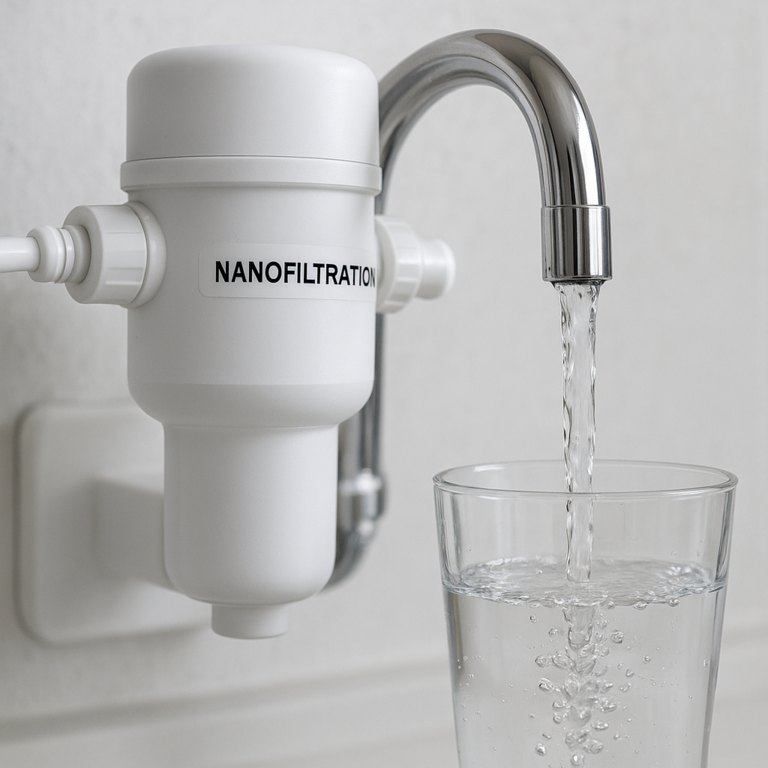
| Faucet-mounted | Convenient at the tap | May not fit every faucet; bypassed water may remain unfiltered | Faucet compatibility and certified lead claim |
| Countertop | Can filter more water without under-sink work | Uses counter space; may need a diverter connection | Installation requirements and program acceptance |
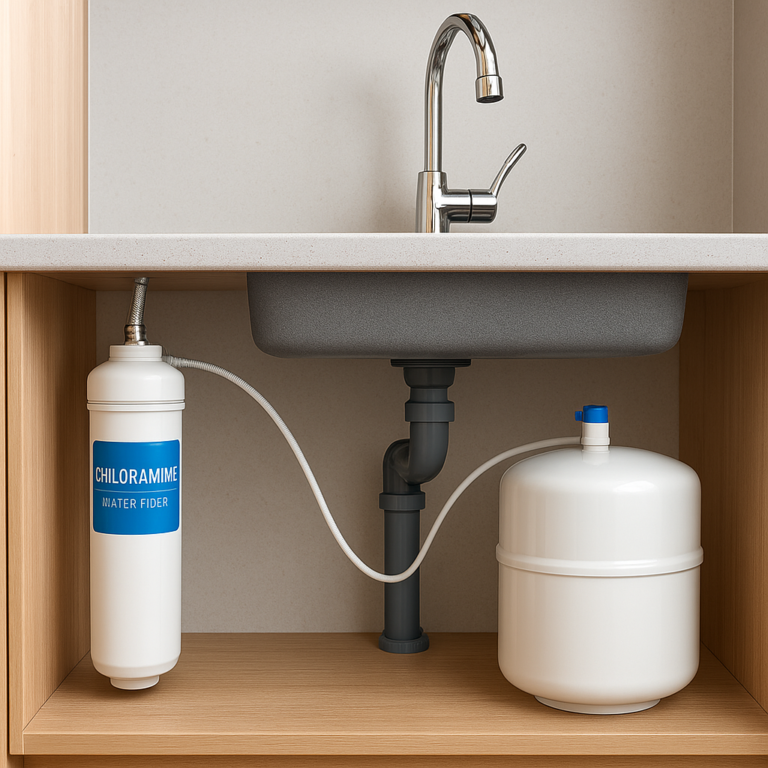
| Under-sink | Convenient for a dedicated drinking-water tap | Installation and cartridge changes can be more involved | Certification for the full system, cartridge, and tap |
| Whole-house system | Treats multiple household outlets | Not always the simplest or most suitable response for lead at a drinking tap | Suitability, certification, and professional advice |
For most residents seeking a temporary program filter, a certified pitcher or faucet-mounted unit may be simpler than installing an under-sink system—if the utility accepts it. Wisconsin’s program specifically recognizes qualifying pitchers as point-of-use filtration. Wisconsin DNR
Comparing Certified Lead-Reduction Filter Features
Consider these features alongside certification:
- Certified lead reduction: the top priority.
- Capacity: enough water for drinking and cooking between refills.
- Cartridge availability: replacement filters should be easy to source.
- Indicator or reminder: useful, but still follow the cartridge’s rated life and instructions.
- Installation fit: especially important for faucet and under-sink systems.
- Program acceptance: a technically capable filter may still fail a program’s documentation requirements.
- Accessibility: household members should be able to fill, install, and maintain it.
Taste matters too: a filter that makes water pleasant to drink may encourage regular use. But taste is not a lead detector. Your senses can’t confirm that water is lead-free.
If you like browsing water by type, our guides to filtered water, natural spring water, mineral water, enhanced water, and bottled water can help with general hydration choices. For a lead concern, however, use a certified filter or follow local public-health advice; bottled-water categories are not a substitute for a replacement plan.
Filter Capacity, Replacement Cartridges, and Household Needs
Replace the cartridge according to its labeled capacity or time limit—whichever comes first—and the program’s instructions. A filter indicator is helpful, but not all indicators measure actual contaminant removal; some simply track elapsed time or estimated volume.
Consider:
- How many people drink and cook at home.
- Whether filtered water is needed for infant formula, drinks, and cooking.
- How often the household can refill a pitcher or dispenser.
- Whether replacement cartridges are included by the program.
- How to store filtered water and whether the device needs cleaning.
Denver Water’s program video advises replacing its supplied pitcher filter at the end of its useful life and using filtered water through six months after service-line replacement. It also demonstrates priming the new filter and using the pitcher’s status indicator. Follow your own program’s product instructions, which may differ. Featured video
Questions to Ask a City or Water Utility
Use this checklist when you call:
- Is my service line confirmed lead, suspected lead, galvanized, or unknown?
- Does the program cover the public side, private side, or both?
- Will the two sides be replaced together?
- What filter model and cartridge will you provide?
- Is the filter certified specifically for lead reduction?
- How long should I use it before and after replacement?
- What flushing instructions should I follow?
- Should I clean faucet aerators or avoid certain taps?
- Is post-replacement testing available, and how do I request it?
- Who pays for replacement cartridges or approved filter purchases?
- What should renters or residents in multi-unit buildings do?
Write down the answer, the person’s name, and the date. When plumbing is involved, a paper trail is more useful than “I’m pretty sure the person on the phone said…”
✅ Safe Drinking Water Practices Before, During, and After Replacement
What to Do Before Construction Begins
Before the crew arrives:
- Ask the utility for its specific filter and water-use instructions.
- Make sure the selected filter is certified for lead reduction and installed correctly.
- Check that you have enough replacement cartridges for the instructed period.
- Store water as directed by the utility, especially if a temporary interruption is planned.
- Keep children away from the work area and follow posted construction notices.
If your home has a known or suspected lead service line, ask your utility or health department whether testing or additional precautions are appropriate. EPA guidance emphasizes that testing is the reliable way to determine lead levels; appearance and taste cannot reveal whether lead is present. EPA drinking-water lead information
Flushing Tap Water After Line Work
Flushing instructions vary by utility and construction circumstances, so follow the project-specific directions rather than using a universal number of minutes. Chicago’s program, for instance, provides a post-replacement flushing procedure alongside its recommendation for a certified filter during the first three months after construction. Lead-Safe Chicago
A cautious approach:
- Confirm which cold-water tap the utility recommends.
- Remove or clean the faucet aerator if instructed.
- Follow the exact flow and duration in the utility’s instructions.
- Use the certified filter for drinking and cooking if the program says to.
- Ask whether additional testing or flushing is needed if water remains discolored or the project notice says to stop using a tap.
Cleaning Faucet Aerators and Using Cold Water
Aerators can trap particles. If the utility recommends cleaning one after work:
- Turn off or gently close the tap.
- Unscrew the aerator according to the faucet instructions.
- Rinse and clean it as directed by the utility or manufacturer.
- Reinstall it securely.
- Flush the tap according to local guidance.
Use cold water for drinking, cooking, and preparing infant formula. EPA advises against using hot tap water for these purposes when lead is a concern; boiling does not remove lead. EPA guidance
When to Use Bottled Water or a Certified Filter
Use the temporary measures recommended by your utility or health department. A certified point-of-use filter may be the program’s preferred interim option; in some circumstances, officials may recommend bottled water.
If using bottled water, choose a reliable drinking-water product and follow local instructions about its use and storage. See our guides to bottled water and filtered water. Neither bottled water nor a filter repairs a lead service line—the replacement and any follow-up steps still matter.
📋 Lead Testing and Follow-Up After Service Line Replacement
How to Request and Interpret a Tap-Water Test
Contact your water utility or local health department to ask:
- Whether testing is available for your address.
- Whether the program provides a sample kit or collects samples.
- How long water should sit before sampling.
- Which tap to use and what containers are acceptable.
- How results will be reported and what actions follow.
Testing procedures affect results, so follow the lab or agency’s instructions exactly. A home test strip or a filter’s indicator is not a substitute for a properly collected and analyzed drinking-water sample. The EPA’s lead information page explains why water testing and source control matter.
Why Partial Lead Line Replacements Need Extra Follow-Up
A partial replacement leaves some lead-bearing pipe in place and can disturb deposits. That is why full replacement is generally preferred and why local agencies may recommend filtration, flushing, testing, or additional communication after partial work.
Wisconsin’s DNR warns that partial replacement can increase lead levels and gives program-specific timing guidance for replacing the private side after public-side work. Wisconsin DNR If only one portion of your line has been replaced, ask the utility for a written plan covering the remaining section, interim filtration, and follow-up.
When to Contact Your Water Utility or Health Department
Contact the utility or health department if:
- Your service-line material is unknown or records conflict.
- The filter supplied does not match the stated model or certification.
- Construction leaves the line partially replaced.
- Tap water becomes discolored or the utility’s instructions are unclear.
- A filter cartridge is damaged, overdue, or unavailable.
- You need testing or live in a home with infants, young children, or a pregnant person and want advice tailored to your situation.
For personal medical concerns or a child’s potential exposure, speak with a healthcare professional. Water testing and medical testing answer different questions; neither should be treated as a substitute for the other.
🚫 Common Filter and Replacement Program Mistakes
- Choosing by brand alone: certifications apply to specific products and configurations.
- Confusing NSF/ANSI 42 with lead reduction: check the exact contaminant claim, not just the standard number.
- Trusting taste, clarity, or a TDS meter: none can confirm lead safety.
- Forgetting cartridge changes: an overdue cartridge may not perform as intended.
- Assuming a partial replacement solves the source: ask whether every lead component was removed.
- Ignoring local directions: construction, flushing, and filter timelines vary by program.
- Using hot tap water for cooking: use cold water and follow local guidance.
- Buying before checking reimbursement rules: a program may require preapproval or accept only specified devices.
- Treating a filter as permanent plumbing repair: filters reduce exposure at the point of use; they do not remove the service line.
- Stopping precautions too early: ask the utility when the program’s filter period ends and whether additional testing is recommended.