Support our educational content for free when you purchase through links on our site. Learn more
4 Water Filter Brands Using Nanofiltration 🔬

The most important takeaway about water filter brands using advanced nanofiltration technology is that a brand’s “nano” claim isn’t proof its product uses nanofiltration—or that it reduces the contaminant you care about. Among the brands reviewed here, Ion Exchange documents nanofiltration for industrial and municipal treatment, while GlacierFresh CoolOn is marketed as a cold-water dispenser but isn’t verified here as an NF system.
That distinction matters because nanofiltration, nanofiber filtration, and reverse osmosis are different technologies. Our Water Brands™ team looks beyond shiny product photos to the model-specific performance sheets, independent certifications, and maintenance details that tell you what a filter can actually do.
Key Takeaways
- Verify the exact product, not just the brand. Look for a clear nanofiltration claim, a performance data sheet, and independently verified contaminant-reduction claims.
- Ion Exchange documents commercial and industrial NF applications. That does not establish a household drinking-water filter.
- GlacierFresh CoolOn is a cold-water dispenser, but its NF status and contaminant-reduction performance are not verified here.
- NF is not interchangeable with RO or nanofiber filtration. Compare technologies against your water test results and treatment needs.
- Check certifications and replacement guidance. A “nano” label, TDS reading, or filter reminder light is not proof of contaminant removal.
Table of Contents
- ⚡️ Quick Tips and Facts
- 🔬 Nanofiltration Water Filters: What the Technology Does
- Nanofiltration vs. Reverse Osmosis, Ultrafiltration, and Carbon Filtration
- What Nanofiltration Can and Cannot Remove
- 📚 Background: How Nanofiltration Membranes Became a Water-Treatment Option
- 🏷️ Water Filter Brands Using Advanced Nanofiltration Technology
- How We Evaluate Nanofiltration Claims and Brand Specifications
- 1. Glacier Fresh: Coolon Countertop Cold Water Purifier
- 2. Elarisey: Nano-Filtration Systems and Filter Features
- Other Brands and Commercial Nanofiltration Membrane Makers
- 🧊 Glacier Fresh Coolon: Features, Specifications, and Everyday Use
- Cooling Capacity, Dispensing, and Countertop Footprint
- Buttons, Indicators, and Smart Filter Reminders
- Setup, Water-Tank Refills, and First Use
- What Product Demonstrations and User Reviews Can Tell You
- ⚖️ Nanofiltration Filter Comparison: Performance, Features, and Trade-Offs
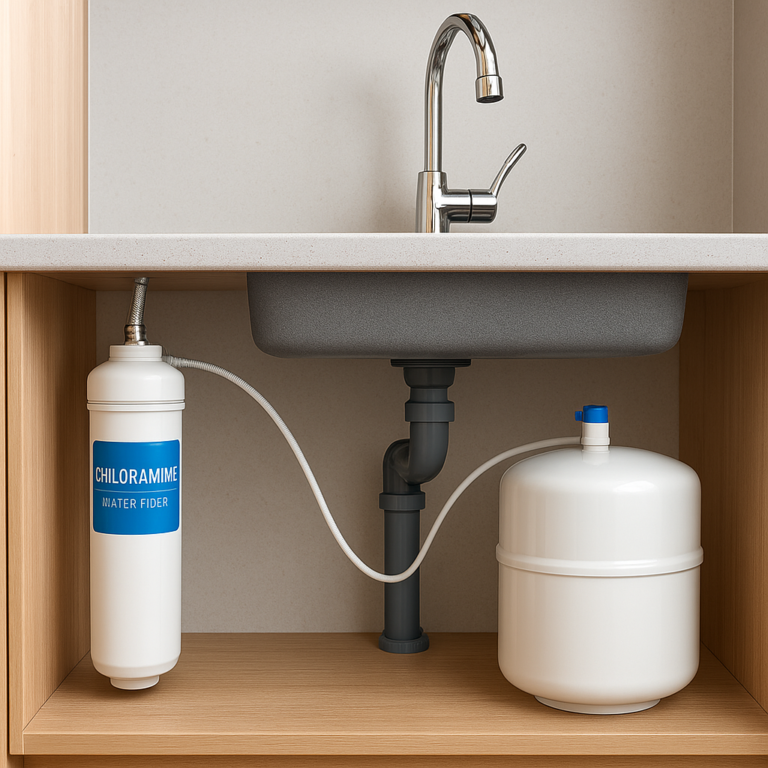
- Countertop vs. Under-Sink vs. Whole-House Systems
- Nanofiltration vs. Reverse Osmosis: Which Fits Your Water?
- 🧪 Contaminant Reduction, Certifications, and Test Reports
- NSF/ANSI Standards and Independent Verification
- How to Read a Performance Data Sheet
- PFAS, Lead, Chlorine, Hardness, and Dissolved Salts
- 🔧 Installation, Compatibility, and Filter Maintenance
- Do You Need Plumbing, Electricity, or a Dedicated Faucet?
- Filter Lifespan, Replacement, and Indicator Lights
- Cleaning, Flushing, and Troubleshooting Common Issues
- 💧 Performance, Capacity, and Water Quality
- Flow Rate, Daily Output, and Wastewater
- Mineral Content, Taste, and Water TDS
- How Source-Water Chemistry Affects Results
- 🛡️ Health, Safety, and Who Should Consider Nanofiltration
- Is Nanofiltered Water Safe to Drink?
- Homes, Renters, Offices, and Special Water Concerns
- 🛒 How to Choose a Nanofiltration Water Filter
- Questions to Ask Before Buying
- Common Marketing Claims and Red Flags
- ✅ Pros and Cons of Advanced Nanofiltration Systems
- Conclusion
- Recommended Links
- FAQ
- Reference Links
⚡️ Quick Tips and Facts
Looking for water filter brands using advanced nanofiltration technology? First, a useful bit of label-reading: nanofiltration (NF) is a specific membrane-treatment process—not a synonym for nanofiber filtration. And a brand selling many kinds of filters doesn’t automatically sell a nanofiltration product.
| Quick fact | What it means for you |
|---|---|
| NF is selective | It can reduce many larger dissolved compounds and some salts while allowing some smaller ions to pass. Actual performance depends on the membrane and water chemistry. |
| NF isn’t RO | Reverse osmosis usually rejects a broader range of dissolved salts. NF can be a better fit when selective treatment and some mineral passage are desired. |
| “Nano” isn’t enough proof | Look for the exact technology, model-specific performance data, and independent certification—not a vague “nano” claim. |
| Product claims need a model name | A company may sell NF equipment for industrial use without offering a household drinking-water filter that uses NF. |
| Know your source water | Review your local water-quality report or test a private well before choosing treatment. The U.S. EPA explains how to access Consumer Confidence Reports. |
| Taste isn’t a safety test | Clear, pleasant-tasting water can still contain contaminants; testing and certified performance claims matter more than a satisfying sip. |
Our Water Brands™ tasting-room take: We judge a water filter on two tracks: how the treated water tastes and what reliable performance documentation says it reduces. Those tracks should meet—but one cannot stand in for the other. For category context, browse our guides to filtered water, mineral water, and natural spring water.
One product deserves an especially careful distinction: GlacierFresh markets a CoolOn cold-water dispenser, but the available product page does not establish that this specific dispenser uses nanofiltration. We’ll separate what’s documented from what the word “nano” might tempt us to assume.
🔬 Nanofiltration Water Filters: What the Technology Does
Nanofiltration is a pressure-driven membrane process. Water passes through a selective membrane, while some dissolved substances are retained to varying degrees. “Nanofiltration” describes a treatment class, not one universal pore size or guaranteed contaminant-removal score.
In practical terms, NF often sits between ultrafiltration and reverse osmosis in selectivity. That shorthand is useful, but it isn’t a substitute for checking a system’s test data. Membrane performance varies with membrane composition, pressure, temperature, feed-water chemistry, and the substances being measured. The U.S. Department of Energy’s water-treatment overview describes membrane processes as tools selected to fit water quality and treatment goals.
Nanofiltration vs. Reverse Osmosis, Ultrafiltration, and Carbon Filtration
| Technology | Typical treatment role | Likely trade-off | What to verify |
|---|---|---|---|
| Nanofiltration (NF) | Selectively reduces some dissolved compounds, hardness ions, and larger molecules | Usually less comprehensive salt rejection than RO; performance is membrane-specific | Model-specific reduction data, operating conditions, certifications |
| Reverse osmosis (RO) | Broad reduction of many dissolved solids and other contaminants | Often rejects more salts; can require higher pressure and may produce a reject-water stream | Certified claims, recovery ratio, storage/output, maintenance requirements |
| Ultrafiltration (UF) | Physical barrier for particles and many microorganisms, depending on system | Does not generally remove dissolved salts in the same way as NF or RO | Absolute/nominal pore rating, tested microbial claims, certification |
| Activated carbon | Commonly improves chlorine taste and odor; some cartridges reduce specific chemicals | Not a general-purpose dissolved-salt or microbial barrier | The exact substances certified for reduction and cartridge capacity |
The comparison is broad by design. A carbon filter paired with NF, for example, may improve taste while the membrane handles a different set of contaminants. The treatment train matters, so inspect the whole system, not just the word printed one cartridge.
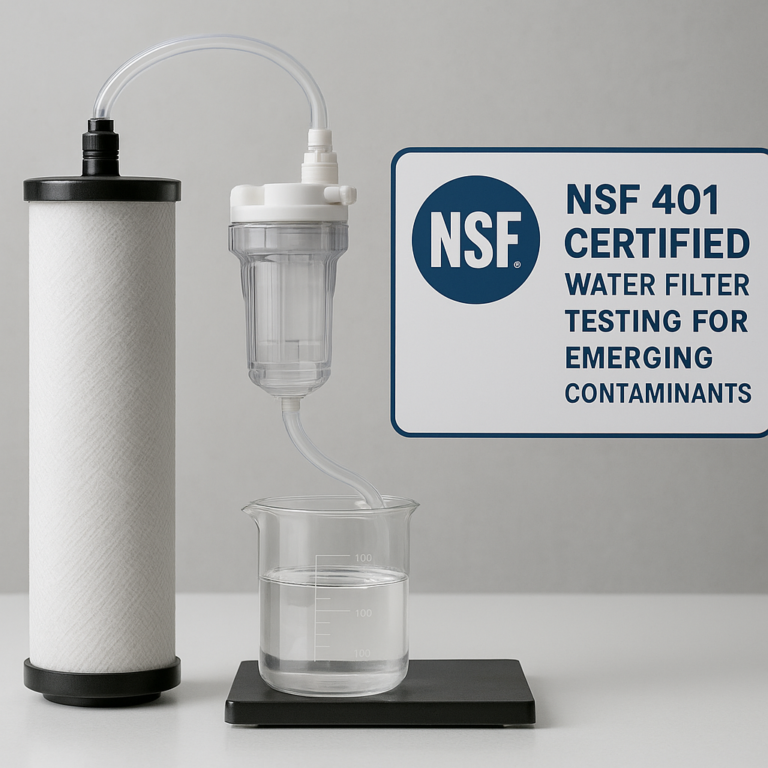
For certification context, the NSF consumer guidance on water filters explains why certification claims are tied to particular contaminants and standards. A system certified for one reduction claim is not automatically certified for every contaminant.
What Nanofiltration Can and Cannot Remove
NF can reduce some substances—including hardness-causing ions and certain dissolved organics—but the amount varies by membrane and operating conditions. It is unsafe to infer that every NF system removes lead, PFAS, arsenic, bacteria, viruses, or all dissolved salts.
Before buying, match the product’s documentation to the concern you’re trying to address:
- Identify the contaminant. Check a municipal water report or arrange appropriate well testing.
- Find the exact model’s performance sheet. General company claims are not model-specific proof.
- Look for the exact reduction claim. “Tested to NSF/ANSI 42,” for example, does not mean the system is certified to reduce lead or PFAS.
- Confirm capacity and replacement conditions. Results apply only when the filter is installed and maintained as directed.
- Use a qualified water professional for complex issues. Private-well risks and industrial water chemistry may need more than a countertop filter.
The EPA’s drinking-water contaminant resources can help you understand regulated contaminants and treatment context. For household claims, a product’s independent certification listing is more useful than a broad “removes impurities” slogan.
📚 Background: How Nanofiltration Membranes Became a Water-Treatment Option

Nanofiltration developed as membrane engineers sought a useful middle ground: tighter separation than many conventional filtration methods, but a different balance of selectivity and operating demands than full desalination. Today, NF appears in municipal and industrial treatment, including applications where hardness reduction, water reuse, or selective separation is important.
That does not mean every technology used in a treatment plant has a small, certified household counterpart. Industrial membranes are often engineered around site-specific water chemistry, pretreatment, pumps, monitoring, and trained maintenance. A home drinking-water unit needs its own evidence: a clearly identified model, appropriate performance claims, and instructions suitable for household use.
Ion Exchange’s overview of reverse osmosis and nanofiltration costs discusses industrial system factors such as feed-water quality, pretreatment, capacity, membrane upkeep, and operating conditions. It notes that “Pre-treatment protects membranes from scaling and fouling, improving efficiency and extending membrane life.” That’s sound general membrane-system advice—but it is not a household product specification or certification.
A related terminology trap: nanofiber and nanofiltration are not interchangeable. Nanofiber describes a material structure; nanofiltration describes a membrane-separation process. GlacierFresh’s website lists comparisons involving “nanofiber,” RO, and ultrafiltration, but those references alone do not show that a particular GlacierFresh household product uses NF.
🏷️ Water Filter Brands Using Advanced Nanofiltration Technology
This is where we put the brakes on the marketing carousel. A defensible brand list must distinguish commercial membrane providers from documented household nanofiltration products.
| Brand or provider | What the available information supports | What it does not establish |
|---|---|---|
| Ion Exchange | Offers membrane-based treatment solutions, including industrial and municipal NF systems, according to its company overview | A named, certified household drinking-water NF model |
| GlacierFresh / Glacier Fresh® | Sells multiple filter categories and has a CoolOn cold-water dispenser page | That CoolOn uses nanofiltration, or any model-specific NF performance claim |
| Elarisey | The name appears in product-related references supplied for this topic | Verified technical documentation establishing an identifiable household NF system, its performance, or certification |
| Other membrane suppliers | Some companies design or supply NF membranes for commercial treatment | That the supplier sells a complete, certified consumer water filter under the same brand |
How We Evaluate Nanofiltration Claims and Brand Specifications
Our review standard is straightforward:
- Specific product name: Can you identify the exact model?
- Explicit NF description: Does the manufacturer say “nanofiltration,” rather than “nanofiber,” “nano filter,” or “advanced membrane” without clarification?
- Performance documentation: Are reduction claims tied to a test method, conditions, and capacity?
- Independent verification: Can you confirm certification in the certifier’s directory?
- Usable instructions: Are installation, flushing, replacement, and maintenance explained?
- Appropriate intended use: Is the device designed and tested for drinking water, not merely described as a treatment component?
A manufacturer’s own page is useful for product identity. For performance, independent listings and test documentation carry more weight. The NSF certified drinking-water treatment unit directory is one place to check listed products and claims.
1. Glacier Fresh: Coolon Countertop Cold Water Purifier
The product page identifies GlacierFresh CoolOn as a cold-water dispenser, but the available information summarized for this review does not provide product specifications, a nanofiltration claim, contaminant-reduction figures, certifications, or customer-rating data. So we can assess the product category and the documentation gap—but we cannot honestly rate its NF performance.
| Review category | Score (1–10) | Why |
|---|---|---|
| Design | Not rated | Sufficient verified specification detail is unavailable here |
| Filtration functionality | Not rated | The product page information available does not establish an NF membrane |
| Cold-water convenience | Not rated | Capacity and cooling-performance details were not provided |
| Certification transparency | 2 | No specific NF certification or performance sheet is established in the available product information |
| Ease of maintenance | Not rated | Replacement interval and service instructions were not provided |
| Overall as an NF recommendation | Not recommended as verified NF | There is not enough evidence to label CoolOn a nanofiltration system |
We’re not calling the dispenser ineffective; we’re saying its NF status has not been substantiated by the evidence available for this review. Those are different statements. The official GlacierFresh CoolOn page is the place to check for current model documentation before purchasing.
- ✅ Potential appeal: A countertop cold-water dispenser may suit someone seeking chilled water without a plumbed installation.
- ❌ Key limitation for this topic: The available page information does not prove nanofiltration, contaminant reduction, or certification.
- 🔎 What to ask GlacierFresh: Request the precise membrane type, model-specific performance data sheet, certification listing, filter replacement schedule, and maintenance instructions.
👉 Shop GlacierFresh CoolOn on:
- GlacierFresh CoolOn: Amazon | Walmart | GlacierFresh Official
2. Elarisey: Nano-Filtration Systems and Filter Features
We could not verify a specific Elarisey household product with an official technical document establishing nanofiltration membrane construction, certified contaminant reductions, or a performance data sheet. That means it would be premature to recommend it as a proven NF brand.
If you’re considering an Elarisey listing, ask for:
- The exact model number and official product manual.
- A clear statement that the unit uses nanofiltration, not a nanofiber or generic “nano” filter.
- A third-party performance report naming the contaminants tested.
- Any NSF, WQA, or equivalent certification listing, verified directly with the certifier.
- Filter-life data and the conditions under which the claimed capacity applies.
A polished product page can still leave the important questions unanswered. We like attractive countertop gear as much as the next hydration enthusiast, but a glowing indicator light cannot certify a membrane.
👉 Shop Elarisey on:
Other Brands and Commercial Nanofiltration Membrane Makers
Ion Exchange is the clearest named provider in the source material for advanced NF systems, but its described focus is commercial and industrial treatment. Its article discusses system design and operational factors, not a specific household dispenser. For a facility, hotel, factory, or municipal application, ask for a project-specific design review rather than treating a domestic filter chart as an engineering specification.
For home use, we recommend shortlisting only brands that publish an identifiable drinking-water model and verifiable, contaminant-specific data. If no manufacturer can show those basics, the responsible answer is “unverified,” not “definitely nanofiltration.”
🧊 Glacier Fresh Coolon: Features, Specifications, and Everyday Use
CoolOn deserves a separate look because consumers often search for it alongside GlacierFresh filtration products. The name and product page support its identity as a cold-water dispenser. They do not, based on the information available for this review, establish NF technology or a certified contaminant-removal profile.
| Specification | Verified information available here |
|---|---|
| Product name | GlacierFresh CoolOn Cold Water Dispenser |
| Product category | Cold-water dispenser |
| Nanofiltration membrane | Not established |
| Contaminant reduction | No model-specific figures established |
| Certification | No model-specific certification established |
| Cooling capacity or output | Not provided in the available product information |
| Filter replacement schedule | Not provided in the available product information |
Cooling Capacity, Dispensing, and Countertop Footprint
For any countertop dispenser, useful buying questions include:
- How much chilled water can it dispense before the temperature rises?
- Does it cool continuously or in batches?
- What are the appliance dimensions and clearance needs?
- Is the reservoir easy to remove and clean?
- Does it require a power outlet?
- Does it filter tap water, or dispense water treated by a separate filter?
We can’t fill in CoolOn’s exact capacity or footprint from the available product details, so check the current manufacturer listing and manual. If your main concern is cold-water convenience, compare those specifications directly. If your main concern is PFAS, lead, hardness, or another contaminant, prioritize documented treatment performance first.
Buttons, Indicators, and Smart Filter Reminders
A simple control panel and filter reminder can make maintenance easier, but an indicator is not a water-quality sensor unless the manufacturer specifically documents that function. Many filter reminders are timers or estimated-life counters. They can remind you when to replace a cartridge; they don’t independently confirm contaminant reduction.
Before relying on a reminder light, find out:
- Is it based on elapsed time, estimated volume, or a measured water-quality parameter?
- Can you reset it after changing a cartridge?
- Does it identify which cartridge needs replacement?
- Does the manufacturer provide a replacement interval under your expected use?
We don’t have verified CoolOn control or indicator specifications here, so we won’t invent them. That small restraint saves buyers from treating a helpful reminder as a laboratory result.
Setup, Water-Tank Refills, and First Use
For a countertop filter-dispenser, the general setup checklist is:
- Read the manual and confirm which water sources the appliance accepts.
- Wash removable reservoirs as instructed before first use.
- Install only the specified replacement filter if the model requires one.
- Flush the cartridge according to the manufacturer’s exact instructions.
- Discard the initial water if the manual directs you to do so.
- Check for leaks, unusual noises, or persistent off-tastes before regular use.
- Record the cartridge installation date and follow the replacement schedule.
These are general best practices, not a CoolOn-specific procedure. Use the current manufacturer instructions for the exact unit.
What Product Demonstrations and User Reviews Can Tell You
A video demonstration can help you see a product’s controls, refill process, noise, and day-to-day footprint. It cannot prove that a filter removes a particular contaminant unless it presents credible, model-specific test documentation.
The requested featured video, “PUR vs Brita vs ZeroWater: An Unbiased, Data-Driven Comparison” by Water Filter Guru, compares pitcher filters—not nanofiltration systems or GlacierFresh CoolOn. It can still be useful for understanding how filter types and measured results differ, but keep the scope straight: a pitcher-filter comparison is not NF verification.
User reviews are most useful for practical patterns: setup friction, leaks, taste changes, noise, or customer support. They are weaker evidence for contaminant claims, because most reviewers do not run controlled laboratory tests. Read reviews as lived experience, then check performance claims against manufacturer data and certifier records.
⚖️ Nanofiltration Filter Comparison: Performance, Features, and Trade-Offs
A good comparison starts with the job you need done. A household dealing with chlorine taste has a different treatment problem from a well with elevated arsenic or a facility reusing process water.
| Your priority | Treatment direction to investigate | Why |
|---|---|---|
| Improve chlorine taste and odor | Certified activated-carbon system | Carbon systems are commonly used for taste and odor claims; verify the exact claim |
| Reduce hardness or selected dissolved compounds | NF system with specific test data | NF can be selective, but performance depends on the membrane |
| Broad reduction of many dissolved salts | RO system with verified claims | RO typically has stronger salt rejection than NF |
| Address microbes | A system with a verified microbial barrier or disinfection claim | Membrane class alone does not establish pathogen performance |
| Treat private-well water | Lab testing followed by targeted treatment | Well conditions vary and may need a treatment train |
| Treat municipal water for a known contaminant | Model certified for that contaminant | Match the claim to the substance found in your report |
Countertop vs. Under-Sink vs. Whole-House Systems
| System type | Best suited to | Common trade-offs |
|---|---|---|
| Countertop | Renters, smaller households, or people avoiding plumbing work | Uses counter space; output, tank capacity, and performance vary widely |
| Under-sink | Dedicated drinking-water treatment with a cleaner counter | May require installation and cabinet space; replacement access matters |
| Whole-house | Treating water at multiple taps for a defined whole-home concern | Needs professional sizing and assessment; not a default solution for every contaminant |
| Commercial/industrial plant | Large flows, specialized process needs, or water reuse | Requires engineering, pretreatment, monitoring, and operating plans |
Do not assume that a membrane marketed for industrial flow can be dropped into a countertop unit and deliver the same result. Flow, pressure, water chemistry, and maintenance conditions are different.
Nanofiltration vs. Reverse Osmosis: Which Fits Your Water?
Consider NF when you need selective reduction and the exact product data demonstrate the contaminants you care about. Consider RO when broader dissolved-solids rejection is a priority and you are comfortable with the system’s water use, maintenance, and mineral profile.
Ion Exchange’s NF/RO cost discussion describes NF as a lower-pressure option for some applications and RO as offering higher salt rejection. Those are general engineering comparisons, not a guarantee that every NF system uses less energy or costs less than every RO unit. Product design and feed water change the equation.
To choose sensibly:
- Test or review your source water.
- List the contaminants you want to reduce.
- Compare model-specific performance data.
- Check certification and replacement requirements.
- Consider water output, rejected water, installation, and maintenance.
- Re-test where appropriate, especially for private wells or higher-risk concerns.
🧪 Contaminant Reduction, Certifications, and Test Reports
A filter’s strongest claim is not “advanced,” “nano,” or “pure.” It is a clearly documented reduction claim for a named contaminant under a defined test standard.
NSF/ANSI Standards and Independent Verification
Standards are designed around different treatment claims. For example, NSF/ANSI 42 commonly concerns aesthetic effects such as chlorine taste and odor; other standards address health-related claims or specific device types. The exact standard and certified claim must be checked for the specific model. See NSF’s guide to contaminant-reduction claims and search the NSF certified drinking-water treatment unit directory.
Also check the Water Quality Association’s product certification resources where applicable. A brand’s logo or statement that a product was “tested to” a standard is not necessarily the same as current third-party certification. Read the listing carefully.
How to Read a Performance Data Sheet
Look for these details:
- Exact model and cartridge number
- Contaminants tested
- Percent reduction or treated-water concentration
- Test conditions, including pressure and source-water levels
- Rated capacity and flow rate
- Replacement interval
- Certification organization and standard
- Limitations or operating instructions
A good sheet helps answer, “What did this exact unit reduce, and under what conditions?” A vague claim such as “removes toxins” does not.
PFAS, Lead, Chlorine, Hardness, and Dissolved Salts
These are distinct treatment targets. A system’s ability to reduce one does not prove it reduces the others.
| Concern | What to look for |
|---|---|
| PFAS | A model-specific reduction claim and recognized certification or independent testing for the relevant PFAS compounds |
| Lead | A specific certified lead-reduction claim; don’t infer it from “heavy-metal filtration” language |
| Chlorine taste and odor | A performance claim for chlorine reduction, commonly associated with carbon media |
| Hardness | Data for calcium and magnesium reduction, scale control, or the stated hardness application |
| Dissolved salts/TDS | Test data identifying which salts or ions are reduced; a TDS reading alone does not identify contaminants |
| Microrganisms | A validated microbial reduction or disinfection claim for the exact device |
The EPA’s PFAS drinking-water information and lead in drinking water guidance provide useful context. For a health concern, use the appropriate regulator or qualified professional—not taste alone—to interpret test results.
🔧 Installation, Compatibility, and Filter Maintenance
Membrane systems perform only as well as their installation and upkeep allow. Industrial guidance from Ion Exchange emphasizes pretreatment because fouling and scaling can shorten membrane life; its article states, “Pre-treatment protects membranes from scaling and fouling, improving efficiency and extending membrane life.” The same principle matters in household systems, though the right pretreatment depends on the device and incoming water.
Do You Need Plumbing, Electricity, or a Dedicated Faucet?
Check the product manual for:
- Water connection type and pressure range.
- Whether it requires a dedicated faucet or drain connection.
- Electrical requirements, especially for chilled-water dispensers or pump-assisted units.
- Counter, cabinet, and ventilation clearances.
- Compatibility with your water source and local plumbing.
- Whether installation affects a lease, warranty, or plumbing code.
A countertop dispenser may avoid permanent plumbing, but that does not mean it avoids power, regular refilling, or cleaning. Confirm the exact model’s requirements rather than relying on category assumptions.
Filter Lifespan, Replacement, and Indicator Lights
Replacement intervals vary with filter design, usage, and source-water quality. Follow the manufacturer’s stated capacity and schedule; do not stretch a cartridge indefinitely because water still tastes fine. Some contaminants have no reliable taste or smell.
Keep a simple maintenance log:
- Installation date.
- Filter model and batch or lot information, if available.
- Replacement date.
- Changes in flow, taste, or leakage.
- Any service or flushing performed.
A reminder light is convenient, but confirm whether it measures anything or merely counts time or estimated use. If the product’s replacement schedule is missing, that is a documentation gap worth resolving before purchase.
Cleaning, Flushing, and Troubleshooting Common Issues
Use the manual’s cleaning agents and procedures. Avoid improvised disinfectants or abrasive cleaning unless the manufacturer explicitly permits them.
| Symptom | Possible cause | What to do |
|---|---|---|
| Slow flow | Clogged cartridge, low pressure, or a valve issue | Check the manual, cartridge age, and inlet conditions |
| New or unusual taste | New cartridge needs flushing, cartridge is exhausted, or water source changed | Follow the flushing directions; investigate persistent changes |
| Leaks | Poorly seated cartridge, loose connector, or damaged seal | Shut off water and inspect according to the manual |
| Filter reminder stays on | Reset procedure not completed or reminder fault | Follow the model-specific reset instructions |
| Cloudiness or bubbles | Entrained air or source-water change may be involved | Follow manufacturer guidance; seek testing if persistent or concerning |
If water quality changes suddenly, don’t assume the filter is responsible—or that it has fixed the problem. Contact your water provider, test the water, or seek qualified help as appropriate.
💧 Performance, Capacity, and Water Quality
A filter’s real-world value depends on more than membrane type. Flow, feed-water quality, household demand, maintenance, and rejected-water volume all matter.
Flow Rate, Daily Output, and Wastewater
Before buying, compare:
- Rated flow rate under stated pressure.
- Daily production or dispensing capacity.
- Storage tank volume, if present.
- Recovery ratio or reject-water volume, for systems that produce concentrate.
- Performance at your home’s pressure and water temperature.
- Whether the rated output includes a cold-water reservoir or only the filter’s production rate.
For large systems, Ion Exchange notes that plant capacity—often described in LPH, KLD, or MLD—affects system sizing and cost. That industrial perspective underscores a simple household lesson: size the system for actual demand, not the biggest number on a box.
Mineral Content, Taste, and Water TDS
NF may allow some smaller ions or minerals to pass, while RO generally rejects more dissolved salts. The outcome depends on the particular membrane, water chemistry, and system design.
TDS meters can offer a rough reading of total dissolved solids, but they do not identify which substances are present and cannot confirm that water is safe. A lower TDS number is not automatically proof of healthier water; a higher number does not identify a specific contaminant either. For taste preferences, compare treated water with your preferred mineral water or enhanced water style—but don’t use taste as a safety test.
Our taste testers often describe water with some mineral content as rounder or less “blank” than very low-mineral water. That’s a preference observation, not a health claim.
How Source-Water Chemistry Affects Results
Hardness, silica, organics, oils, pH, and dissolved salts can affect membrane performance and fouling risk. That is why Ion Exchange emphasizes source-water conditions and pretreatment when designing industrial systems. For a private well, test before choosing a technology; for municipal water, start with the utility’s annual report and investigate any specific concern.
If your water has changing seasonal conditions, unusually high hardness, or a known contaminant, generic product recommendations are especially risky. A local laboratory or water-treatment professional can help translate test results into a suitable treatment plan.
🛡️ Health, Safety, and Who Should Consider Nanofiltration
NF can be a useful treatment option when a specific application calls for its selectivity and the chosen system has evidence for the target contaminants. It is not a blanket guarantee of safe water. The right treatment depends on what is in the source water and what the product has actually been tested to reduce.
Is Nanofiltered Water Safe to Drink?
Water treated by a properly selected and maintained system may be suitable for drinking, but “nanofiltration” alone does not establish safety. Verify the specific model’s intended use, certifications, and contaminant claims. Follow maintenance and replacement instructions, and test water when the source or risk warrants it.
For general public-health guidance, consult the EPA’s drinking-water resources and local health authorities. If you are managing an elevated contaminant, use a treatment system explicitly validated for that contaminant and confirm results with testing where advised.
Homes, Renters, Offices, and Special Water Concerns
- Renters: Countertop designs may be simpler to install, but confirm the water source, power needs, and cleaning routine.
- Families: Choose a system with clear maintenance instructions and an appropriately verified claim for the concern at hand.
- Offices: Estimate peak demand and storage needs; household-scale units may struggle with high-volume use.
- Private-well households: Test first and re-test as recommended. Water quality can differ from one well to another.
- Industrial or municipal users: Work with a qualified engineer or treatment provider to design NF, RO, pretreatment, and monitoring around site-specific needs.
- Taste-focused shoppers: If the goal is primarily flavor, a certified carbon filter may be more appropriate than a membrane system. Explore our guides to bottled water and filtered water for broader comparisons.
🛒 How to Choose a Nanofiltration Water Filter
Use this checklist before you spend time comparing glossy product photos:
- Name the water problem. Use a water report or laboratory test.
- Search by exact model number. Avoid treating a brand-wide claim as product proof.
- Confirm the membrane type. Distinguish nanofiltration from nanofiber and generic “nano” wording.
- Check the contaminant claim. Confirm that the exact target appears in the performance documentation.
- Verify third-party certification. Search the certifier’s directory yourself.
- Compare output and maintenance. Consider flow, capacity, replacement, and wastewater.
- Confirm installation fit. Check plumbing, power, space, and water-pressure requirements.
- Ask for missing evidence. If a seller cannot provide the manual or data sheet, keep shopping.
Questions to Ask Before Buying
- Is this exact model explicitly described as an NF system?
- Which contaminants has it been independently tested to reduce?
- What certification applies to those claims?
- Is there a current performance data sheet?
- What is the rated capacity and replacement interval?
- Does it need electricity, plumbing, a drain, or a dedicated faucet?
- What happens if source-water quality is outside the stated range?
- How can I verify the unit’s performance after installation?
Common Marketing Claims and Red Flags
Be cautious when you see:
- “Nano technology” without a clear definition.
- “Removes 99% of impurities” without naming them.
- A certification logo with no certifier listing or model number.
- A brand comparison page that discusses nanofiber but is used to imply nanofiltration.
- A replacement reminder presented as proof of water quality.
- TDS readings used as the sole evidence of contaminant removal.
- A product page with no manual, test report, or replacement details.
That final point brings us back to GlacierFresh CoolOn: it may be worth investigating as a chilled-water dispenser, but the available evidence here does not establish it as an advanced nanofiltration product. The honest recommendation is to request the missing documentation before treating it as one.
✅ Pros and Cons of Advanced Nanofiltration Systems
| Potential advantages | Limitations to consider |
|---|---|
| Can selectively reduce some dissolved compounds and hardness ions | Performance varies by membrane and water chemistry |
| May retain some smaller ions that RO rejects more extensively | “Nanofiltration” alone does not identify exact reductions |
| Useful in municipal and industrial treatment applications | Commercial treatment systems may not translate to household products |
| Can be part of a tailored treatment train | Pretreatment, maintenance, and monitoring may be needed |
| May offer a different pressure and recovery profile from RO | A specific household model still needs reliable performance evidence |
| Can support water reuse and specialized processing | Certification and model-specific test data are essential |
Our recommendation: Choose NF when the specific water problem, product documentation, and independent verification line up. For household buyers, don’t choose a product merely because a brand uses “nano” in its marketing. GlacierFresh CoolOn is not verified here as an NF system; Ion Exchange is documented as an industrial and municipal membrane-treatment provider, not as a named household NF filter in the material reviewed. For any product, the data sheet—not the buzzword—gets the final sip.