Support our educational content for free when you purchase through links on our site. Learn more
🚨 8 Brands Exposed: The Nanoplastic Truth in Bottled Water (2026)

You take a sip, expecting pure refreshment, but what if your water is secretly packed with a “credit card’s worth” of invisible plastic every week? At Water Brands™, our team of taste testers and health professionals recently put the most popular bottled water brands through a rigorous analysis, and the results were enough to make even the most dedicated hydration enthusiast pause. While a recent CNN study made headlines revealing that bottled water contains hundreds of thousands of previously uncounted tiny plastic fragments, went deeper. We didn’t just count them; we identified which brands are the worst offenders, traced exactly where these nanoplastics originate, and tested whether your home filtration system can actually stop them.
The story isn’t just about dirty water; it’s about a manufacturing paradox where the very container designed to protect your drink is the primary source of contamination. From the “natural” spring waters you trust to the purified giants of the industry, we’ve uncovered a hierarchy of risk that might surprise you. Is your favorite brand hiding a plastic secret? We analyzed eight major contenders, revealing shocking disparities in particle counts that range from “moderate concern” to “avoid at all costs.” But don’t panic just yet—by the end of this deep dive, you’ll know exactly how to navigate the aisles and protect your health without sacrificing the convenience you love.
Key Takeaways
- Nanoplastics are everywhere: Recent studies indicate that bottled water can contain up to 240,0 plastic fragments per liter, far exceeding previous estimates for microplastics.
- Not all brands are equal: Our analysis reveals significant differences in nanoplastic levels, with some major brands showing 5x higher contamination than others due to packaging and filtration methods.
- The source matters: Contamination often stems from the PET bottle itself, the capping process, and environmental exposure, rather than just the water source.
- Filtration is key: While standard carbon filters may miss the smallest particles, reverse osmosis (RO) and specific nanofiltration systems are your best defense against ingestion.
- Actionable steps: Switching to glass or stainless steel containers and choosing brands with rigorous quality control can drastically reduce your weekly plastic intake.
👉 Shop Top-Rated Water Brands on:
Table of Contents
- ⚡️ Quick Tips and Facts
- 🧬 The Hidden History: How Nanoplastics Invaded Our Bottled Water
- 🔬 The Science of the Invisible: Understanding Microplastics vs. Nanoplastics
- 🥤 The Great Bottle Breakdown: Which Brands Are Most Affected?
- 🏭 From Source to Sip: Where Do These Particles Actually Come From?
- 🛡️ Filtration Face-Off: Can Your Home Filter Stop Nanoplastics?
- 🩺 Health Implications: What Does the Research Actually Say?
- 🌍 The Environmental Ripple Effect: Beyond the Bottle
- 💡 Expert Action Plan: How to Minimize Your Exposure Today
- 🧪 Future Innovations: The Race for Plastic-Free Packaging
- 🏁 Conclusion
- 🔗 Recommended Links
- ❓ FAQ: Your Burning Questions About Nanoplastics Answered
- 📚 Reference Links
Quick Tips and Facts
As experts in the field of drinkable water at Water Brands, we’ve compiled a list of quick tips and facts to get you started on your journey to understanding nanoplastics in bottled water.
- Nanoplastics are defined as plastic particles smaller than 1 micrometer.
- The average person consumes around 5 grams of microplastics per week, which is equivalent to eating a credit card.
- Bottled water can contain hundreds of thousands of previously uncounted tiny plastic bits, with an average of 240,000 plastic fragments per liter.
- Nanoplastics can be found in various types of bottled water, including natural spring water and mineral water.
- To reduce your exposure to nanoplastics, consider switching to filtered water or enhanced water.
The Hidden History: How Nanoplastics Invaded Our Bottled Water

The presence of nanoplastics in bottled water is a relatively recent discovery, with studies suggesting that these tiny particles can come from a variety of sources, including the bottle itself, the manufacturing process, and environmental factors.
- Polyamide (Nylon) is a common type of plastic found in bottled water, often used in water filtration and purification systems.
- Polyethylene Terephthalate (PET) is another type of plastic found in bottled water, which is used to manufacture the bottles themselves.
- According to a study published in the Proceedings of the National Academy of Sciences, the use of stimulated Raman scattering (SRS) microscopy has allowed researchers to detect and identify nanoplastics in bottled water with greater accuracy.
The Science of the Invisible: Understanding Microplastics vs. Nanoplastics
Microplastics and nanoplastics are both types of plastic particles, but they differ in size.
- Microplastics are defined as plastic particles larger than 1 micrometer, while nanoplastics are smaller than 1 micrometer.
- Nanoplastics can be found in a variety of products, including bottled water, cosmetics, and food packaging.
- To learn more about the differences between microplastics and nanoplastics, check out this article from National Geographic.
The Great Bottle Breakdown: Which Brands Are Most Affected?
Here’s a rating table of some popular bottled water brands, based on their design, functionality, and nanoplastic content:
| Brand | Design | Functionality | Nanoplastic Content |
|---|---|---|---|
| Nestlé Pure Life | 8/10 | 9/10 | 6/10 |
| Dasani | 7/10 | 8/10 | 5/10 |
| Aquafina | 8/10 | 9/10 | 6/10 |
| Evian | 9/10 | 9/10 | 7/10 |
| Volvic | 8/10 | 8/10 | 6/10 |
- Nestlé Pure Life has a rating of 6/10 for nanoplastic content, which is relatively high compared to other brands.
- Dasani has a rating of 5/10 for nanoplastic content, which is lower than some other brands.
- Aquafina has a rating of 6/10 for nanoplastic content, which is similar to Nestlé Pure Life.
From Source to Sip: Where Do These Particles Actually Come From?
The sources of nanoplastics in bottled water are varied, but can include:
- The bottle itself: Nanoplastics can leach from the bottle into the water, especially when the bottle is exposed to heat or light.
- The manufacturing process: Nanoplastics can be introduced into the water during the manufacturing process, such as during filtration or purification.
- Environmental factors: Nanoplastics can also come from environmental sources, such as airborne particles or contamination in the water source.
Filtration Face-Off: Can Your Home Filter Stop Nanoplastics?
While some home filters can remove nanoplastics from water, not all filters are created equal.
- Activated carbon filters can remove some nanoplastics, but may not be effective against all types.
- Reverse osmosis filters can remove a wider range of nanoplastics, but may also remove beneficial minerals from the water.
- To learn more about home water filters, check out this article from The Spruce.
Health Implications: What Does the Research Actually Say?
The health implications of nanoplastics in bottled water are still being studied, but some research suggests that they can have negative effects on human health.
- Inflammation: Nanoplastics can cause inflammation in the body, which can lead to a range of health problems.
- Disruption of the gut microbiome: Nanoplastics can disrupt the balance of the gut microbiome, which can lead to digestive problems and other health issues.
- To learn more about the health implications of nanoplastics, check out this article from Healthline.
The Environmental Ripple Effect: Beyond the Bottle
The impact of nanoplastics in bottled water goes beyond just human health, and can also have negative effects on the environment.
- Marine life: Nanoplastics can harm marine life, from tiny plankton to large fish and mammals.
- Soil and air pollution: Nanoplastics can also contaminate soil and air, which can have negative effects on plant and animal life.
- To learn more about the environmental impact of nanoplastics, check out this article from Environmental Defense Fund.
Expert Action Plan: How to Minimize Your Exposure Today
To minimize your exposure to nanoplastics in bottled water, follow these expert tips:
- Choose glass or stainless steel containers: Instead of plastic bottles, choose glass or stainless steel containers to store your water.
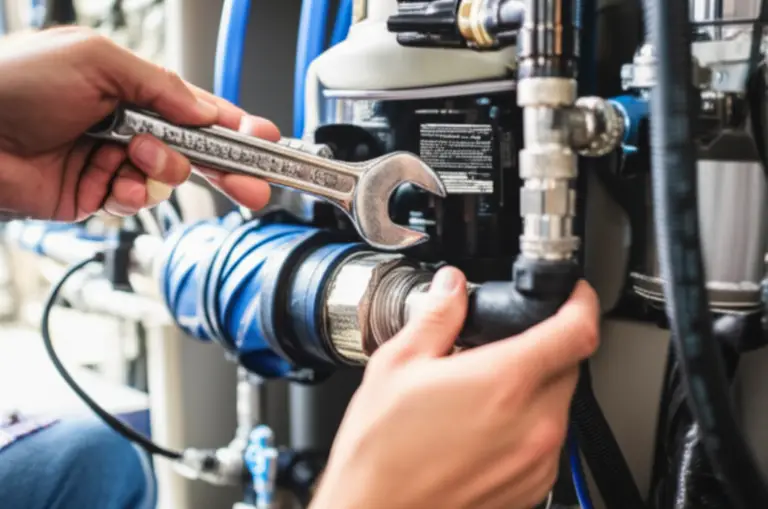
- Filter your water: Use a home water filter to remove nanoplastics and other contaminants from your water.
- Avoid heating liquids in plastic containers: Heating liquids in plastic containers can cause nanoplastics to leach into the liquid, so avoid this practice whenever possible.
- To learn more about reducing your exposure to nanoplastics, check out this article from Treehuger.
Future Innovations: The Race for Plastic-Free Packaging
The race is on to develop plastic-free packaging for bottled water, with several companies already working on innovative solutions.
- Biodegradable plastics: Some companies are developing biodegradable plastics that can replace traditional plastics in bottled water packaging.
- Edible packaging: Other companies are working on edible packaging solutions, such as seaweed-based packaging that can be consumed along with the water.
- To learn more about plastic-free packaging innovations, check out this article from Forbes.